
Beagle Separation Anxiety: Howling and Destruction
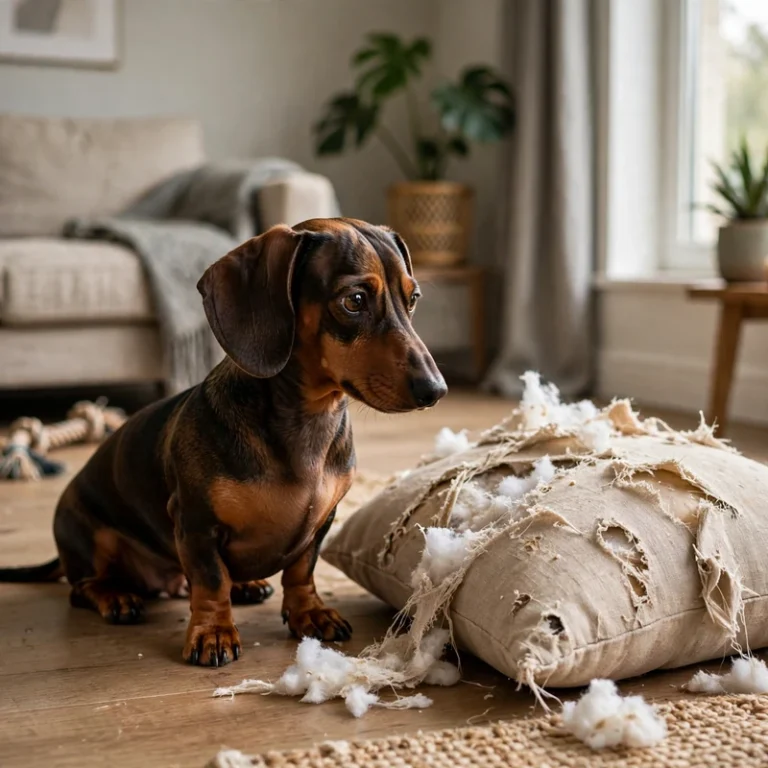
You leave for twenty minutes and come home to a shredded cushion, scratch marks on the door, and a note from a neighbor about the howling.
This guide covers beagle separation anxiety in plain steps. You will learn how to tell panic from boredom, how to build alone time slowly, and when to get help.
Your Beagle is not angry at you for leaving. They are frightened, and frightened dogs need a plan, not punishment.
Key Takeaways
- Separation anxiety is panic about being left alone, not misbehavior. Punishment always makes it worse.
- Film your Beagle for 30 to 45 minutes after you leave. That footage is your most useful check.
- Gradual training, with absences measured in seconds at first, is the foundation of every good plan.
- Beagles are food driven and nose driven, so departure-only food puzzles and sniffy walks help a lot.
- Self-injury, escape attempts, refusing all food when alone, or no progress after weeks of steady work all mean professional help is needed.
- Progress is usually slow and uneven. Short, calm practice beats one long, panicked absence.
Beagle Separation Anxiety: The Direct Answer
Beagle separation anxiety is distress when a Beagle is left alone or believes they are about to be left alone.
It often shows as howling, baying, pacing, drooling, toilet accidents, and destruction near doors or windows.
The fix is gradual training, not scolding. You teach your Beagle, in tiny steps, that departures are boring and safe.
Start with a camera, rule out medical causes with your vet, and keep every practice absence below the panic point.
Why Beagles Struggle With Alone Time
Beagles were developed as pack hounds, bred to work all day alongside other dogs and people. Company feels normal to them.
They are also one of the most vocal breeds you can own. The bay was bred so hunters could follow the pack by sound.
Then there is the nose. A Beagle brain is built for scent work, and an idle nose in an empty house soon finds a job.
That mix explains a lot about beagle separation anxiety. A social, vocal, scent-driven dog can find silence and stillness hard.
None of this means you caused the problem by caring too much. It means your training plan must fit the breed in front of you.
Howling and Destruction: What They Look Like
Howling often starts within minutes of your departure. It may be steady baying, whining, or a mix of both.
Destruction in anxious dogs tends to focus on exit points. Look for scratched doors, chewed window frames, and damage near gates.
Other signs can include drooling, panting, pacing, and restlessness as you get ready to leave. Some dogs refuse food they normally love.
Toilet accidents can happen too, even in a dog who is normally fully house-trained. The pattern matters more than any single sign.
If howling also happens at night, read the Beagle baying at night guide for a calm night routine.
Panic or Boredom? Use the Camera Test
A bored Beagle and an anxious Beagle need different plans. The camera test helps you tell them apart.
Set up a phone or camera and record the first 30 to 45 minutes after you leave. Then watch the timing, not just the mess.
| Clue | More like panic | More like boredom |
|---|---|---|
| When it starts | Within minutes of leaving | Later, after a nap |
| Damage location | Doors, windows, and exit points | Scattered around the house |
| Food and toys | Ignored when alone | Enjoyed happily after you leave |
| Short practice departures | Distress even after a minute or two | Calm during very short absences |
If panic starts fast, settles only when you return, and pairs with drooling or pacing, treat it as panic first.
One caution: if the behavior started suddenly, see your vet first. Pain, illness, and cognitive change can look like anxiety.
Gradual Alone-Time Training, Step by Step
Desensitization teaches your Beagle that departures are boring and safe, starting in seconds. Keep sessions short and calm.
Step 1: Set up a comfort spot. Pick one puppy-proofed room or area for alone time, with a bed, water, and a worn item of your clothing.
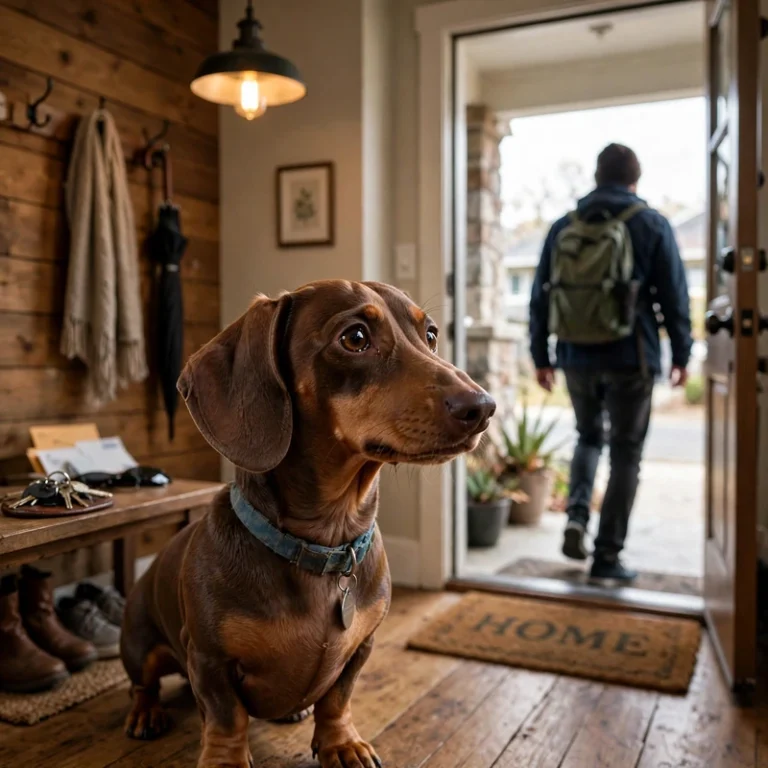
Step 2: Desensitize the departure cues. Keys jingle, shoes go on, and a bag gets picked up, then you vanish, so those cues can trigger dread.
Break that link by repeating the cues without leaving. Pick up your keys, then sit down. Put on your shoes, then make a drink.
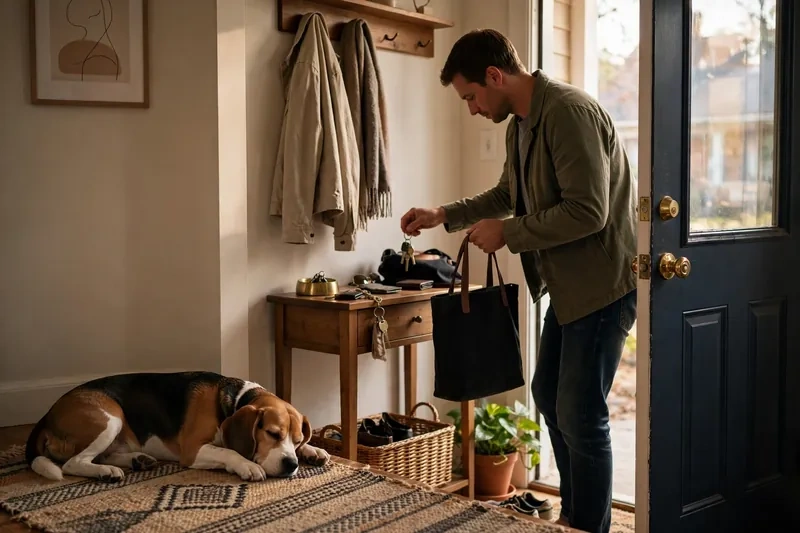
Step 3: Practice absences in seconds. Step outside, close the door, count to five, and come back in with no drama and no big greeting.
Repeat many times a day. When five seconds is boring, try ten, then twenty. Only move up when the current step is calm.
Step 4: Make departures pay. Prepare a special high-value food puzzle, a stuffed frozen chew toy, or a loaded snuffle mat that appears only when you leave.
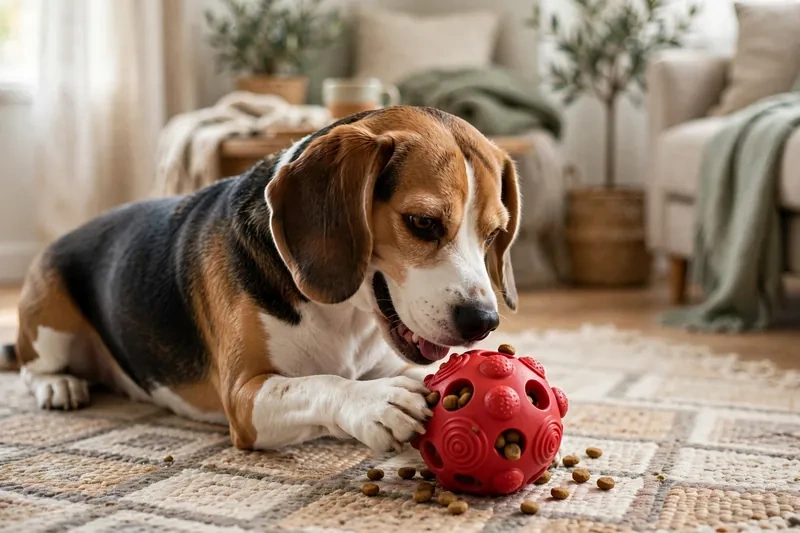
If your Beagle will not eat when alone, that is useful information. It often means panic is too high, so shorten the absence.
Step 5: Keep arrivals and departures boring. Skip the long emotional goodbye and the excited reunion. Leave quietly, return quietly, and greet calmly.
Step 6: Track progress honestly. Log the longest calm absence each day and re-record video every week or two.
Short recall games indoors also build trust and focus. See the Beagle recall guide for a staged, reward-based plan.
Departure Routines That Lower the Alarm
A predictable routine helps an anxious dog. The same calm sequence, every time, tells your Beagle what comes next.
Start the wind-down before you leave. Offer a toilet trip, a short settle on the comfort spot, and then the departure-only puzzle.
Keep your leaving cues low-key all day, not only in training sessions. Random key pickups help the cues lose their warning power.
Avoid rushing out the door in a flurry of bags, coats, and apologies. A calm exit is easier for your Beagle to copy.
A Better Alone Day: Exercise, Nose Work, and Enrichment
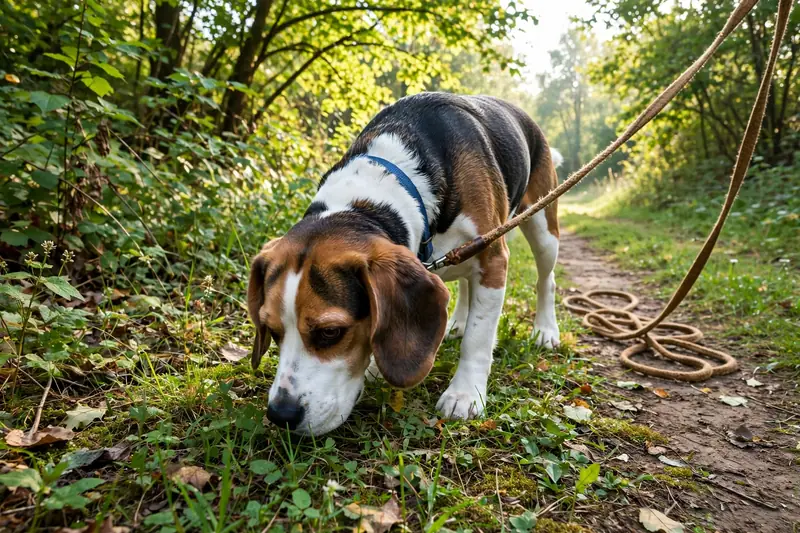
Before every real departure, give your Beagle a good sniffy walk. For a scent hound, twenty minutes of sniffing can tire the brain well.
Rotate toys so something is always novel. Leave low background sound on, like talk radio or calm music, to soften outside noises.
Scatter feeding and simple find-it games give the nose a job. A Beagle with a worked nose settles more easily than a bored one.
Enrichment supports training, but it does not replace it. A puzzle alone will not fix panic that starts in seconds.
Management While You Train
Training only works if your Beagle is not rehearsing full panic every workday in between. Arrange cover where you can.
Ask a family member, friend, or dog sitter to stay with your dog on long days. Daycare can help some dogs, but check it suits your Beagle.
If cover is impossible on a given day, a dog-proofed room with a camera is safer than a crate your dog panics in.
If panic turns into a bolt out the door, follow the Beagle running away off leash guide for a calm return plan.
Check gates and fences too, using the Beagle escapes from the yard guide, since a panicked dog may push at weak points.
For neighbors, be honest and early. Tell them you are training, share your plan in simple terms, and ask them to note the times they hear howling.
What NOT to Do
- Do not punish the howling or the destruction. Punishing an anxious dog adds fear on top of panic. Your Beagle is frightened, not spiteful.
- Do not use bark collars or any collar that startles, sprays, vibrates, or shocks. These punish the sound without touching the panic underneath, and they usually increase it.
- Do not use shock or prong collars. Positive reinforcement only is the safe basis for anxiety training.
- Do not crate a dog who panics in the crate. A stressed dog can seriously injure themselves trying to escape confinement.
- Do not get a second dog to fix it. Anxiety is usually about attachment to you, not lacking company. You can easily end up with two anxious dogs.
- Do not do dramatic goodbyes. Big emotional departures teach your Beagle that leaving is worth worrying about.
- Do not flood your dog by leaving them to panic for hours. Letting panic run its course does not teach calm, and it can make the problem worse.
Medication Only Through Your Vet
Medication is sometimes part of a broader plan, but it is a vet decision only. Never give human medicine or another dog’s medicine.
Your vet may discuss medication for severe cases, or when panic is so high that training cannot get a foothold.
Medication does not replace training. It can lower anxiety enough for learning to happen, while you keep building alone time slowly.
When Panic Needs Professional Help Urgently
Separation anxiety is a clinical behavior problem. Get professional help urgently if you see any of these signs.
- Your Beagle injures themselves trying to escape, such as broken nails, cut paws, damaged teeth, or raw skin from chewing.
- They refuse all food and cannot settle even briefly when alone.
- Escape attempts are repeated, forceful, or aimed at doors, windows, or crates.
- The behavior appeared suddenly or comes with other changes like lethargy or appetite loss. See your vet first.
- You have worked a plan consistently for several weeks with no real improvement.
- Your dog panics within seconds of your departure no matter how gradually you build.
Your vet is the right first call. They check for medical causes and can refer you to a veterinary behaviorist or a certified separation anxiety specialist.
The same panic pattern appears in other breeds, as shown in the German Shepherd separation anxiety guide and the Golden Retriever separation anxiety guide.
Setbacks and Realistic Progress
Progress is rarely a straight line. A holiday, a move, a new schedule, or a loud storm can bring a setback.
When a setback happens, drop back to the last calm duration. Rebuild from there, rather than pushing through the panic.
Judge progress over weeks, not days. A calm week on camera matters more than one good afternoon.
Mild cases often improve within four to eight weeks of consistent daily practice. More severe cases can take months.
Frequently Asked Questions
How long does it take to ease beagle separation anxiety?
Mild cases often improve within four to eight weeks of consistent daily practice. Moderate to severe cases usually need months.
Daily short sessions matter more than occasional long ones. If progress stalls for weeks, ask your vet or a certified specialist for help.
Should I crate my Beagle when I leave?
Only if your Beagle is already relaxed and happy in their crate. For a dog who loves it, the crate can feel like a safe den.
If your Beagle panics in the crate, stop crating. Use a dog-proofed room instead, and test the new space with a camera.
Will getting another dog help?
Usually not. It is most often an attachment to a specific person, not a general fear of being alone.
Some dogs settle better with company, but many still panic when their person leaves. Get a second dog for the right reasons, not as a cure.
Does leaving the TV or radio on help?
Background sound can make an empty house feel less stark and mask outside noises that trigger baying.
It helps most as part of a wider plan. Sound alone will not fix panic, but it can soften the day while you train.
My Beagle howls the second I leave. Is that definitely separation anxiety?
Not on its own. Howling right after departure is a strong clue, especially with drooling, pacing, or exit-focused destruction.
Film the first 30 to 45 minutes after you leave. The timing and the other signs together give a much clearer picture.
Can an older Beagle develop separation anxiety suddenly?
Yes. A move, a routine change, or the loss of a companion can trigger it at any age. In senior dogs, pain and cognitive change must be checked first.
Book a vet visit before you assume it is only behavior. A medical check protects your dog and shapes the right plan.
Start small, stay calm, and let your Beagle learn that leaving is safe. That steady message, repeated daily, is what builds calm alone time.
Reference
ASPCA, Separation Anxiety: https://www.aspca.org/pet-care/dog-care/common-dog-behavior-issues/separation-anxiety
Still stuck? Get a plan built for your dog.
Answer a few quick questions and get a personalized, force-free training plan in minutes.