How to Stop Your Golden Retriever Chasing Cats and Squirrels
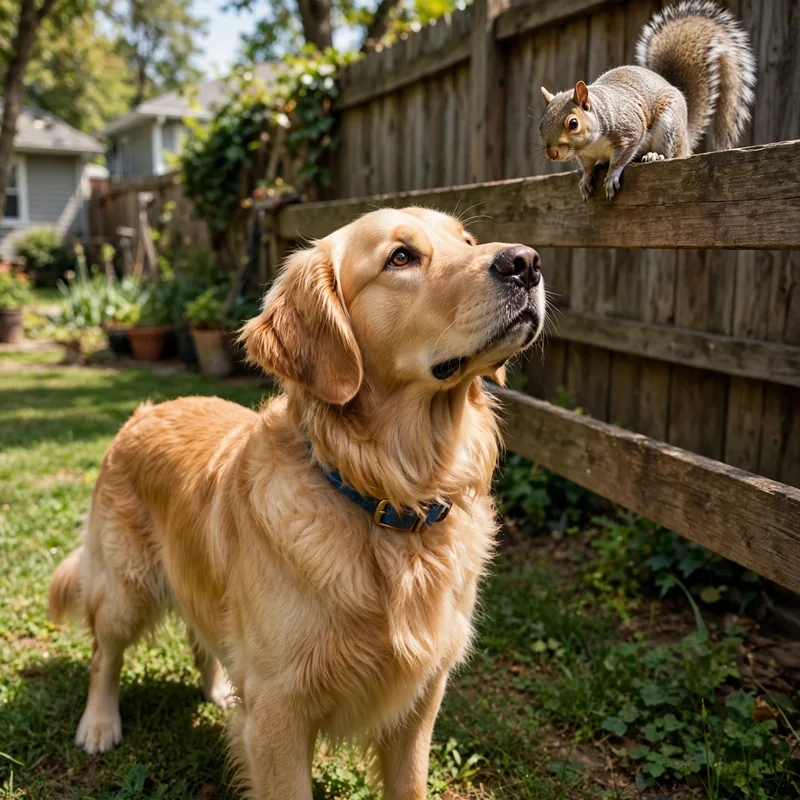
Few things spike an owner’s heart rate like watching their Golden Retriever chasing cats across the yard. To stop Golden Retriever chasing cats safely, start by understanding the instinct behind the chase instead of punishing it.
It looks wild, and it can be dangerous. But here is the important reframe: a Golden Retriever chasing cats is not being “bad” or aggressive. They are doing what retrievers were bred to do. Movement triggers a sequence in a dog’s brain: notice, stalk, chase.
You cannot delete that instinct, but you can manage it and redirect it. This guide explains why your Golden chases, how to keep everyone safe right now, and how to train a reliable “leave it” and recall over a few weeks, using positive reinforcement only.
Key Takeaways
- A Golden Retriever chasing cats or squirrels is following prey drive, a natural instinct. The chase itself is self-rewarding, so every chase makes the next one more likely.
- Safety first: leash or long line outdoors, never off-leash near roads, and give resident cats escape routes and dog-free zones with baby gates.
- Train “leave it” and a recall that cuts through distraction over weeks of gradual practice — the two skills that stop Golden Retriever chasing cats. Reward every correct choice heavily.
- Redirect the chase instinct into fetch, flirt pole play, and scent games. A dog with a job chases less.
- If your Golden fixates, cannot disengage, or has harmed a small animal, get help from a qualified professional before face-to-face work.
Why Golden Retrievers Chase Cats and Squirrels
Dogs are predators by ancestry, and every dog carries some prey drive: the instinct to notice, pursue, and grab moving things. In Goldens, that drive was shaped by their job: mark fallen game, run out, bring it back.
VCA notes Goldens love to retrieve “to the point of seeming compulsive,” and that wiring fires when a squirrel darts or a cat bolts.
Movement is the trigger. A sitting cat may get a sniff. A running cat triggers the full chase sequence.
The chase rewards itself. Even without a catch, the running feels amazing. Every completed chase strengthens the habit.
Goldens are fast and strong. A 65-pound dog at full sprint can reach a road in seconds. Management matters as much as training.
Prey drive differs from aggression: the chasing dog is typically silent and focused (hard stare, forward lean, launch), not barking and posturing. The plan differs too, so get a professional assessment if you are unsure what you are seeing.
Rule One: Manage the Environment First
Training takes weeks. Safety cannot wait. These management steps stop Golden Retriever chasing cats today, while training builds reliability for tomorrow.
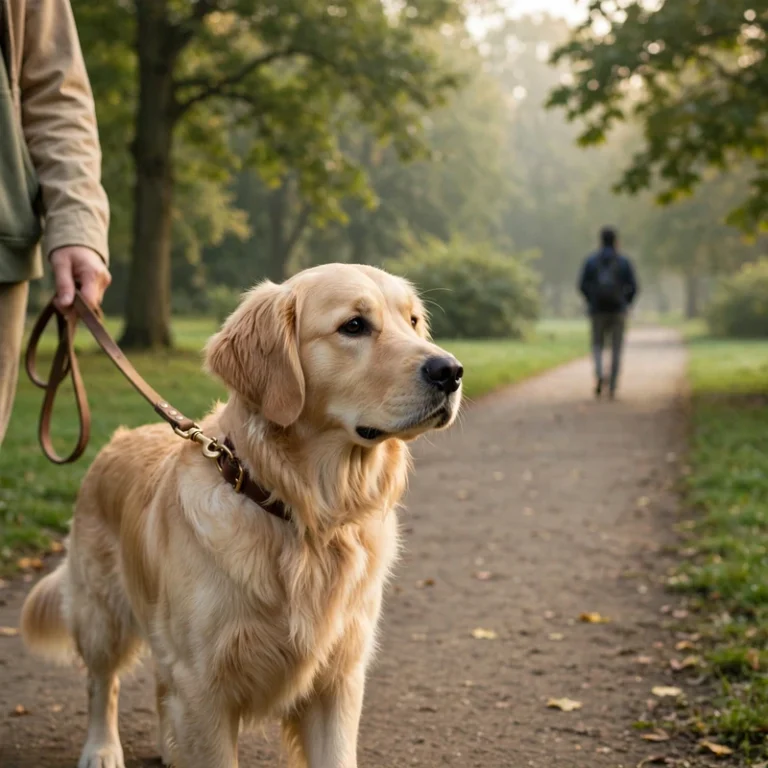
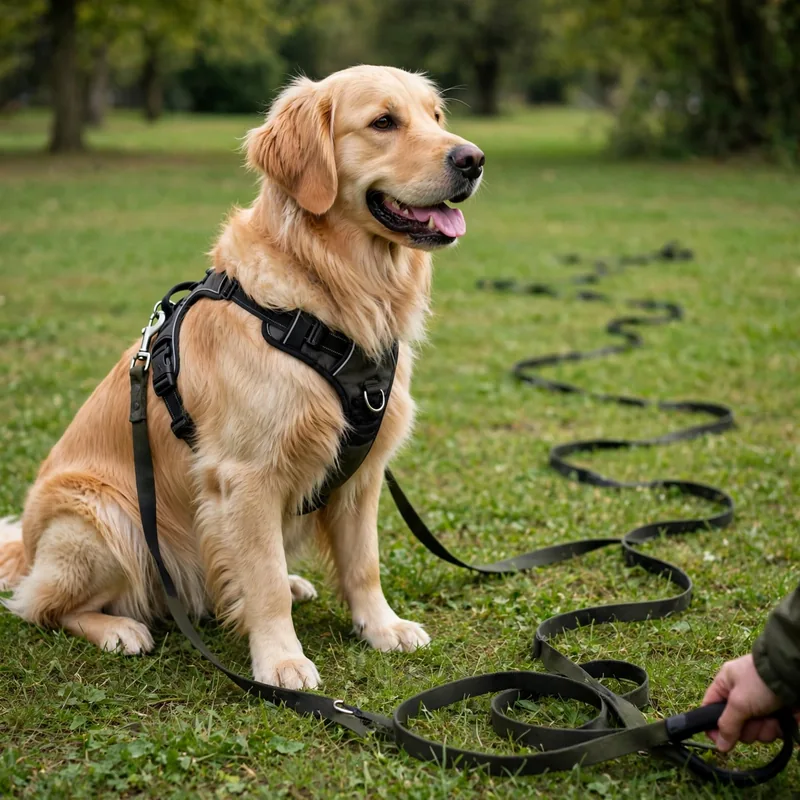
Leash or long line outdoors. Until recall is bulletproof, no off-leash time in unfenced areas. A 15 to 30-foot long line on a harness (never a collar) gives freedom with a safety brake. Never off-leash near roads.
Secure the yard. Check fences for gaps and dig spots, and supervise yard time.
Cat safe zones. The cat needs rooms and vertical spaces the dog cannot reach. Use baby gates, keep food, water, and litter in dog-free areas, and always give the cat an escape route. Never force them together.
Supervise every interaction. The dog that ignores the cat in the living room may fixate on the same cat sprinting across the yard.
Train “Leave It” and Recall to Stop Golden Retriever Chasing Cats
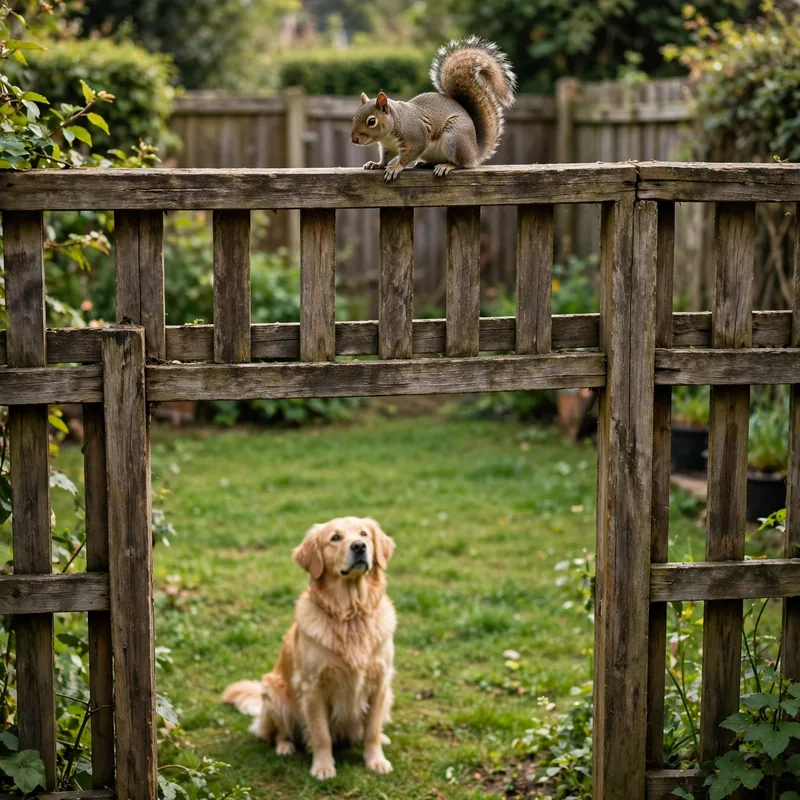
These two skills are the core of stopping a Golden Retriever chasing cats and squirrels.
“Leave it” in five steps
1. Closed fist with a treat. When your dog sniffs then pulls away, say “yes” and reward from your other hand.
2. Open the hand slightly; close it if they dive in. Reward looking away.
3. Treat on the floor, first covered then uncovered, on leash.
4. Practice with dropped food on walks and staged distractions. Reward generously.
5. Generalize: each new context is a new lesson, so go back to easy when the scenario changes.
Build a recall worth coming back for
A kitchen recall is not a squirrel-proof recall.
- Charge the word. Say “come,” then deliver something amazing. Repeat dozens of times with no distractions.
- Short distances indoors. Call, reward, release. Two-minute sessions, always ending in success.
- Add distance and distraction gradually. Yard on a long line, then smells, then a helper bouncing a ball.
- Never punish a slow recall. A scolded dog learns coming back is risky. Reward every recall, and never call for something unpleasant.
The “look at that” game
When your Golden notices a squirrel or cat at a distance, say “look at that!” cheerfully. The moment they glance at it, mark (“yes!”) and reward them for looking back at you. Start where your dog can still think, and close the distance over sessions.
A 4-Week Plan to Stop Golden Retriever Chasing Cats
Consistency beats intensity. If your goal is to stop Golden Retriever chasing cats for good, short daily sessions following this progression will take you further than one exhausting weekend.
| Week | Focus | Goal |
| 1 | Management plus foundations | Long line on every outing; cat safe zones set; “leave it” with treats on the floor; recall charged indoors |
| 2 | Generalize the basics | “Leave it” with dropped food on walks; recall in the yard on a long line; “look at that” with distant triggers |
| 3 | Raise the difficulty | Practice near busier squirrel areas at a distance; recall past rolling balls and tossed toys; reward every disengagement |
| 4 | Proof and maintain | Shorter long line; new locations; keep rewarding; add structured chase games as the legal outlet |
If you stall at any week, stay there. Rushing past your dog’s current ability is the most common reason these plans fail. Regression is normal: adolescence, a move, or a very exciting squirrel day can set you back a week. Training is not linear.
Introducing Your Golden to a Resident Cat
If your goal is to stop Golden Retriever chasing cats and the cat lives in your house, introduce them gradually.
Separation and scent. Keep them apart for the first days. Swap bedding, or rub a cloth on one animal and place it near the other’s food bowl, so each learns the other’s scent predicts good things.
Feed on opposite sides of a door. Both learn the other’s nearby presence means mealtime.
Visual barrier. Once both are relaxed, use a baby gate so they can see but not touch.
Keep your Golden leashed and reward calm behavior (glancing at the cat then looking away, lying down) with high-value treats. This counter-conditioning builds a new association: cat predicts treats, not chase.
Short, supervised meetings. When both are calm through the gate, try brief leashed meetings where the cat has escape routes. End on a good note. If the dog fixates, go back a step.
Never leave them unsupervised until you have months of calm history.
Give the Chase Instinct a Legal Outlet
A Golden that never gets to chase anything is a pressure cooker. Give the instinct somewhere legal to go.
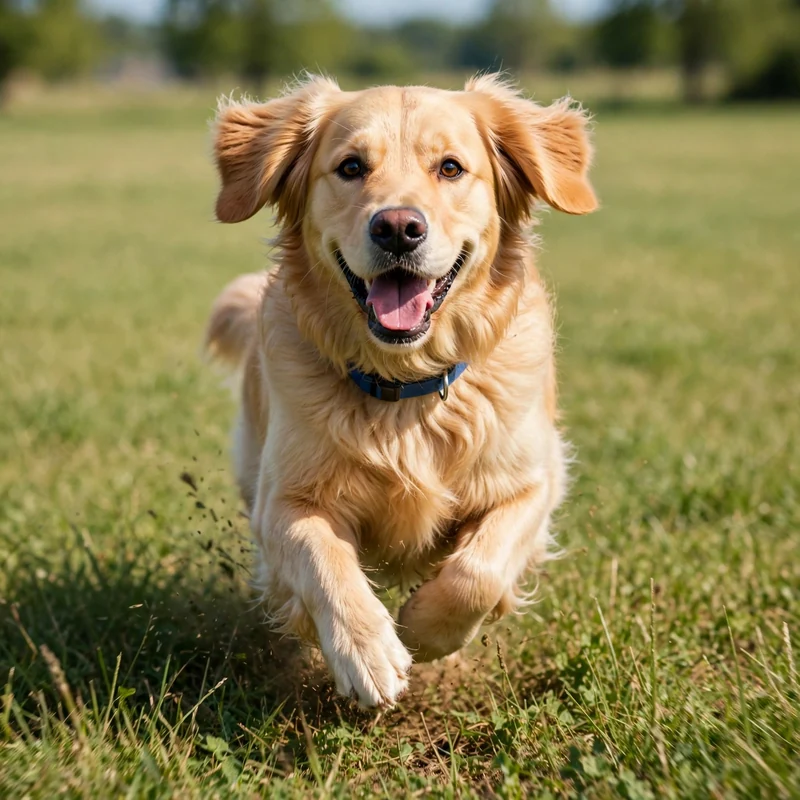
- Fetch with rules. Build “wait,” “fetch,” and “drop it” into every session. The chase becomes the reward for self-control.
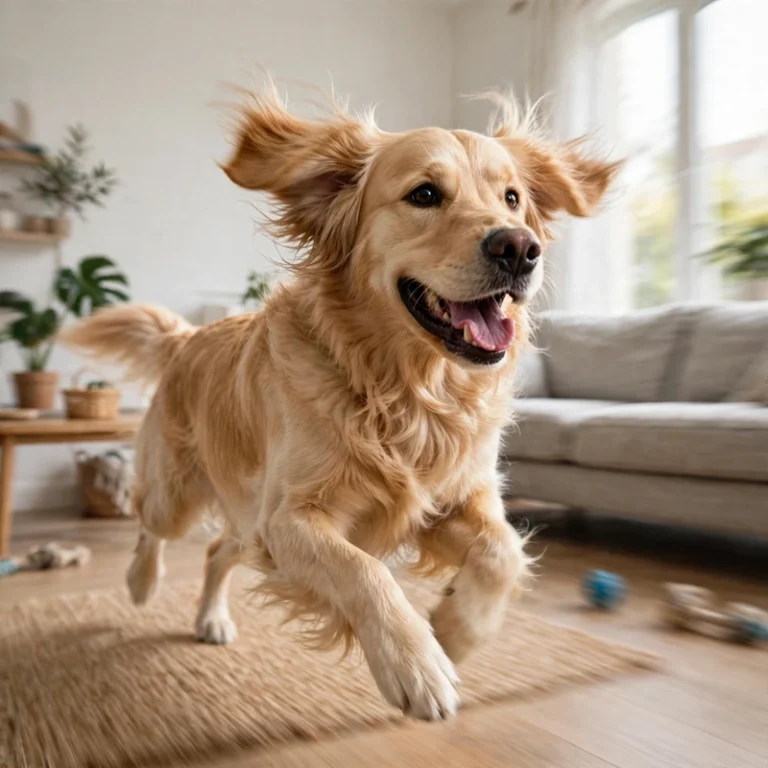
- Flirt pole. Ten minutes of lure chasing with “wait” and “drop it” pauses satisfies prey drive and trains impulse control together. Let the dog catch the lure regularly.
- Treat chases. Toss treats into grass and cue “find it.” The run-sniff-grab sequence uses the same brain circuits as a chase but ends with a snack.
- Nose work. Scent games channel the hunting brain into an activity with no victim.
No shock collars, prong collars, choke chains, leash pops, yelling, or physical punishment. These add fear and stress without teaching an alternative, and a frightened, highly aroused dog near a cat is more dangerous, not less.
When to Call a Professional
Most chase cases improve with management and training, but get professional help promptly if:
- Your Golden fixates so intensely they cannot hear you or take treats near small animals
- They have ever grabbed, shaken, or injured a cat, squirrel, or other small animal
- The behavior is escalating despite consistent training
- You see stiff posturing, hard staring, or silent stalking that feels predatory
- Children or vulnerable pets are in the mix and you are unsure about safety
Look for a certified professional dog trainer or veterinary behaviorist who uses reward-based methods. Ask what tools they use before booking. The right professional will help you stop Golden Retriever chasing cats without fear, force, or punishment. Anyone reaching for a shock collar for a prey-drive case is not the right fit.
Frequently Asked Questions
Why does my Golden Retriever chase cats but not hurt them?
Chasing and harming are different links in the predatory sequence, and many pet dogs chase without the grab-and-hold part. But “hasn’t hurt one yet” is not a safety guarantee. Manage every interaction as if it could escalate.
Can prey drive be trained out of a Golden Retriever?
No. Prey drive is an instinct and cannot be deleted — but you can still stop Golden Retriever chasing cats. Manage the environment so chasing cannot be rehearsed, train alternatives like “leave it” and recall, and redirect the drive into games.
Will neutering stop my Golden Retriever chasing cats?
Neutering is not a treatment for prey drive, which is driven by instinct and reinforcement, not hormones. Discuss timing with your vet, but do not expect it to fix chasing.
How do I stop my dog chasing squirrels on walks?
To stop Golden Retriever chasing cats and squirrels on walks, use a leash or long line, practice “leave it” and the “look at that” game at distances where your dog can still think, and reward every check-in.
Walk at quieter times while you train, and never let them rehearse the chase off-leash near roads.
My Golden is gentle with our indoor cat but chases outdoor cats. Why?
Context changes everything. Indoors the cat is familiar and predictable. Outdoors, a fleeing unfamiliar cat triggers the full chase sequence. This is normal, and exactly why management must cover every context.
Should I punish my Golden Retriever for chasing?
No. Punishment after the fact teaches nothing. Punishment in the moment (yelling, leash yanks, shock collars) suppresses behavior through fear without teaching an alternative, and can make an aroused dog more dangerous. Reward checking in, leaving it, and coming back instead.
The Bottom Line
A Golden Retriever chasing cats or squirrels is following an ancient instinct. You will not train it away, and you do not need to.
Manage the environment, build “leave it” and recall, introduce resident cats gradually, and give the drive a legal outlet. Most Goldens become far more controllable within a month or two. Stay consistent, and you will stop Golden Retriever chasing cats for good.
See our Golden Retriever behavior problems pillar guide and the Golden Retriever category. Also useful: biting the leash on walks, how to calm a hyperactive Golden, puppy nipping plan, and the German Shepherd behavior problems guide.
For more on the breed’s temperament and exercise needs, see the AKC’s Golden Retriever breed guide.