
Golden Retriever Whining for Attention? How to Respond Right
Few sounds wear a person down like a Golden Retriever whining for attention: that high, thin whine while you are on a call or making dinner.
The cruel part is that responding to it, any response at all, is often what keeps it going. This guide will help you tell a whine that needs answering from a whine that needs ignoring, and the right response to each.
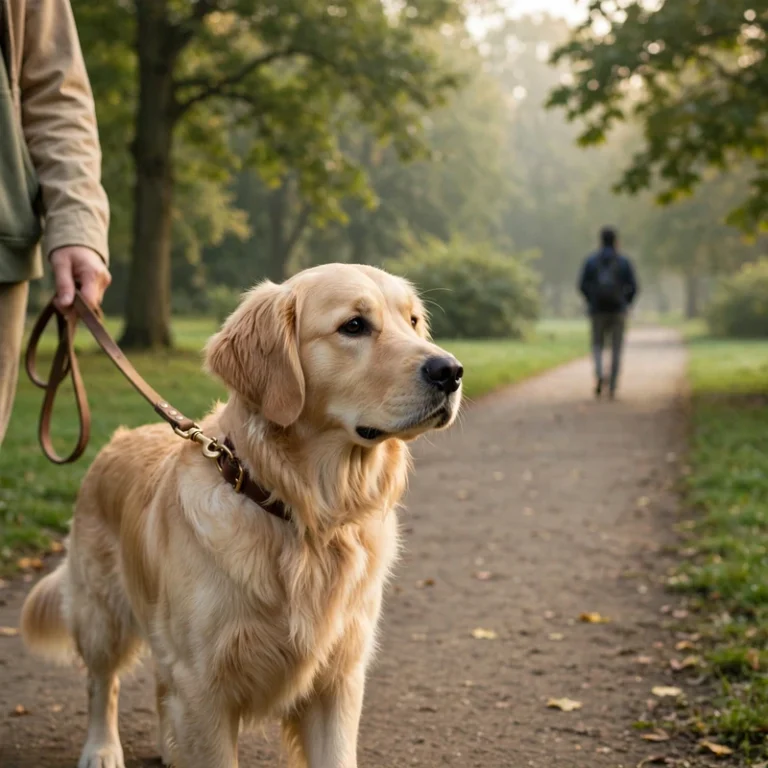
Golden Retrievers are famously people-focused. The Golden Retriever Club of America’s standard describes the temperament as eager, alert, self-confident, friendly, reliable, and trustworthy, and the flip side of that devotion is a dog that wants to be near you and noticed.
That is why attention whining is so common in this breed. It is not a flaw. It is devotion with the volume turned up.
Key Takeaways
- Whining is communication, not disobedience. Before changing it, figure out what it says: attention, boredom, anxiety, excitement, or pain.
- New or sudden whining gets a vet visit first. Pain and illness are ruled out before training begins.
- For golden retriever whining for attention: check needs, ignore the whine, and reward silence. Even scolding can reinforce it.
- Teach a better way to ask: a sit, a nudge of a toy, or going to a mat beats whining every time.
- A predictable daily routine of exercise, training, and scheduled attention prevents more whining than correction.
Why Golden Retriever Whining for Attention Is So Common
Three breed traits stack up to make Goldens whiny. First, they were bred to work in close partnership with people, so a Golden notices everything you do and comments on it. Second, they are expressive: where some breeds stare silently, Goldens “talk” with whines, grumbles, and soft woo-woos.
Third, they hate being left out; a Golden who can see you but cannot reach you has something to say about it.
The right answer to golden retriever whining for attention is not punishing a Golden for being a Golden. It is teaching them that quiet, calm behavior is what gets them what they want.
The Vet-First Rule: New or Sudden Whining
Read this before training anything. Whining is one of the ways dogs tell us something hurts. If your Golden starts whining out of nowhere, whines while getting up, lying down, or climbing stairs, flinches when touched somewhere, or the whining comes with lethargy, appetite changes, limping, or panting, stop and call your veterinarian.
Pain has to be ruled out before any behavior plan.
This matters especially with seniors, who may be dealing with joint pain or other age-related discomfort. Do not assume it is attention-seeking just because whining used to get attention. When in doubt, the vet visit comes first.
Read the Whine: What Your Golden Is Actually Saying
Responding right starts with listening right. Not all whines are the same, and the correct response to one type is the wrong response to another:
| Type of whine | Cues | Typical context | Respond by |
|—|—|—|—|
| Attention whine | Rhythmic, rising pitch; looks at you, paws or nudges | You are busy or talking to someone else | Ignore the whine; reward silence |
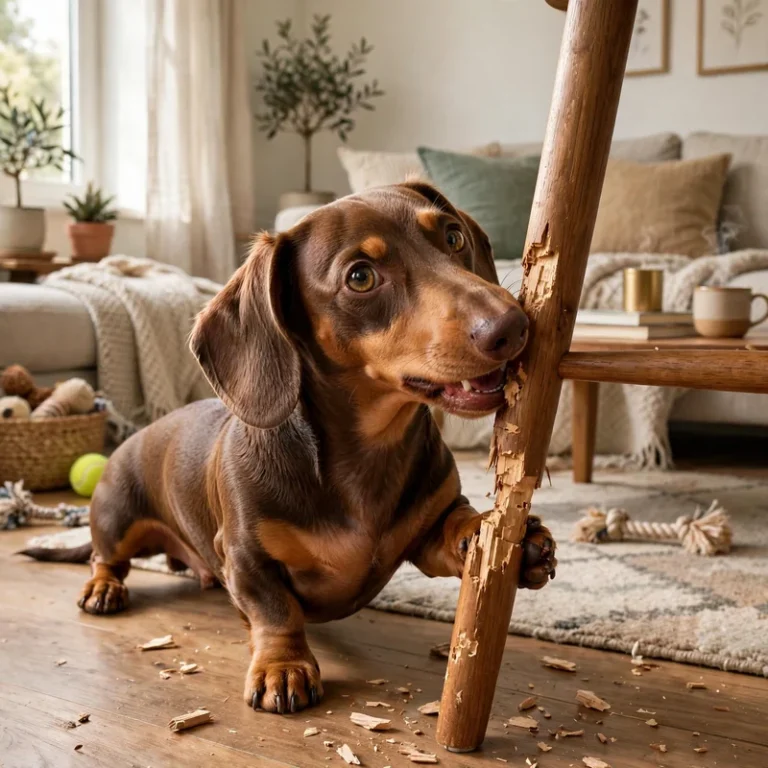
| Boredom whine | Flat, repetitive; sighing, restless pacing | Long stretch with no exercise or play | Meet the need: exercise, training, enrichment |
| Anxiety whine | High, trembling; ears back, lip licking, panting | Alone, storms, new places, departures | Calm support; gradual desensitization |
| Pain whine | Sharp or sudden; flinching, guarding a body part | Getting up, stairs, touch, out of nowhere | Vet visit first; no training until cleared |
| Excitement whine | High and breathy; wagging body, spinning | Leash comes out, playtime starts | Reward settled behavior instead |
Spend three days just noticing: when does your Golden whine, what happened right before, and what happens right after?
The whine that always starts ten minutes into your work call is an attention whine, and it has a different fix than the whine that starts when you pick up your keys.
How to Respond Right to Golden Retriever Whining for Attention
Here is the protocol for golden retriever whining for attention, in order. Skipping steps is how people end up accidentally training their dog to whine louder.
1. Check the basics first. Water, recent potty break, not overdue for a meal, enough exercise today. A dog whining for a real need is not misbehaving, and answering real needs means fewer mystery whines.
2. Ignore the whine itself, not the dog. The whining must produce nothing: no eye contact, no talking, no touching, no “stop it.” Even scolding is attention, and for a dog whose whole goal is a reaction, a reaction is a win.
3. Reward the silence. The moment there is a genuine pause, even two or three seconds, mark it calmly (“yes”) and give a small treat or brief pat. You are paying for the quiet.
Over days, stretch the pause: five seconds, then ten, then a full minute. The whine gets nothing; the quiet gets everything.
4. Teach a replacement way to ask. Dogs do not stop communicating; they switch to what works. Teach your Golden that sitting quietly near you, bringing a toy, or lying on a mat earns attention.
When the dog sits calmly beside you unprompted, that is when the petting arrives. Most Goldens offer the new behavior within weeks, because it pays better.

5. Make good behavior predictable. Whining thrives on uncertainty. A Golden who never knows when the next walk is coming will campaign all day. A Golden with a reliable daily rhythm relaxes between the scheduled good stuff.
What Not to Do About Whining
Do not yell or scold. A sharp “quiet!” is, to your dog, you joining in the noise. It raises arousal and can make an anxious dog more anxious.
Do not use spray bottles, shake cans, or physical corrections. These still circulate in old advice, including one shelter handout that suggests squirting the dog in the face.
They suppress behavior through fear and teach the dog nothing to do instead. With a soft, people-pleasing breed like the Golden, they damage trust fast.
Do not give in after holding out. If you ignore whining for ten minutes and then cave, you have taught your dog that whining for ten minutes works. Late, unpredictable rewards create the most persistent behavior there is.
Decide your plan before the whining starts; if you cannot hold the line, redirect with a food puzzle or chew instead of rewarding the whine directly.
Do not isolate the dog as the whole solution. Moving the crate to the far corner of the house so you cannot hear the whining teaches the dog nothing. Work the protocol where you live.
Preventing Whining for Attention: A Golden’s Daily Needs
The best whining fix is a day that leaves nothing to whine about. VCA’s breed guidance notes that Goldens make calm housedogs only with adequate exercise, and do best with reward-based training and mental work. In practice:
Real exercise. Daily walks plus something that uses body and brain: fetch, swimming, a sniff-heavy walk, or retrieving games. A tired Golden is dramatically less whiny. Our night-barking guide covers how evening exercise settles vocal dogs after dark.
Short training sessions. Five to ten minutes of tricks, “find it” scent games, or obedience a couple of times a day. Training is attention on your terms.
Food puzzles and chews. Feed at least one meal from a food-dispensing toy or snuffle mat, and keep a long-lasting chew on hand for busy times.

Scheduled together time and rest. Build in predictable connection, a morning session, an evening wind-down, so the dog stops campaigning for attention.
And make sure young Goldens get their rest: puppies need around 18 to 20 hours of sleep a day according to the AKC, and overtired puppies whine more, not less. Mouthy young Goldens often pair whining with nipping at feet, so if that sounds familiar, our ankle-biting guide tackles the movement-triggered kind.
When Whining Isn’t Just Attention-Seeking
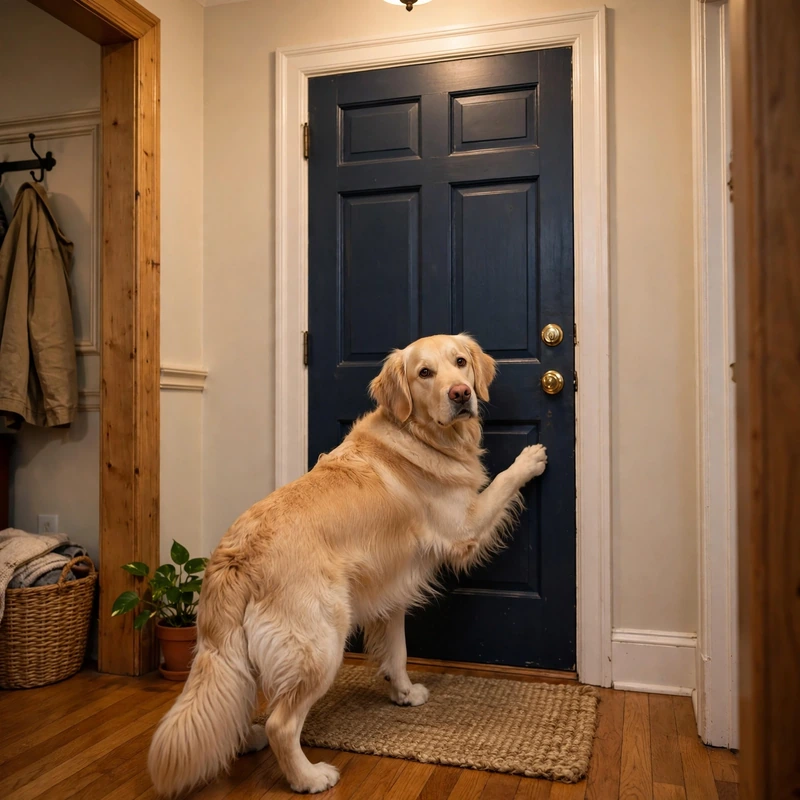
Some whining needs more than the protocol above. If your Golden whines, paces, pants, or drools specifically when left alone, especially with destruction at doors or windows, house soiling by an otherwise trained dog, or escape attempts, that points toward separation anxiety rather than ordinary golden retriever whining for attention.
An anxious dog is genuinely distressed, and the fix involves gradual desensitization to departures, sometimes with veterinary support. Talk to your veterinarian and consider a qualified force-free trainer or veterinary behaviorist.
The rule of thumb: golden retriever whining for attention stops when the dog gets what they want or gets distracted. Whining driven by anxiety, pain, or compulsion does not stop so easily, and that difference is your cue to get help.
Frequently Asked Questions
Should I ignore my Golden Retriever’s whining completely?
No, not blindly. Ignore the attention whine after checking real needs, but never ignore whining that could signal pain, a potty emergency, anxiety, or a genuine request. The skill is telling them apart with the table above, then responding to each type appropriately.
Why does my Golden Retriever whine when I stop petting them?
Because it worked before. If whining has ever restarted the petting, your Golden learned the formula: whine equals more affection. Wait for a pause before resuming petting, so the quiet restarts the good stuff.
My Golden whines in the crate at night. What should I do?
Rule out needs first: young puppies need nighttime potty breaks, and a new puppy may be genuinely distressed at separation.
Make the crate comfortable, keep departures and returns boring, and reward quiet moments in the crate during the day. Panicked whining with drooling or escape attempts suggests separation anxiety: get professional guidance.
Will getting a second dog stop the whining?
Not reliably. A second dog sometimes reduces boredom, but attention whining is about you, not canine company. Fix the training and routine first; add a dog later only if you actually want one.
How long does it take to stop attention whining?
With real consistency, most owners see golden retriever whining for attention fade within one to two weeks. Expect a brief extinction burst first: the whining often gets louder for a few days before it fades, a sign the old strategy is failing.
Is whining ever okay in a Golden Retriever?
Yes. Soft whining during greetings, play, or happy anticipation is normal Golden “talking.” You are not trying to produce a silent dog, just to retire the demanding whine that runs your household.
A whining Golden is a communicating Golden, and communication can be redirected. Respond to golden retriever whining for attention with the protocol above: check the basics, ignore the whine, and reward the quiet.
If the whining comes with pacing, drooling, or destruction when you leave, it may be separation anxiety rather than simple attention-seeking, and a veterinary behaviorist can help you build a plan.