Hyperactive Golden Retriever? How to Help Them Calm Down
If you live with a hyperactive Golden Retriever, you know the drill: the jumping, the zoomies, the inability to sit still for ten seconds. Here is what most owners miss: hyperactivity in a Golden is almost never a personality flaw.
VCA Animal Hospitals describes the breed as “eager to please, but can be overly exuberant,” and notes a Golden is a calm housedog “only if given adequate exercise.” Your dog is not broken. They are a sporting breed with deep energy reserves and a brain that needs a job.
This guide explains why your hyperactive Golden Retriever acts this way, how to meet their real needs, and how to train calmness step by step, with positive reinforcement only.
Key Takeaways
- A hyperactive Golden Retriever is usually an under-exercised or under-stimulated one. VCA notes Goldens are calm indoors “only if given adequate exercise.”
- Calmness is trainable. Rewarding settled behavior and teaching a “settle on the mat” routine beats scolding excitement.
- Overtired puppies act wild, not sleepy. The AKC says puppies need 18 to 20 hours of sleep daily.
- Build a routine with exercise, mental games, training, and real rest. Most Goldens improve within weeks.
- Sudden restlessness or inability to settle can signal pain or illness. See your vet.
Why Your Hyperactive Golden Retriever Is So Hyperactive
Golden Retrievers were developed as gundogs, bred to spend long days outdoors retrieving game. That heritage still runs through your dog’s veins.
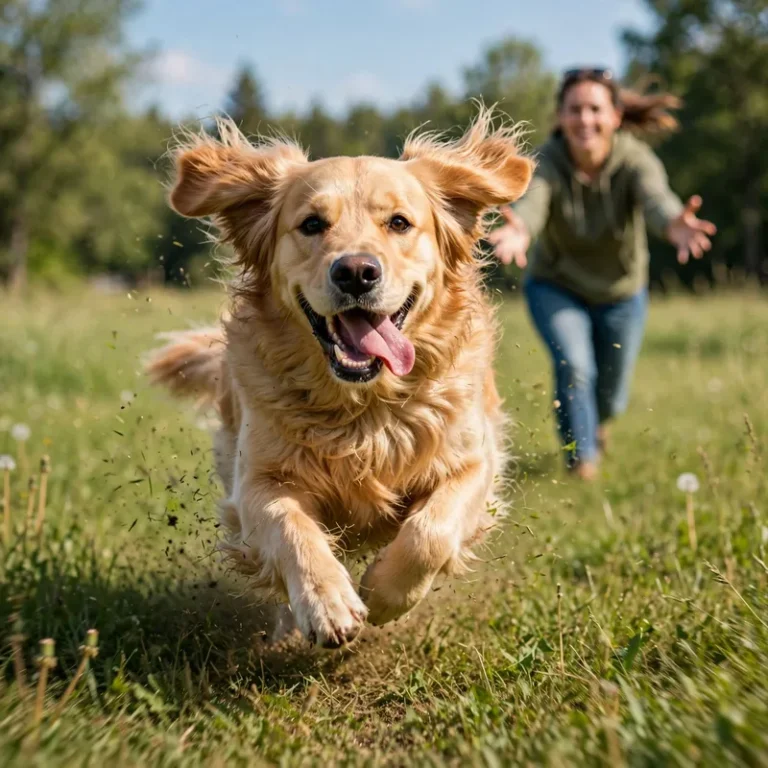
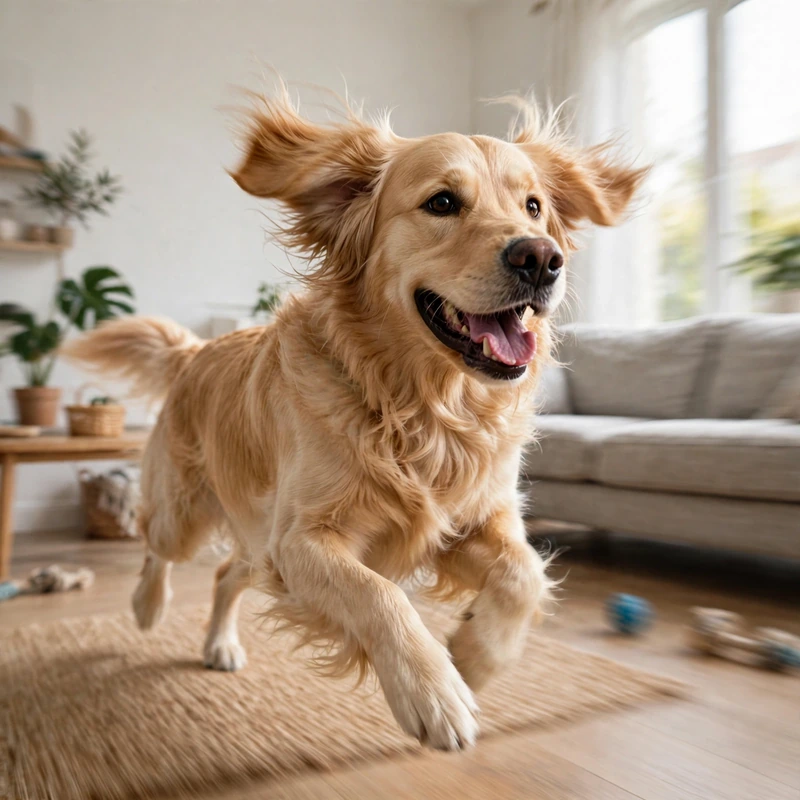
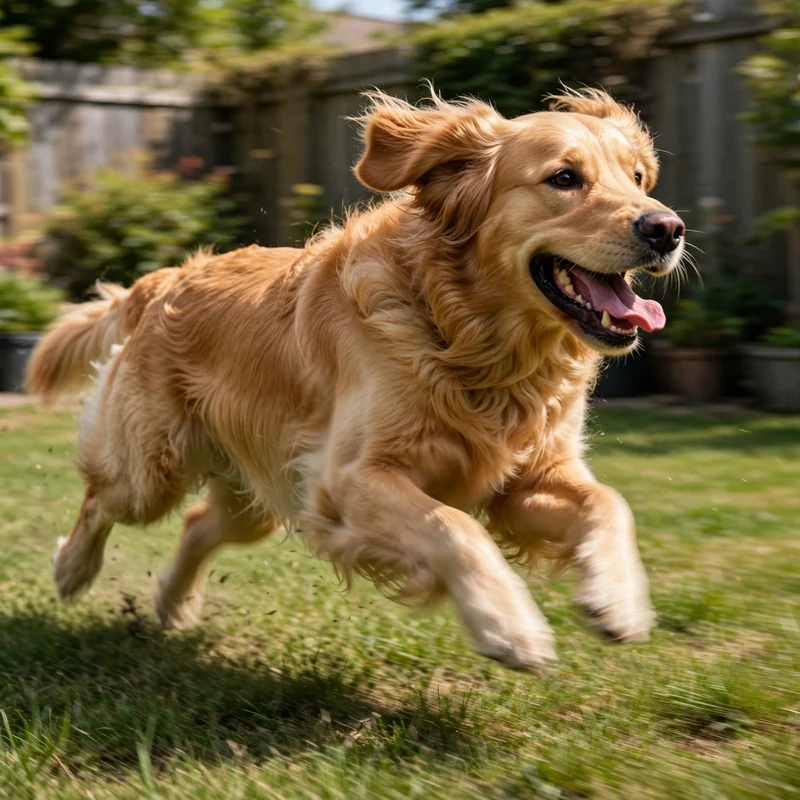
A Golden that spends the day indoors with one short walk is like a marathon runner locked in a small room. The energy comes out as zoomies, jumping, counter surfing, and the classic Golden tornado spin.
Age matters too. Puppies and adolescents, roughly 8 weeks to 2 years, are at peak energy. Many owners report settling between 2 and 3 years old, but waiting it out without training just rehearses bad habits.
Three overlooked drivers:
Unmet mental needs. An hour of running without thinking often brings home a dog that is just as wired. VCA lists “obedience training or other mental games” as important alongside physical exercise.
Overtiredness. An overtired puppy behaves like an overtired toddler. The AKC reports puppies need 18 to 20 hours of sleep daily. Evening zoomies are often a missing nap, not a missing walk.
Accidental rewards. If jumping earns attention, even scolding, wildness works. If calmness earns nothing, it dies out. Most households accidentally pay for the exact behavior they want to stop.
How Much Exercise Does a Hyperactive Golden Retriever Need?
For a healthy adult Golden, plan on roughly 60 to 90 minutes of physical activity daily, split into sessions, plus mental enrichment.
VCA recommends daily walks, jogs, hikes, or play for the breed, with swimming and retrieving as favored methods. Swimming is ideal: low-impact and deeply satisfying to a retriever.
Match exercise to the dog. A one-year-old field-line Golden needs far more than a seven-year-old companion. Check with your vet on the right amount, especially for puppies, seniors, or dogs with joint issues.
For puppies, keep it short. Some trainers use the “five-minute rule”: up to five minutes of structured exercise per month of age, twice daily. Avoid long forced marches on pavement for growing puppies, but do not skimp on free play.
Mix up the week with fetch (with “drop it” built in), swimming, sniffy walks where the dog can sniff everything, five-minute training sessions, and puzzle feeders for at least one daily meal.
Teach Your Hyperactive Golden Retriever to Settle
You cannot exercise a Golden into permanent calmness. At some point you have to teach them that settling down is a behavior worth doing. The most effective method is called capturing calmness, and it is beautifully simple.
You cannot exercise a Golden into permanent calmness. The most effective method is called capturing calmness: rewarding your dog for choosing to be calm.
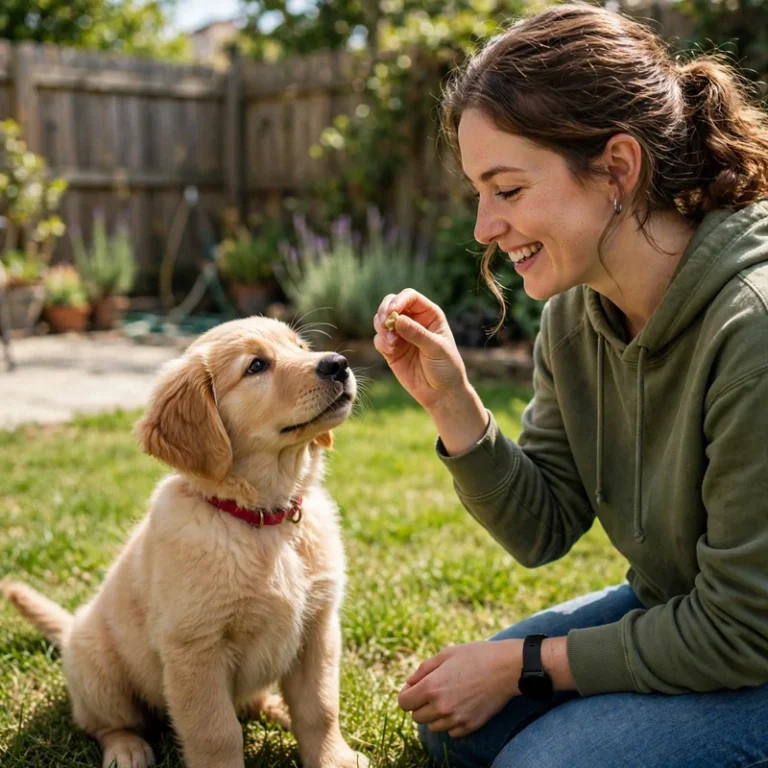
Step 1: Catch calm moments. Keep treats handy. Whenever your Golden lies down quietly on their own, say “yes” and deliver a treat calmly between their paws. Keep your energy low so the reward feels like part of the calm.
Step 2: Repeat for weeks. After dozens of paid calm moments, your dog starts offering calm behavior on purpose because it has a history of paying off.
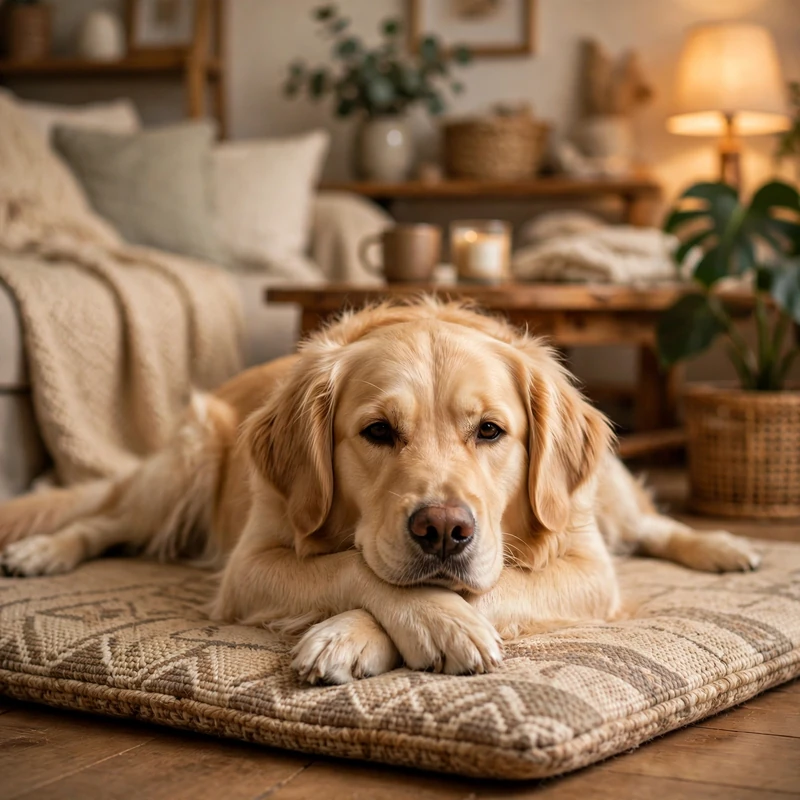
Step 3: Add the mat. Place a mat in your living area and reward any interest: a glance, a step on, a sit, a down. Build up to your dog choosing the mat when the house gets busy. This becomes your tool for doorbells and guests.
Step 4: Add distractions. Once the mat works in a quiet room, practice with the TV on, people walking past, then the doorbell. Reward staying settled. If they break, make it easier and try again.
Reward within a couple of seconds so the dog connects the treat to the calm. Never punish excitement with yelling, leash pops, alpha rolls, or physical correction. Those suppress behavior through fear without teaching an alternative.
A Sample Daily Routine for a Hyperactive Golden Retriever
Hyperactive dogs thrive on predictability. A routine tells your Golden when fun happens and when rest happens, which lowers the constant arousal of “maybe something exciting is about to happen.” Here is a template for a healthy adult Golden. Adjust times to your life.
| Time | Activity |
|—|—|
| Morning | 30 to 40 minute walk or jog, mostly sniffy; breakfast from a puzzle feeder |
| Midday | 10 minute training session; short potty walk |
| Afternoon | Fetch or swimming, 20 to 30 minutes; settle-on-mat practice |
| Evening | Short relaxed walk; dinner; quiet chew on the mat |
| Night | Final potty break; lights low; bed in a quiet spot |
Notice the rest built in. An adult dog that never learns to do nothing will struggle to switch off. For puppies, shorten everything and add naps: one hour awake followed by a two-hour nap, repeated through the day, produces a dramatically calmer puppy than six wired hours straight.
Impulse Control Games That Burn Energy
Impulse control games teach your hyperactive Golden Retriever to think before acting, and they double as energy burners. Practice a few minutes daily.
Find it. Toss treats into grass and say “find it.” Sniffing and searching is calming and tiring, and a great pre-guest ritual: scatter treats before opening the door so your dog’s nose is busy instead of their legs.
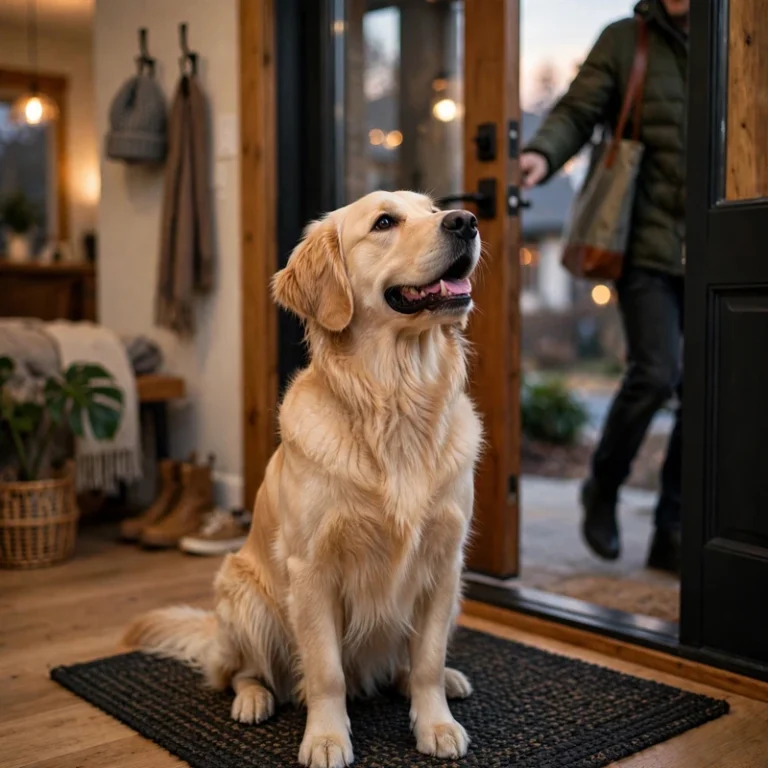
Wait at the door. Ask for a sit before the door opens. Open it a crack. If they hold the sit, open wider and reward. If they break, close the door and try again. Calm behavior unlocks the exciting thing.
The name game. Say your dog’s name. The instant they look at you, reward. Practice everywhere until their name cuts through distraction. This builds your emergency recall too.
Flirt pole play. Ten minutes of lure chasing with “drop it” and “wait” pauses drains energy while practicing self-control. Let the dog catch the lure sometimes.
Go to your mat. The single most useful calm behavior in a busy household. A dog lying on a mat cannot jump on guests.

When Hyperactivity Needs a Vet Visit
Most hyperactive Golden Retrievers are healthy dogs with unmet needs. But book a vet visit if you notice any of these:
- A sudden change in energy or restlessness in a previously calm dog
- Inability to settle with panting, pacing, or whining at night
- Hyperactivity paired with weight loss, increased thirst, or digestive issues
- Repetitive behaviors like spinning or tail chasing that you cannot interrupt
- Any behavior change after injury, illness, or a new medication
Pain and medical issues can masquerade as behavior problems. A dog that cannot get comfortable because of hip pain or an ear infection will look hyperactive. Rule out the medical before doubling down on training.
If behavior tips toward aggression or severe anxiety, ask your vet for a referral to a qualified animal behaviorist.
Frequently Asked Questions
At what age do Golden Retrievers calm down?
Many owners report noticeable settling between 2 and 3 years old, but variation is wide and it is not guaranteed. Training calmness, meeting exercise needs, and building a routine matter far more than waiting for a birthday.
Why is my Golden Retriever so hyper all of a sudden?
A sudden change warrants a vet visit first. Pain, illness, anxiety, or a routine change can all cause restlessness. If your vet clears them medically, look at what changed in exercise, sleep, and daily structure.
Can you train a hyperactive Golden Retriever to be calm?
Yes. Rewarding calm moments, teaching a settle-on-the-mat routine, and building impulse control through games all teach your dog that settling down pays off. Yelling or leash corrections only suppress behavior without teaching an alternative.
How much exercise does a hyperactive Golden Retriever need daily?
A healthy adult typically does well with roughly 60 to 90 minutes of physical activity per day, split into sessions, plus mental enrichment. Puppies need less structured exercise. Adjust to your dog and check with your vet if unsure.
Do calming supplements or anxiety vests work?
Some owners report mild benefits from pheromone diffusers or pressure wraps, but evidence is mixed and they are no substitute for exercise, training, and routine. Talk to your vet before trying any supplement.
Is my hyperactive Golden Retriever getting enough sleep?
Maybe not. The AKC reports puppies need 18 to 20 hours of sleep daily, and overtired puppies are often the wildest. If your Golden never switches off, try scheduled naps in a quiet crate or room.
The Bottom Line
A hyperactive Golden Retriever is not giving you a hard time. They are having a hard time meeting the needs of a high-energy sporting breed in a pet lifestyle.
Give them the exercise, mental work, and sleep they need, train calmness like any other skill, and build a routine they can relax into. Most owners see real change within weeks.
For the full picture, start with our Golden Retriever behavior problems pillar guide and the Golden Retriever category. For evening crazies, see Golden Retrievers barking at night; for mouthy energy, how to stop puppy nipping and our puppy chewing guide. The German Shepherd behavior problems guide covers similar settle-training principles.
Golden Retrievers were bred as energetic Scottish gundogs, which explains much of the exuberance described above. For more on the breed’s history and temperament, see the AKC overview of the Golden Retriever.