How to Stop Your Golden Retriever Chewing Furniture
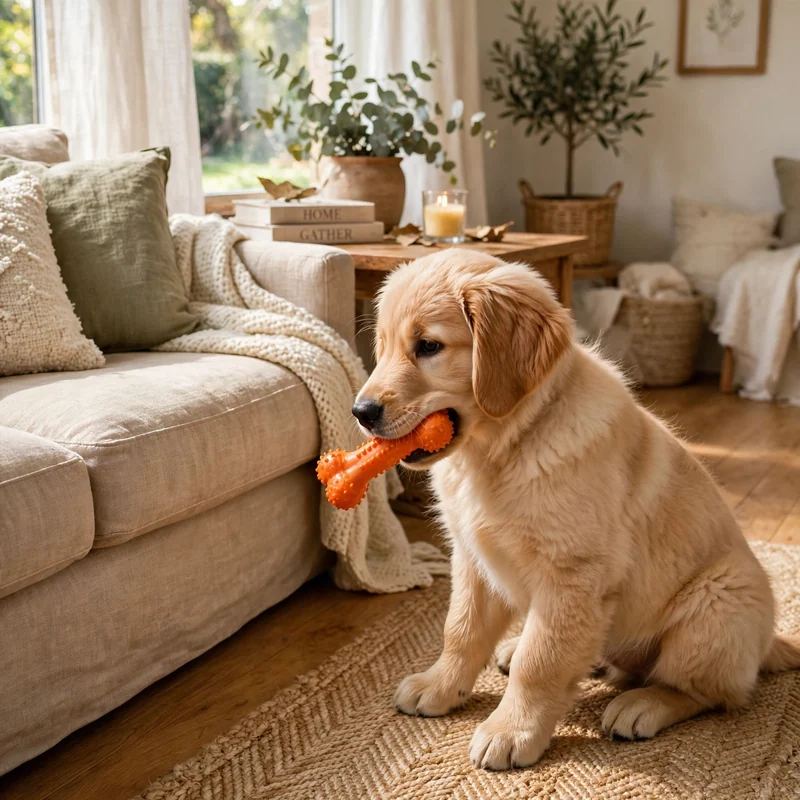
The arm of your sofa has a new scalloped edge. The coffee table leg looks like a beaver visited overnight. Golden retriever chewing furniture is one of the most expensive behavior problems this breed offers, and one of the most normal.
Chewing is what dogs do. The question is never how to stop your Golden chewing. It is how to decide what they chew.
This guide covers why Goldens target furniture, the exact redirect protocol that works, how to proof your home, and when chewing signals something deeper like anxiety that needs a different approach.
Key Takeaways
- Golden retriever chewing furniture is driven by breed wiring (mouth-oriented retrieving breed), teething, boredom, or anxiety, not spite.
- You cannot train chewing away, only redirect it. The winning formula is: manage access, supply better chew options, and reward the dog for choosing them.
- Interrupt calmly and trade up: swap the table leg for a high-value chew, then praise the switch. Never chase, yell, or punish after the fact.
- Taste deterrents can help protect specific items but only work alongside redirection and management, never as the whole plan.
- Chewing paired with distress when left alone, escape attempts, or self-injury points to separation anxiety and needs a vet or behavior professional, not just more toys.
Why Golden Retriever Chewing Furniture Is So Common
Breed wiring. The Golden Retriever Club of America’s breed guide describes a gundog developed in Scotland and England in the late 19th century to find, pick up, and carry game. The breed’s development is chronicled in the Golden Retriever breed history on Wikipedia.
Generations of selection for a busy, capable mouth produced a dog that experiences the world orally. An under-employed Golden mouth goes looking for work, and furniture is available.
Teething and adolescence. Puppies chew to relieve sore gums while adult teeth come in, usually between about four and six months, and the heavy chewing phase often runs through adolescence.
Young Goldens also chew from sheer exploratory drive: mouthing is how they investigate texture and taste. It is no surprise that golden retriever chewing furniture complaints peak during this mouthy phase.
Boredom and unspent energy. The leading cause in adult dogs. A Golden with energy to burn finds chewing physically satisfying and self-rewarding.
Destructive chewing that happens mainly when the dog is under-exercised or left without enrichment is a management problem first. Most adult golden retriever chewing furniture cases trace back to this gap.
Anxiety. Chewing that clusters around departures, with drooling, pacing, vocalizing, or escape attempts at doors and windows, suggests separation-related distress rather than casual boredom. Anxious chewing needs a different plan, because no chew toy fixes panic.
Taste and texture. Wood, leather, and upholstery have interesting textures and often carry food smells, sweat, or salt from human hands.
Once a dog discovers the sofa arm tastes interesting, the habit has a built-in reward. That built-in reward is exactly why golden retriever chewing furniture is so persistent.
The Redirect Protocol: What to Do in the Moment
When you catch your Golden chewing furniture, you have about three seconds to respond well. Here is the sequence:
1. Stay calm and upbeat. No yelling, no chasing. An exciting reaction turns furniture into the best toy in the house.

2. Interrupt gently. A cheerful “oops” breaks focus without frightening the dog. If they are deeply engaged, show the trade item first. A calm interrupt keeps golden retriever chewing furniture from escalating into a chase game.
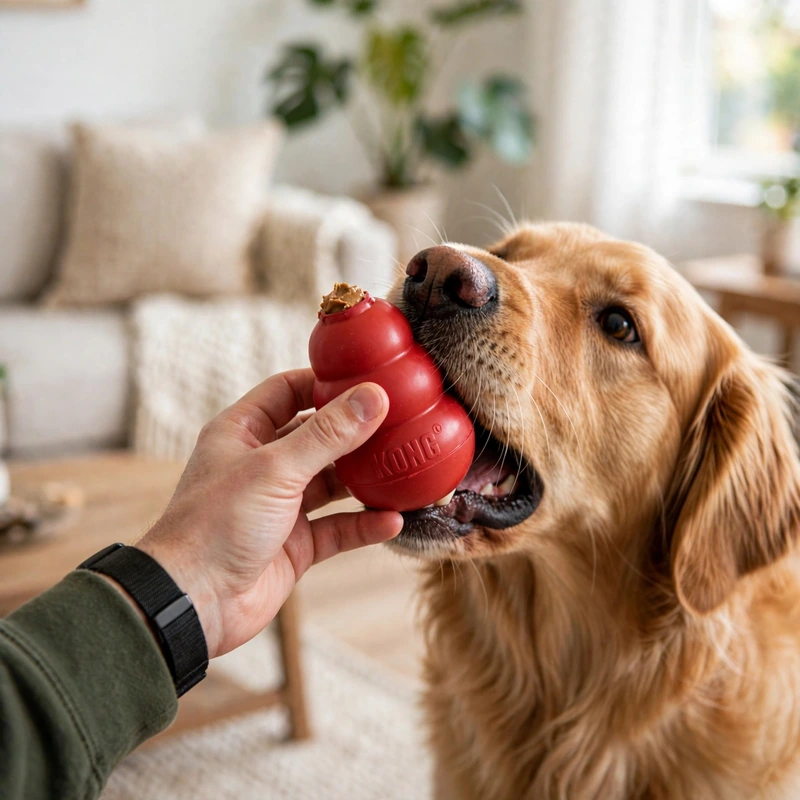
3. Trade up. Offer something better than the table leg: a stuffed Kong, a bully stick, a frozen lick mat. Trading teaches your dog that giving up forbidden items produces excellent things.
4. Reward the switch generously. Praise and a treat the moment they engage with the legal chew. You are paying for the decision to chew the right thing.
5. Manage the scene. Close the living room door, use a baby gate, or tether the dog near you with a chew so the rehearsal stops.
What never to do: chase the dog (it becomes keep-away), yell or physically punish (it creates fear without teaching anything, and punishment after the fact cannot connect to the act), or use shock, prong, or choke collars as deterrents. The American Veterinary Society of Animal Behavior’s 2021 position statement recommends only reward-based methods for all training and behavior modification, and advises that aversive methods should not be used.
Build a Better Chew Menu
Dogs chew different things for different reasons, so one toy rarely covers it. Offer a rotating menu matched to the need.
| Chew need | Good options | Notes |
|—|—|—|
| Long, satisfying gnawing | Stuffed and frozen Kongs, Toppls, lick mats | Freezing makes them last much longer; rotate fillings |
| Hard chewing | Appropriately sized bully sticks, yak chews, split antlers (supervised) | Always supervise; remove when small enough to swallow |
| Shredding and dissecting | Snuffle mats, cardboard boxes with treats inside, plush toys for supervised de-stuffing | Satisfies the urge to tear without costing you a sofa |
| Teething pain (puppies) | Frozen carrots, frozen washcloths, puppy teething toys | Cold soothes sore gums |
| Boredom between activities | Puzzle feeders, scatter feeding in the yard | Makes meals into a job instead of a 30-second inhale |
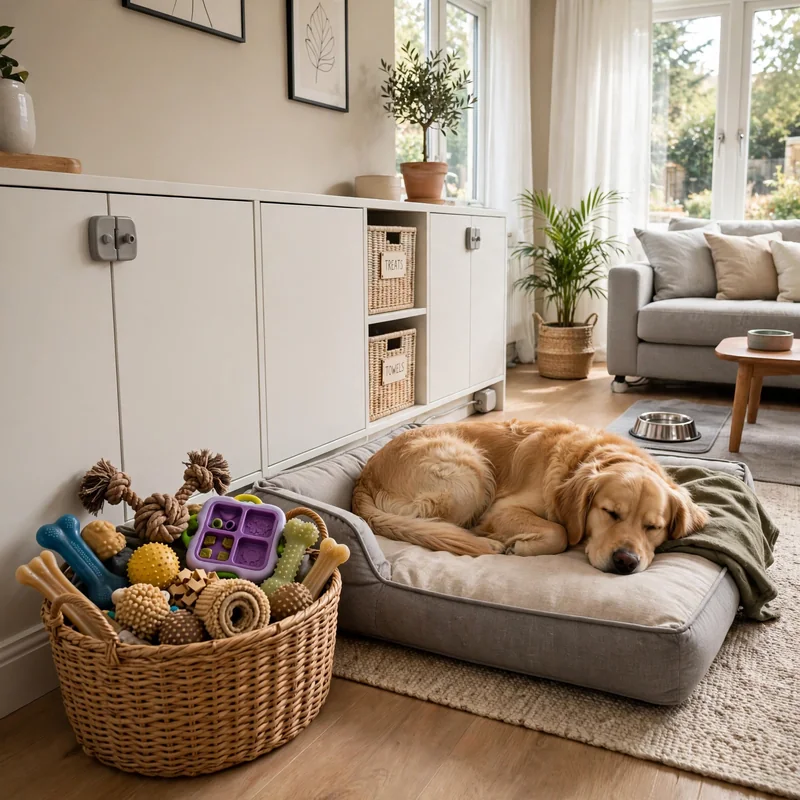
Rotate the options every few days so they stay novel. A chew your dog sees every day becomes furniture; a chew that reappears after a week is exciting again.
Proofing Your Home Against Golden Retriever Chewing Furniture
Redirection works best when the wrong choices are simply unavailable during the learning period.
- Limit unsupervised access. Use baby gates, closed doors, or a puppy-proofed room when you cannot watch. Chewing rehearsed daily becomes habit; chewing prevented daily fades.
- Protect high-value targets. Taste deterrent sprays (bitter apple and similar) can discourage repeat visits to a specific table leg or windowsill, but test on a hidden spot first and reapply as directed. Treat deterrents as backup, not the plan.
- Exercise before alone time. A Golden that has had a good walk, a training session, and a sniff-heavy outing is far more likely to nap than to renovate.
- Set up for success on departure. Leave a frozen stuffed Kong or a puzzle feeder for the first stretch of alone time, so the dog’s mouth has a legal job from the start.
- Check the environment. Dogs often chew out of frustration at barrier situations too. Make sure confinement areas are comfortable, appropriately sized, and never used as punishment.
When Chewing Means Anxiety, Not Boredom
Some chewing needs more than toys and gates. Suspect separation-related distress if the destruction focuses on exit points (doors, windowsills, blinds), happens mainly in the first stretch after you leave, and comes with drooling, panting, pacing, vocalizing, house soiling in a housetrained dog, or attempts to escape that risk injury. If you see this pattern, talk to your veterinarian and consider a referral to a certified behavior professional. Anxiety-driven destruction does not respond to more chew toys, and punishing a panicking dog makes everything worse. Our guide to destructive behavior when left alone explains the same assessment logic in depth.
Safety note: chewing furniture is not just a property problem. Splinters, swallowed upholstery foam, nails, staples, and wood glue can injure the mouth, cause choking, or create intestinal blockages. If your dog swallows non-food material, vomits repeatedly, stops eating, strains, or seems painful or lethargic, see your vet promptly. Puppies that swallow chunks of toys or bedding need the same urgency.
Why does my Golden Retriever chew furniture but not his toys?
Because the furniture is more rewarding: interesting texture, your scent, always available. The toys may be boring, too hard, or just old news. Make the legal options win: rotate novel chews, stuff and freeze food toys, match the chew type to what your dog likes, and reward every choice of the toy.
Will bitter apple spray stop my Golden chewing furniture?
It can help as one layer. Taste deterrents make a specific spot unpleasant, discouraging repeat visits to that table leg. But they don’t teach the dog what to chew instead, they wear off, and some dogs chew through the taste. Use deterrents on specific items while you run the real program: management, a better chew menu, and rewarded redirection.
At what age do Golden Retrievers stop chewing furniture?
There is no fixed expiry date. Intense puppy chewing usually eases as teething finishes, but under-exercised adult Goldens will chew furniture at any age. Rather than waiting for maturity, build the habits now: daily exercise, mental work, a rotating chew menu, consistent redirection. Dogs don’t age out of habits that keep paying off.
My Golden only chews when left alone. Is it separation anxiety?
Not necessarily. Many dogs chew when alone simply because they’re bored and unsupervised, which is why prevention and enrichment solve most cases. Separation anxiety looks different: destruction focused on doors and windows, drooling, vocalizing, pacing, escape attempts, or distress that starts soon after departure. If you see that cluster, or if the behavior is intense and the dog seems genuinely panicked rather than casually destructive, consult your vet or a behavior professional.
Should I punish my dog for chewing the sofa?
No. Punishment after the fact doesn’t work because dogs can’t connect your anger now with chewing that happened minutes or hours ago.
Even catching them in the act, yelling or physical corrections create fear and can damage your relationship without teaching what to chew instead. The AVSAB’s 2021 position statement recommends only reward-based methods for behavior problems. Interrupt calmly, trade for a legal chew, and reward that choice instead.
My puppy swallowed part of a toy. What should I do?
Monitor closely and call your vet for guidance. Small soft pieces often pass, but watch for vomiting, loss of appetite, lethargy, abdominal pain, or straining, which can signal a blockage and need prompt veterinary care.
Prevent repeats by supervising chew sessions, choosing appropriately sized chews, and removing toys once they start breaking into swallowable pieces.
—
Golden retriever chewing furniture looks like defiance and is almost always just an unmet need with a mouth attached. Supply the right outlets, make the wrong ones unavailable, reward the good choices, and the furniture survives.
For the complete breed behavior picture, see our Golden Retriever behavior problems pillar and browse the Golden Retriever category. Related mouthy habits are covered in puppy chewing everything, chewing shoes, and counter surfing.
For the same redirect principles applied to another breed, the German Shepherd furniture-chewing guide is a useful companion read.