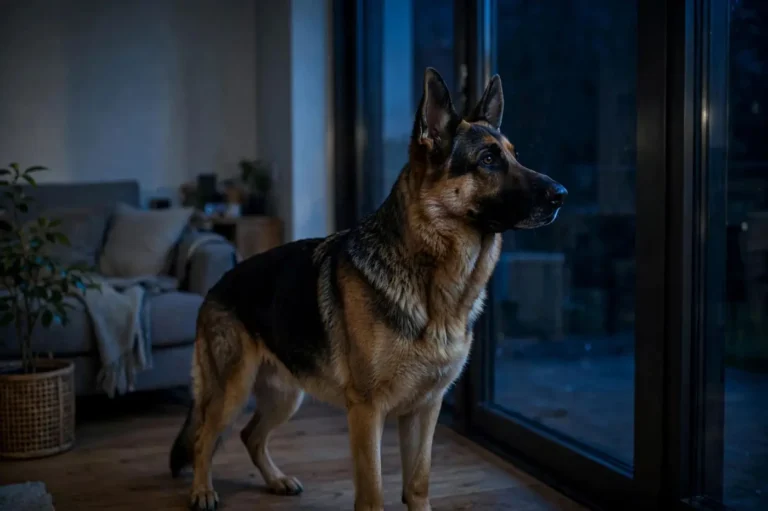

German Shepherd Barking When Left Alone
# German Shepherd Barking When Left Alone
The note from the neighbor. The message from the landlord. The guilt every time you close the front door. A German Shepherd barking when left alone is stressful for everyone — the dog, you, and everyone within earshot. The good news: this is a solvable problem, but only if you treat the right cause.
Barking when alone comes from two main places: boredom (an under-stimulated dog entertaining itself) or separation distress (a dog genuinely upset about being alone). The fixes overlap but aren’t identical — so step one is always figuring out which one you’re dealing with.

Key Takeaways
- Barking when alone is usually boredom or separation distress. A simple camera test tells you which.
- Build alone time gradually — don’t jump from 10 minutes to a full workday.
- Enrichment solves boredom barking; desensitization solves distress barking. Most dogs need a bit of both.
- Bark collars suppress the symptom and can worsen anxiety. Avoid them.
Figure Out Why: The Camera Test
Set up a pet camera or an old phone on a video call for a few absences. Watch what happens after you leave:
Signs of boredom barking:
- The dog settles first — naps, wanders — then starts barking later, often in bursts
- Barking is interspersed with other activity: playing with toys, looking out windows, exploring
- The dog seems otherwise relaxed: loose body, normal breathing
- It happens mainly during long absences
Signs of separation distress:
- Barking, howling, or whining starts within minutes of your departure and continues
- Pacing, panting, drooling, scratching at doors
- The dog can’t settle at all — no napping, no playing, just distress
- It happens even during short absences
This distinction matters because a bored dog needs a better day, while a distressed dog needs a gradual training program (and sometimes professional help). Many dogs are a mix — boredom on top of mild distress — so the plan below covers both.
Immediate Steps: For the Dog and the Neighbors
Talk to your neighbors early. Most people are remarkably patient when they know you’re actively fixing the problem. A brief, honest note — what you’re doing about it, your phone number, a realistic timeline — buys enormous goodwill. Silence buys complaints.
Adjust the routine if you can. Even temporarily: a midday dog-walker visit breaks up a long absence and gives the dog a reset. For distress barkers, shorter absences during the training period speed everything up.
Enrichment before you leave. A frozen stuffed rubber toy, a scatter-fed breakfast in the garden, a snuffle mat — give the dog a 20–40 minute project that starts as you walk out. This helps boredom barkers significantly and gives distress barkers something to focus on during the easiest part of the absence (the beginning).
Background sound. A radio, TV, or white noise machine left on masks outside sounds that can trigger barking and makes the silence less stark. It’s a comfort measure, not a cure — but it helps.
Exercise first. A German Shepherd who has had a proper morning workout — not just a toilet trip — settles far more easily. This is the highest-leverage change for boredom barkers.

The Training Plan: Building Comfort Alone
This is gradual desensitization — the standard, evidence-backed approach. It works for both boredom and mild-to-moderate distress.
Step 1: Desensitize departure cues. Your dog has learned the sequence: keys, shoes, bag, coat = you’re leaving = panic. Break it: pick up your keys and sit down. Put your coat on and make coffee. Do each cue a dozen times a day with no departure until they’re meaningless again.
Step 2: Practice micro-absences. Step out the door for 10 seconds. Return before any barking. Repeat many times, gradually extending — 30 seconds, 2 minutes, 10 minutes. The golden rule: always return *before* distress starts. If the dog barks at 5 minutes, you’re training at 2 minutes. Rushing this step is the number-one reason plans fail.
Step 3: Alone-but-enriched practice. Give the frozen toy or scatter feed, then step into another room while you’re home. Let the dog learn that good things happen during alone moments — even with you in the building.
Step 4: Extend to real departures. Once practice absences are solid, start applying the same structure to real ones: exercise, enrichment, calm brief exit, background sound on. Build duration in increments your dog has proven they can handle.
Step 5: Generalize. Practice at different times of day, with different departure cues, on weekends and weekdays. Dogs don’t automatically generalize — “alone on Tuesday morning” is a different skill from “alone on Saturday afternoon” until you’ve trained both.
Enrichment That Actually Helps
Not all enrichment is equal. For alone-time barking, you want things that engage the dog independently for extended periods:
- Frozen stuffed toys — layer kibble, peanut butter (xylitol-free), and banana; freeze overnight. A 30-minute project.
- Scatter feeding — throw the whole breakfast across the garden or a snuffle mat. Nose work is deeply tiring.
- Safe long-lasting chews — sized for a power chewer, introduced under supervision first.
- Rotation — the same toy every day becomes wallpaper. Rotate a stash every few days.
What doesn’t help much: a bowl of food eaten in 90 seconds, a squeaky toy the dog ignores, or the TV alone.
Common Mistakes
- Sneaking out. Slipping away quietly seems kind, but the dog learns that you vanish without warning — which makes every quiet moment suspicious. Calm, predictable departures are better.
- Punishing barking on return. The dog can’t connect your anger to barking they did hours ago. They just learn your arrival is scary.
- Bark collars (citronella, ultrasonic, shock). These punish the dog for expressing distress without addressing any cause. For anxious dogs, they reliably make things worse — now the dog is distressed *and* being punished for it.
- Going from 10 minutes to 8 hours. The most common failure point. Build in steps the dog has actually mastered.
- Only training on workdays. You need dedicated practice sessions — short, controlled, frequent — not just the daily high-stakes real absence.
When It’s Separation Anxiety
Some dogs aren’t just bored — they’re in genuine distress. Take it to the next level if you see:
- Panic from the moment you leave: nonstop vocalizing, drooling, panting, escape attempts
- Self-injury: broken teeth, torn nails, raw paws from scratching
- No progress after several consistent weeks of the plan above
- A sudden onset in a previously fine adult dog — see your vet first, as medical issues can drive new anxiety
Severe separation anxiety responds best to a structured desensitization protocol, sometimes with veterinary support to lower the dog’s baseline enough to learn. Certified separation anxiety specialists exist (many work remotely) and this is literally all they do. There’s no shame in hiring one — it’s the fastest route for hard cases.
Our guide to German Shepherds that get destructive when left alone covers the destruction side in depth, and the separation anxiety archive has more.

Frequently Asked Questions
How long until the barking improves?
Boredom barkers often improve within 1–3 weeks once exercise and enrichment are fixed. Distress barkers on a desensitization plan typically show progress over several weeks to a couple of months. The trajectory matters more than the timeline — steady improvement is success. Keep a simple log (date, absence length, barking duration from the camera) so you can see the trend; progress you can measure is progress you’ll stick with.
Should I get a second dog for company?
It rarely fixes barking when alone. A second dog doesn’t treat separation distress, and for boredom barking it’s an expensive gamble that often produces two barking dogs. Fix the root cause with the dog you have.
Is doggy daycare a good alternative?
It can be excellent for boredom barkers — a tired, socialized dog barks less. For true separation distress, daycare avoids the problem rather than solving it: the dog may still panic on days they’re home alone. Use it as support, not the whole plan.
Will my dog ever be quiet alone?
Yes — the vast majority of alone-time barking resolves with the right approach. Dogs are enormously adaptable, and “relax while the human is out” is a very teachable skill. The exceptions are the severe cases, and those have professional help available.
What if my landlord threatens eviction over the barking?
Document your training plan and show you’re acting in good faith — it matters. Talk to neighbors proactively (see above), consider a temporary schedule change or daycare to reduce absences during training, and prioritize the management steps while the longer training works. If it comes to formal complaints, evidence of active remediation is your best defense.
Barking when alone is your dog telling you something about their experience of solitude — listen to what the camera shows you, then train accordingly. For the full breed picture, read our complete German Shepherd behavior guide. Related: barking at night and the barking archive. You can also browse all German Shepherd guides and every barking guide.