Why Does My Dog Lick My Feet So Much? 6 Reasons Explained
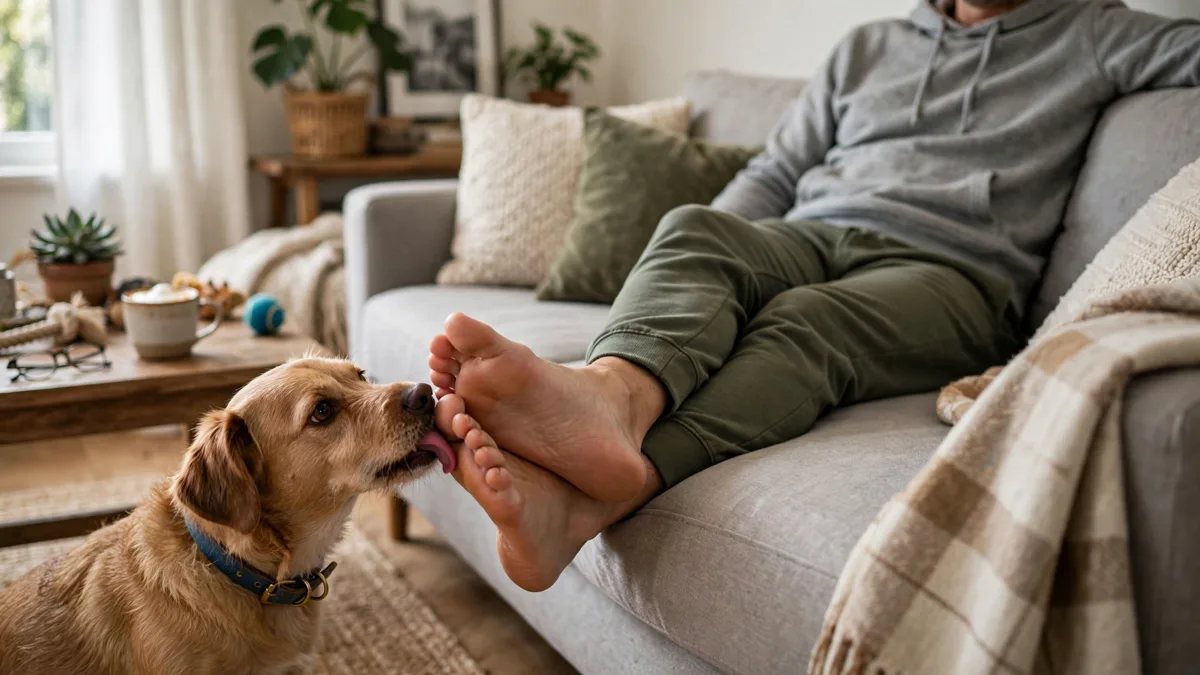
Why does my dog lick my feet so much? Hands get a quick lick, faces get a kiss, but feet often get the full treatment.
Feet are warm, salty, and full of scent. They sit at nose height when you sit down, and your reaction can keep the habit going.
This guide explains six reasons, how to tell them apart, and kind ways to redirect the habit. It also explains when to get vet help.
Key Takeaways
- Most foot licking is normal social or scent-driven behavior, not anger or dominance.
- Salt, scent, affection, attention, lotions, and boredom or worry are the most common drivers.
- Redirect calmly to a lick mat, chew, or game, and reward calm settling.
- Do not use human creams on your dog, and do not punish licking.
- Get vet help for sudden change, licking that will not stop, or the warning signs below.
Why Does My Dog Lick My Feet? The Direct Answer
In short, why does my dog lick my feet? Usually because feet taste salty, carry strong familiar scent, and sit close to your dog. Licking can also be affection, a learned way to get attention, or a way to settle.
It becomes a concern when it is sudden, intense, hard to interrupt, or paired with other changes. In that case, note the pattern and talk to your vet.
6 Reasons Your Dog Licks Your Feet
The reasons below often work together. One dog may lick for scent and attention at the same time.
Reason 1: Salt and Taste
Feet sweat, and sweat tastes salty. After a walk or workout, that taste can be stronger.
That simple taste reward can be enough to bring your dog back again and again.
Reason 2: Scent and Where You Have Been
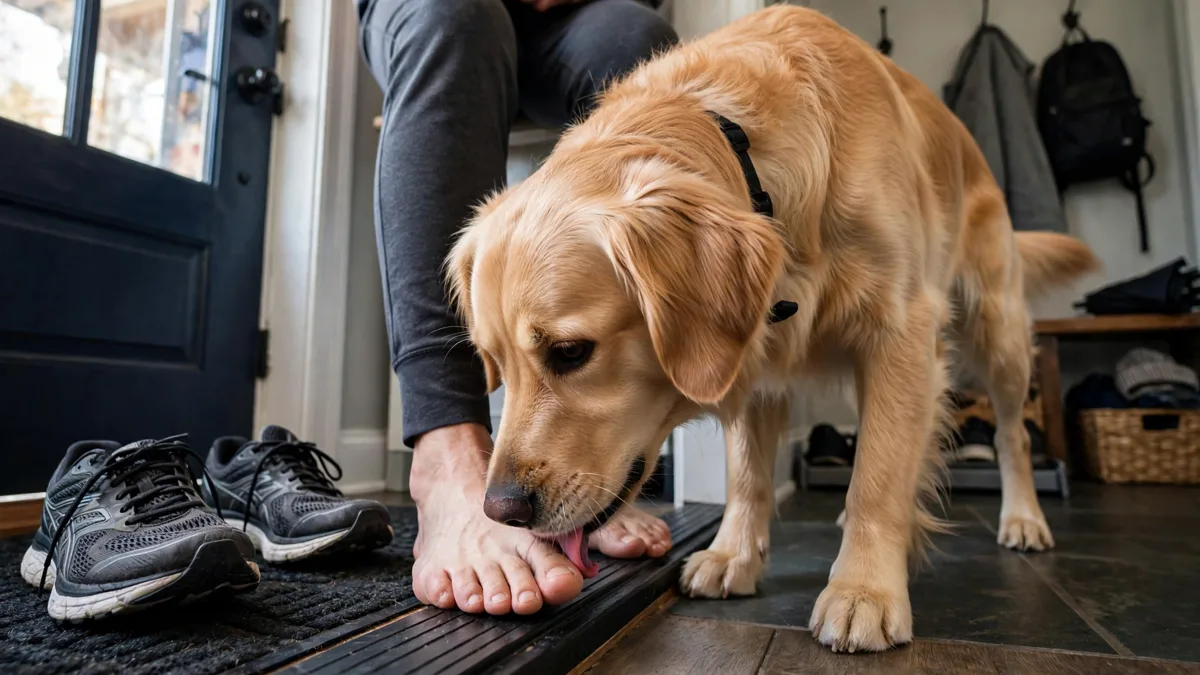
Your feet walk through the world all day. They pick up smells from grass, pavements, other animals, and home.
When you sit barefoot, those smells are right at nose height. Licking is one way your dog takes in that information.
Reason 3: Affection and Grooming
Dogs groom dogs they trust. A gentle lick can be a friendly, social gesture.
Look for a relaxed body, soft eyes, and easy movement. That pattern usually means your dog is comfortable, not upset.
Reason 4: Attention and Your Reaction
Foot licking often gets a big reaction. You may laugh, talk, move your feet, or push your dog away.
To your dog, all of that can feel like attention. If licking reliably starts a game, your dog will try it again.
Reason 5: Lotions, Creams, and Showers
Licking may spike after a shower or after you use foot cream. Warm skin and new smells can make feet more interesting.
This matters for safety too. Some products made for people are not safe for dogs to lick. Cover treated feet with socks or shoes until the product has soaked in.
Reason 6: Boredom, Worry, and Self-Soothing
Some dogs lick when they are bored, restless, or unsettled. Licking can help them settle, so it can become a habit.
Watch for licking at stressful times, or a dog that struggles to settle without it. That pattern needs a calmer routine, more enrichment, and professional help if it persists.
How to Tell the Reasons Apart
| Pattern | Likely driver | First step |
|---|---|---|
| After walks or workouts | Salt and scent | Wash feet and offer a calm settle |
| When you come home barefoot | Scent and greeting | Greet calmly, then redirect |
| Soft, relaxed licking during cuddles | Affection | Allow it if you like it, or redirect calmly |
| Licking grows when you react | Attention | Keep your reaction boring and reward settling |
| After showers or cream | Lotions and smell | Cover feet until cream soaks in |
| Restless, hard-to-interrupt licking | Boredom or worry | Add enrichment and routine, and seek help if it persists |
What You Can Check at Home Safely
- Timing: when does it happen, and what happened just before it?
- Feet: are they clean, dry, and free of cream or cuts?
- Body language: is your dog relaxed, tense, restless, or hard to distract?
- Routine: has exercise, play, rest, or daily routine changed?
- Other licking: is your dog also licking its own paws, body, floors, or objects a lot?
Keep notes for a few days. A clear pattern helps you, and it helps your vet or behavior professional if you need one.
Your Feet or Your Dog’s Own Paws?
Licking your feet is not the same as licking its own paws. Own-paw licking can have different drivers.
Common drivers for own-paw licking include allergies, irritation from dirt or grit, pain or injury, grooming habit, and boredom or worry. This guide gives general information only. It does not diagnose your dog.
Check paws gently at home if your dog allows it. Look for cuts, swelling, redness, or something stuck between the toes. Do not force the check, and do not try to treat a sore paw yourself.
Short, calm grooming sessions help, as shown in our shih tzu tear stain removal natural guide. Stop if your dog shows pain, fear, or aggression, and seek professional help.
How to Redirect Foot Licking Kindly
- Make feet less interesting: wash feet after walks and workouts, and wear socks when needed.
- Stay boring when licking starts: calmly move feet away, with no laughing, squealing, or foot games.
- Offer a better job at once: a lick mat, a chew, or a short game.
- Reward the choice you want: praise and a treat when your dog settles or chooses the mat.
- Teach a short cue: say “enough” once, calmly, then move feet away and reward settling.
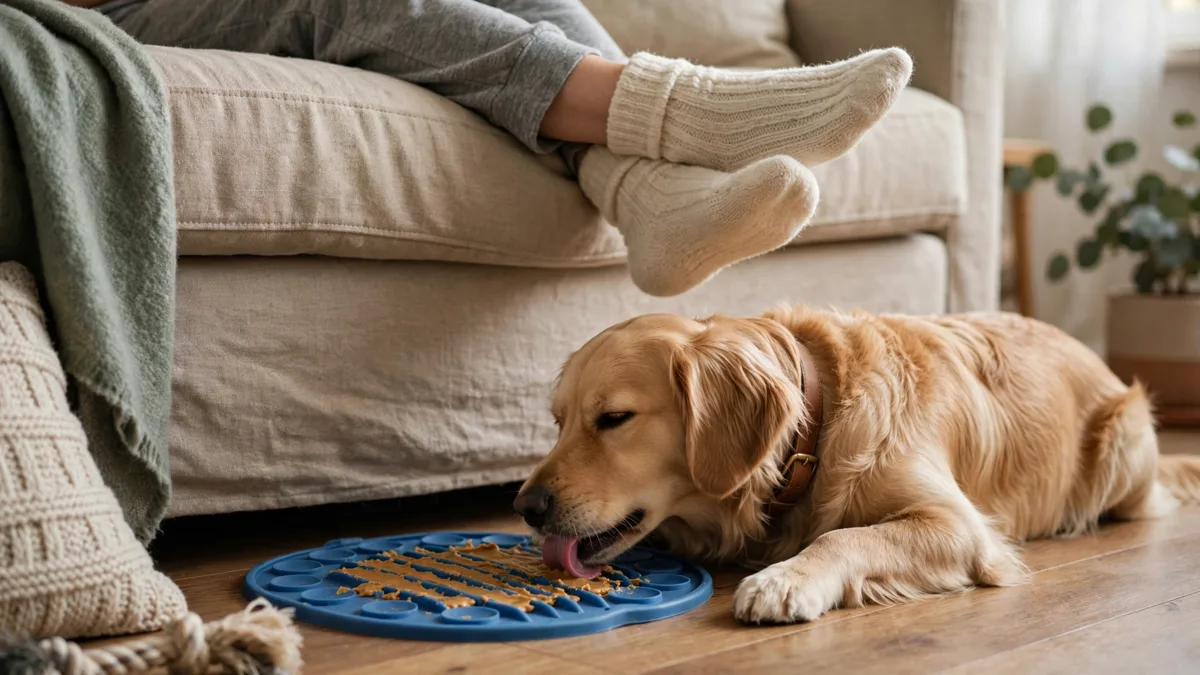
If you use a lick mat, use a plain spread your dog already tolerates. Before trying a new food, see our guide to safe human foods for dogs with upset stomach.
If you keep wondering why does my dog lick my feet, check the pattern first. A dog that licks mainly after workouts needs a different fix than a dog that licks when restless.
What NOT to Do
- Do not punish, shout at, or push your dog hard. That can increase worry and damage trust.
- Do not use shock or prong collars, and do not frame licking as dominance or alpha behavior.
- Do not put human creams, medicated creams, or antifungal products where your dog can lick them.
- Do not let your dog lick over broken skin, sores, or treated skin.
- Do not ignore a sudden change in licking.
Use positive reinforcement only. Reward calm behavior you want, and make the unwanted behavior less rewarding. Our guide to a dry cracked dog nose explains why human lotions are not a good choice for dogs.
When Licking Needs Vet Attention
- Red, swollen, sore, or broken skin on paws, or limping
- Licking that will not stop, or is hard to interrupt
- Sudden onset in a dog that did not lick much before
- Own-paw or body licking plus other new changes
- Pain or aggression when paws are touched
- Frequent licking of floors or non-food items
If you notice any of these, contact your vet promptly. Do not wait to see if it settles, and do not try to diagnose the cause at home.
For pain, a sudden change, or aggression, ask your vet or a qualified behavior professional for help. Early help is kinder than waiting.
Is It Safe to Let Your Dog Lick Your Feet?
For many households, occasional relaxed licking on clean, intact skin is low risk. It is a personal choice, not a requirement.
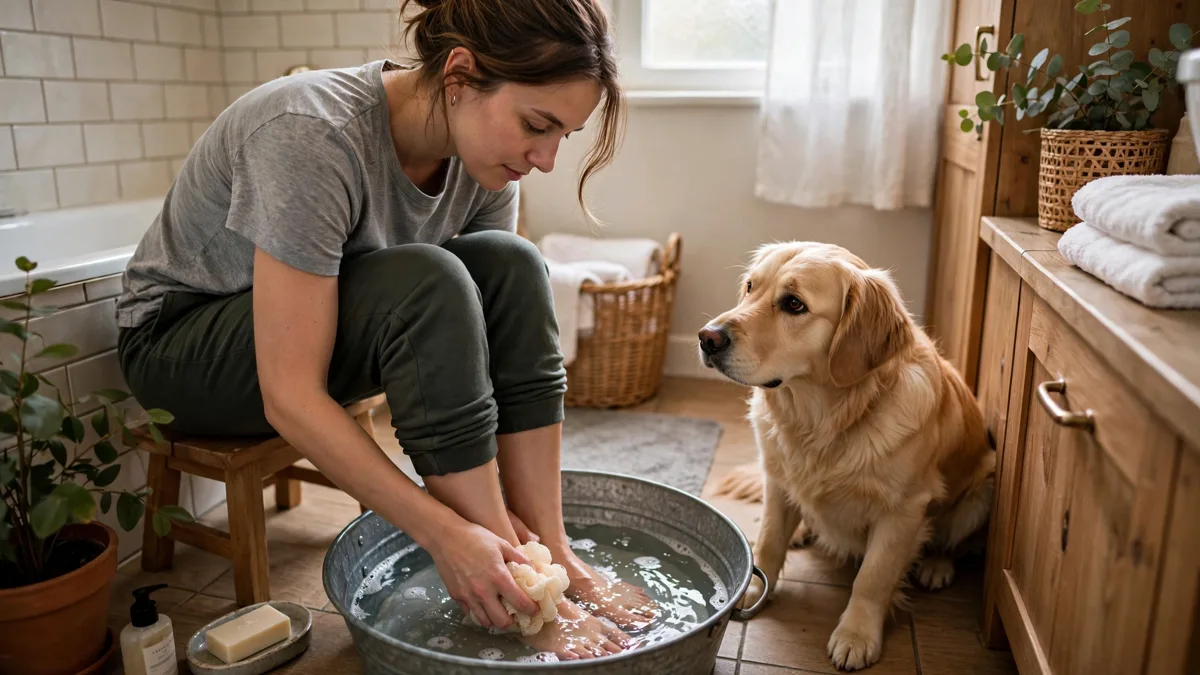
Wash feet first if you allow it. Do not allow licking over cuts, sores, or treated skin.
Dog saliva carries bacteria, so broken skin is different. If you have a health concern, ask your own clinician for advice.
Frequently Asked Questions
Why does my dog lick only my feet, not my partner’s?
Scent, habit, and feedback differ from person to person. Your barefoot habits, lotions, and reaction may make you more rewarding to lick. That does not mean your dog likes your partner less.
Why do feet get extra attention at night or in bed?
Evenings combine a full day of scent, bare feet at nose height, and a calm, close moment. Your dog may also be settling for sleep, so licking becomes part of the wind-down routine.
Is foot licking a sign of dominance?
No. Foot licking is usually social, scent-driven, or attention-seeking behavior. It is not a power struggle, and it does not need a dominance-based response.
Why are feet more interesting after a shower?
Warm, damp skin and fresh soap or lotion smells make feet stand out. Bare feet are also easy to reach, so a quick lick can turn into a longer session.
Can foot licking mean my dog needs more salt?
Very rarely, and it is not the first explanation to reach for. A dog on a complete diet does not usually lick feet because of a salt shortage. Ask your vet if you are concerned.
Should I let my dog lick my feet?
That is your choice. If you enjoy it and your skin is clean and intact, occasional licking is usually fine. If you do not enjoy it, redirect calmly and reward settling instead.
The Bottom Line
So, why does my dog lick my feet? Usually for a mix of salt, scent, affection, attention, and habit.
Enjoy it if you like it, redirect it calmly if you do not, and get help early if the pattern changes or will not stop.
Reference
American Kennel Club, Why Does My Dog Lick My Feet?
Still stuck? Get a plan built for your dog.
Answer a few quick questions and get a personalized, force-free training plan in minutes.
Try the Free Dog Tools