Dachshund Destructive When Left Alone: Causes and Fixes
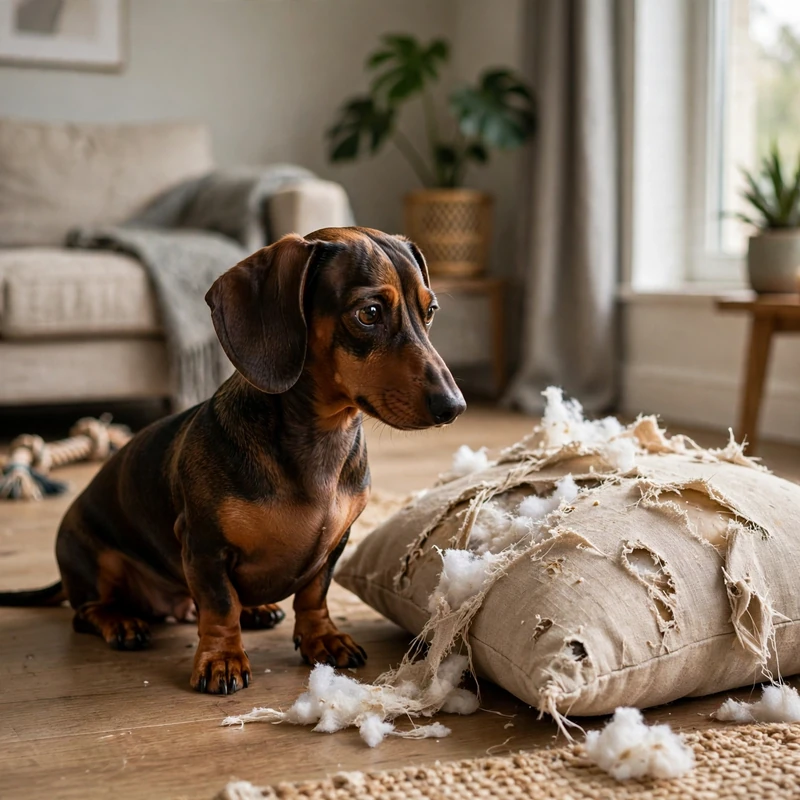
You leave for two hours. You come home to a crime scene: cushion stuffing across the rug, a chewed table leg, scratch marks on the door. If your Dachshund is destructive when left alone, the first thing to know is that punishment after the fact changes nothing.
Your dog can’t connect your anger now with what they did an hour ago. What they can learn, with the right plan, is how to be alone without falling apart.
When a Dachshund Destructive When Left Alone, it usually stems from two completely different causes, and they need different fixes. This guide helps you tell them apart and gives you the exact plan for each.
Key Takeaways
- Destruction when alone is usually boredom and under-stimulation, or genuine separation distress. The fix depends on which one you’re dealing with.
- A cheap camera (or an old phone) is the best diagnostic tool you own: film one absence and you’ll know exactly what happens after you leave.
- Never punish destruction you discover after the fact. The dog can’t link it to the act, so it only damages trust.
- True separation distress is a welfare issue, not a training inconvenience. If your dog panics, get professional help rather than pushing through.
Why Your Dachshund Is Destructive When Left Alone
Boredom and under-stimulation. The most common cause. Dachshunds are working dogs with busy brains and strong jaws.
A dog who got a ten-minute amble and then eight hours of nothing will manufacture entertainment, and a bored Dachshund’s entertainment looks like your furniture. This destruction usually starts well after you leave, once the dog has run out of better ideas.
Separation distress. Some dogs aren’t bored; they’re panicking. This is an emotional response to isolation, not a character flaw. Destruction from distress tends to start within minutes of departure, focuses on exit points (doors, windows), and comes with other signs: drooling, panting, howling, house-soiling in a trained dog, or escape attempts.
Puppy mayhem. Young dogs destroy things because they’re teething, untrained, and unsupervised, not because they’re distressed. Puppy destruction is a management problem with a training solution, and it improves with age and guidance.
Attention history. If destruction has ever reliably summoned you home early or earned a big emotional reaction on return, the dog has learned that chaos works. This is rarer than people think, but worth knowing.
A note on the breed: Dachshunds bond intensely to their people. That loyalty is the breed’s charm and also why alone-time needs deliberate training here. A breed that was content to ignore you would have fewer problems alone; a Dachshund notices your absence immediately.
Boredom or Distress? The Camera Test
Guessing wrong wastes weeks, so diagnose first. Set up a phone or cheap camera to film your dog for one normal absence.
It looks like boredom if: the dog sleeps or settles for a while first, then gets up and starts exploring, chewing, or playing with objects. Destruction is scattered and opportunistic. The dog looks normal on camera: no panting, no drooling, no fixation on doors.
It looks like distress if: the trouble starts within minutes of your departure. The dog paces, whines, or howls; scratches or chews at doors and windows (exit points); drools or pants heavily; has accidents despite being house-trained. The dog looks worried, not mischievous.
Mixed picture? Common. Many dogs are a little anxious and a lot bored. Treat the anxiety first (it’s the welfare issue), and the boredom plan below will handle the rest.
If what you see is full panic (nonstop howling, self-injury, frantic escape attempts), skip the DIY plan and get a qualified behavior professional. That’s not stubbornness; that’s suffering.
The Boredom Plan for a Dachshund Destructive When Left Alone
This fixes the majority of cases.
Step 1: Tire the brain before you leave. A sniff-heavy walk or ten minutes of training before departure takes the edge off far better than a quick toilet dash. A Dachshund who’s worked their nose is a Dachshund who naps. Our guide to calming a Dachshund down has settle-building exercises that transfer directly to alone time.
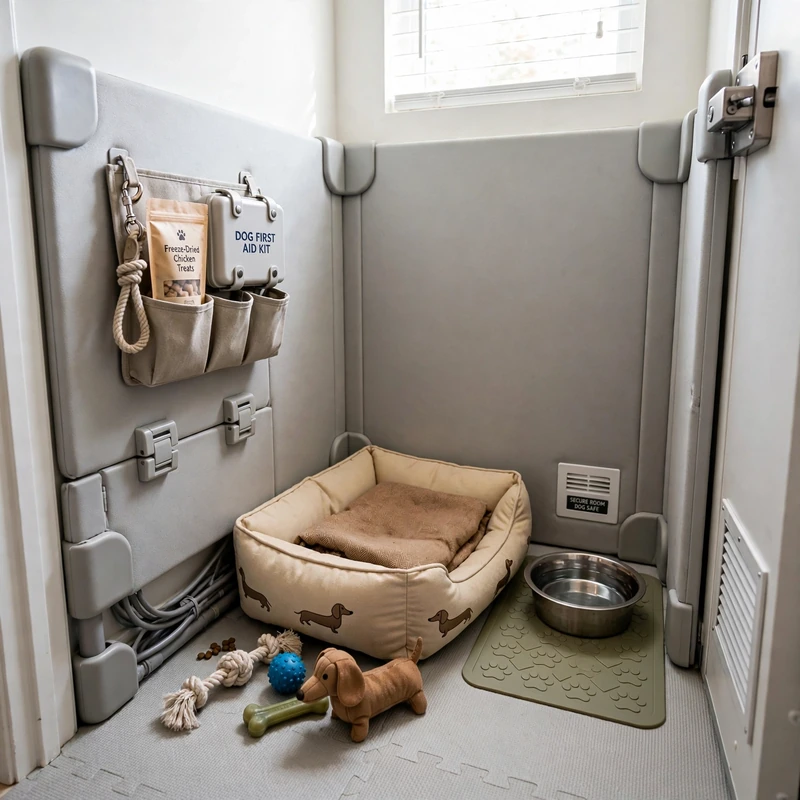
Step 2: Set up for success. Before you go: toilet trip, then a long-lasting chew or stuffed food toy, water available, and the dog in their safe space. A crate-trained dog goes in the crate with a chew. A non-crated dog gets one puppy-proofed room, not the whole house. Fewer rooms means fewer bad decisions.
Step 3: Make departures boring. Ten minutes before you leave, stop fussing over the dog. No emotional farewell speech; long goodbyes teach the dog that departures are a big deal. Pick up your keys, put on your shoes, and go. Equally: when you return, keep it low-key for the first few minutes. Calm arrivals teach the dog that your comings and goings are non-events.
Step 4: Practice alone time while you’re home. Several times a day, put the dog in their safe space with a chew while you potter around the house. You’re teaching the skill (settling alone) without the trigger (you leaving). Gradually extend the durations.
Step 5: Build duration honestly. Start with absences the dog can already handle and stretch them gradually. If the dog is fine for thirty minutes but not two hours, your training absences should live between those numbers for a while. Jumping straight to full workdays is how good progress collapses.
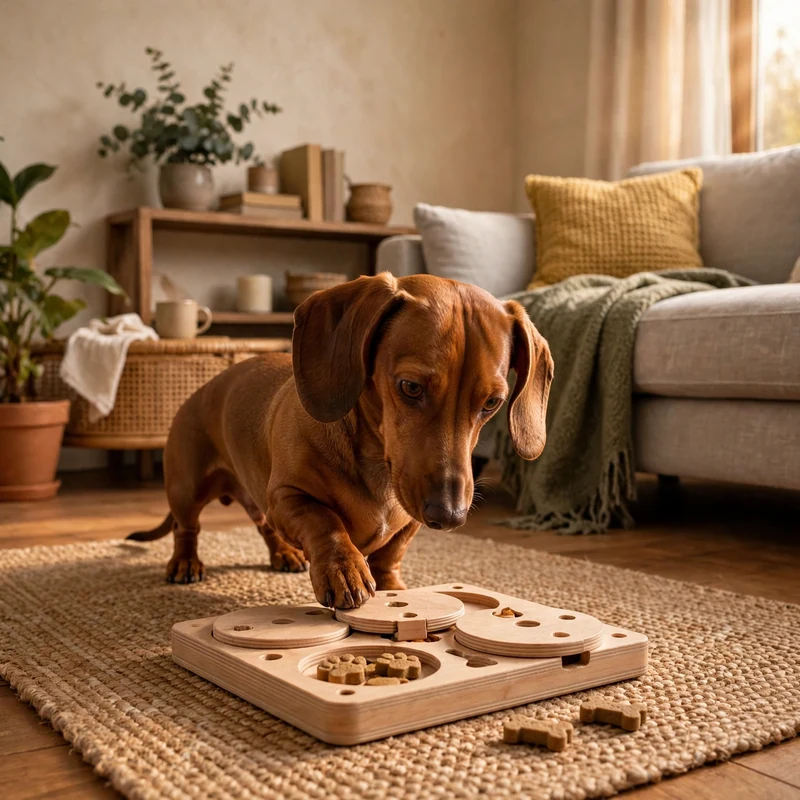
Step 6: Enrich the alone time. Rotate toys so they stay novel. Food puzzles, snuffle mats, and frozen stuffed toys give the dog a job. A job beats your skirting boards every time.
The Plan for Separation Distress
Distress needs a different, gentler protocol, and often professional guidance.
Rule out medical first. Sudden onset of distress in an adult dog warrants a vet check. Pain, cognitive changes in seniors, and other medical issues can look exactly like anxiety.
Desensitize departures. Break your leaving routine into tiny pieces (pick up keys, sit down; put on shoes, take them off) and repeat until each piece is boring. Then practice micro-absences: step outside the door for five seconds, return before the dog panics, repeat. Build in seconds and minutes, not hours. This is slow work, and that’s normal.
Don’t flood. Leaving a distressed dog alone “to get used to it” doesn’t work; panic doesn’t habituate, it sensitizes. Every full-panic absence sets you back. While training, avoid leaving the dog longer than they can handle: daycare, a sitter, or taking the dog with you are management, not cheating.
Consider professional help early. Separation distress is one of the most fixable behavior problems with expert guidance and one of the most frustrating without it. A qualified behavior professional (look for credentials in applied animal behavior, not just a training certificate) can tailor the desensitization plan to your dog. In severe cases, vets can discuss whether short-term anti-anxiety support alongside training is appropriate. That’s a vet decision, not an internet decision.
Management That Helps Either Way
- Exercise before absences. Every time. A tired dog is a calmer dog.
- A proper safe space. Crate or puppy-proofed room, set up as described in our crate training guide.
- Background sound. A radio or white noise blurs outside triggers and makes the house feel less empty.
- Something that smells like you. A worn t-shirt in the bed is cheap comfort.
- No punishment, ever, for what you find. Manage the environment so there’s less to destroy, and train the skill that’s missing.
Common Mistakes
- Punishing the wreckage. The dog cannot connect your anger with an act from hours ago. You’ll get a dog who’s afraid of you coming home, which makes anxiety worse.
- Getting a second dog “for company.” Sometimes it helps; often you get two distressed dogs. Fix the first dog’s alone-time skills before adding a second.
- Skipping the diagnosis. Treating distress as boredom (more toys!) or boredom as distress (months of desensitization the dog didn’t need) wastes everyone’s time. Film first.
- Inconsistent absences. Fine for an hour on Tuesday, eight hours Wednesday. Build gradually and protect the progress.
- Ignoring sudden changes. A previously fine adult dog who suddenly can’t be alone needs a vet check before a training plan.

Frequently Asked Questions
How long can I leave my Dachshund alone?
It depends on the individual dog’s training. A well-prepared adult can typically manage a normal workday with a midday break, especially with a good morning routine and enrichment. Puppies need much shorter stints with toilet breaks. Build up to your target gradually rather than starting there.
Will my Dachshund grow out of separation distress?
Puppy restlessness often improves with maturity and training. True separation distress in an adult dog rarely resolves on its own; it usually needs the gradual desensitization plan above, ideally with professional guidance. Waiting it out tends to entrench it.
Should I crate my Dachshund when I leave?
If the dog is crate-trained and settles happily, yes: it’s the safest management. If the dog panics in the crate, don’t force it; a distressed dog can injure themselves, and long-backed breeds risk real harm throwing themselves against the door. Use a puppy-proofed room instead and address the distress itself.
My neighbor says my dog barks all day. Is that separation anxiety?
Not necessarily; it could be alert barking at daytime noises. The camera test tells you: distress barking is frantic and paired with other stress signs, while alert barking comes in bursts at triggers. Our night barking guide covers the alert-barking protocol, which applies by day too.
Is medication the answer for separation anxiety?
That’s a decision for your vet, based on severity. Training is the core of the fix either way; in severe cases some vets discuss short-term support to make the dog able to learn. No one online can make that call for your dog.
Can I ever leave my dog for a full day?
Occasionally, with preparation (big morning exercise, enrichment, a midday visitor), most trained adults cope. As a daily routine without a break, it’s a lot to ask of any dog, let alone a breed this bonded to its people.
—
Destruction when alone is information: your dog is telling you the current setup exceeds their skills. Change the setup, build the skill, and most dogs come right. For the full breed picture, read the complete Dachshund behavior guide and browse all Dachshund guides.