How to Stop a Husky Escaping the Yard
Every husky owner knows this story: five minutes in the yard, a rattle at the fence, an empty yard where your dog used to be. Twenty minutes later, the call from three streets away.
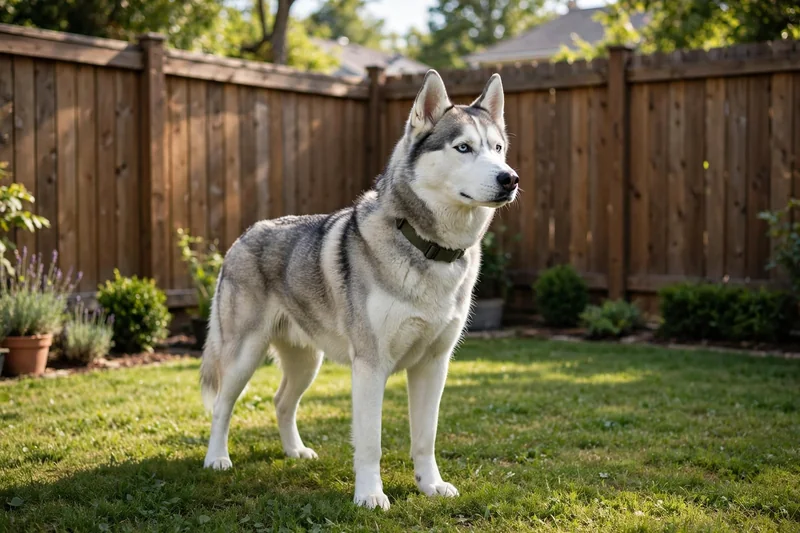
Here is the truth that will help you stop husky escaping yard for good: your dog is not doing this to spite you. Huskies are among the great escape-artist breeds. The AKC lists escaping, digging, and strong prey drive as signature husky traits, and VCA notes they love to run and “may roam for miles if the opportunity arises.” A sled dog is doing what centuries of breeding designed it to do, in a yard that asks it to do nothing.
The fix: a genuinely secure yard, a life interesting enough to stay for, and a safety net for the day something fails anyway.
One warning first: a loose husky is a husky in danger. Traffic, theft, poison, fights, animal control. Treat every escape as urgent. If your dog is out right now, go find them first and read the plan after.
Key Takeaways
- Huskies escape because they were bred to run, dig, and solve problems. The AKC lists escaping, digging, and strong prey drive as signature traits. Normal husky behavior, not disobedience.
- Every husky has a preferred escape method: digging, jumping, climbing, squeezing, or door dashing. Find it before you buy the fix.
- Three layers to the plan: a secure fence, a life interesting enough to stay for, and a safety net (ID, microchip, GPS) for the day something fails.
- Never punish a dog for coming back. A scolded return teaches your husky to run further next time. Coming home must always be the safest choice.
- Tie-outs are not a solution. The AVMA advises against chaining dogs because it can contribute to aggressive behavior. A chained husky is frustrated, not contained.
Why Huskies Escape: It Is the Breed, Not the Dog
Understanding the why keeps you from buying the wrong fix.
Roaming is the breed’s job description. Developed by the Chukchi people of northeast Asia as a sled dog for long-distance hauling, the Siberian Husky is exuberant, adventurous, and independent (VCA). A yard is a very small world for genetics that expect a horizon.
Digging is the breed too. Huskies dig to cool off, to entertain themselves, and because the base of a fence is an interesting project. The AKC lists digging among the breed’s hallmark behaviors.
Prey drive provides the spark. A squirrel on the other side of the fence can flip a switch training never fully removes. Many escapes start with a chase, not a plan.
Boredom provides the motive. This is the factor you can change fastest. A husky alone in a bare yard is a problem-solving athlete with nothing to solve, and VCA warns under-exercised huskies turn overactive and destructive. Escaping becomes the day’s entertainment.
Intact status can add fuel. An intact male that scents a female in heat has a powerful reason to travel. Neutering alone does not fix escaping, but with a seasonal pattern, talk to your vet about spay or neuter timing as one piece of the puzzle.
Notice what is not on this list: spite, dominance, or a dog that does not love you.
The Great Escape Audit: Find How Your Husky Escapes
Do not buy anything yet. Walk your fence line, inside and out, and find exactly how your dog gets out. Most have one primary method plus a backup.
The digger. Look for disturbed soil or starter holes along the fence base, especially at corners. Diggers work the same spot and get a little further each time.
The jumper. Look for scratch marks high on the fence, plus launch pads: dog houses, bins, patio furniture near the fence. Move them away. Those are stairs.
The climber. Chain-link and fences with horizontal rails are ladders. Look for paw marks on the fence face. Some huskies climb like cats.
The squeezer. Check gaps under gates, between fence and house, and where the fence meets uneven ground. A loose board becomes a door.
The door dasher. Some huskies never touch the fence. They bolt through open front doors, garage doors, and gates. If your escapes happen at the front of the house, the fence is not the problem. The routine is.
Stop Husky Escaping Yard: The Step-by-Step Plan
Work the layers in order: containment first, then the dog’s daily life, then training. Containment keeps your dog alive while the rest takes effect.
Layer 1: Make the Yard Genuinely Escape-Proof
Height and surface. A four-foot fence is a suggestion to a husky, not a barrier. Aim for a solid six-foot fence with a smooth inner face and no horizontal rails inside.
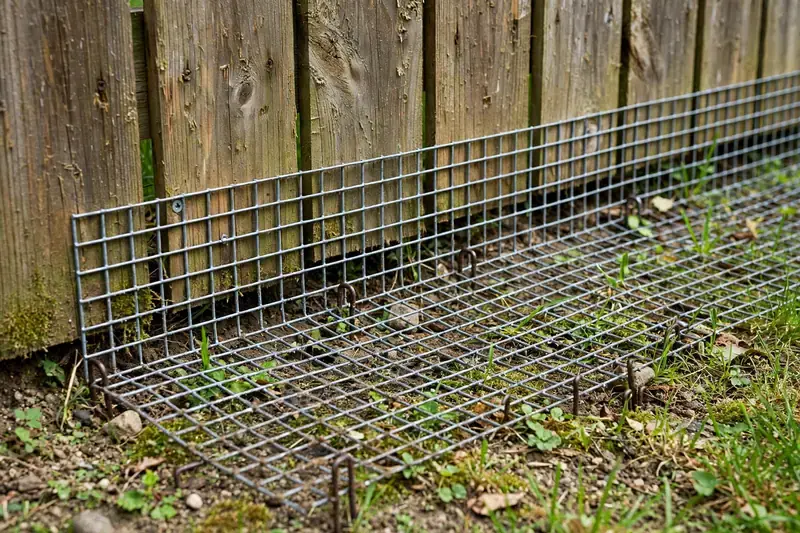
Stop the digging: install a dig guard. The most reliable dig fix: an L-shaped apron of heavy welded wire mesh attached to the fence bottom, extended one to two feet outward along the ground inside, buried or pinned flat. Digging paws hit wire, and most dogs give up fast.
Stop the climbing: lean-ins or rollers. For climbers, Best Friends Animal Society recommends lean-ins (fencing angled inward at the top) or coyote rollers (spinning bars that deny paw traction). Both are humane, need no power, and fit most fence types.
Secure the gates. Every gate needs a self-closing, self-locking latch, lift-proof hinges, and no gap underneath. Until the fixes are done, supervise yard time or use a long line on a harness (never a collar).
Layer 2: Make Staying Home Worth It
A tired, busy, included husky has far less reason to leave. Huskies are social pack dogs, and loneliness drives roaming. Slower than fencing, but it makes the fix permanent.
Exercise that actually tires a husky. VCA recommends a long walk or, preferably, a long jog daily; a twenty-minute stroll is a warm-up. Aim for one to two hours of real activity daily. Daycare or a dog runner helps if you cannot provide that. An under-exercised husky outsources entertainment to your fence.
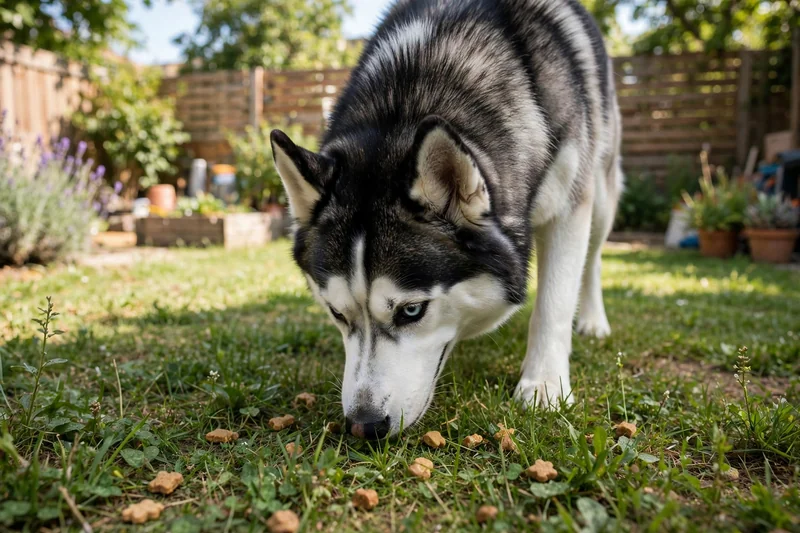
Enrichment that works the brain. Feed meals from puzzle feeders and frozen Kongs, not a bowl. Scatter kibble in the grass for a sniff game. Give the digging drive a legal outlet: a digging pit far from the fence. Rotate toys weekly.
Layer 3: Train the Boundaries
Training will not replace a fence, but it adds a valuable layer on top of one.
Boundary training. On a long line, reward your husky for staying away from the fence: call them back, pay well with real meat or cheese, release them again. You are building a habit of checking in.
Recall as a backup plan. Train recall like for any independent breed: charge the cue indoors, add distance gradually, practice on a long line with high-value rewards (see our Shiba Inu recall training guide). Honest limit: even a well-trained husky can blow a recall when prey drive takes over. Recall is an emergency tool, not a reason to trust an unsecured yard.
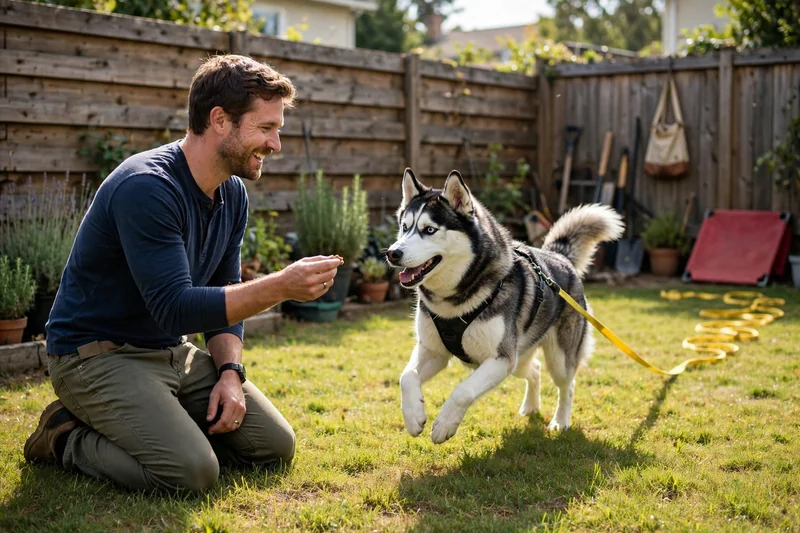
The door-dashing protocol. For door dashers, the fix is routine, not punishment. Train a solid “wait” at every doorway: the door opens only when the dog is calm behind a threshold line, and only on release. Until that is solid, use a baby gate before opening the front door and brief every visitor.
The Safety Net: GPS Collar, ID Tags, and Microchip
Even the best plan has a bad day: a guest leaves a gate open, a storm damages a panel. Build the safety net before you need it.
ID tags, always on. Your husky should wear a flat collar with a current ID tag (name and your phone number) at all times, including in the yard. A tag is the fastest route home: a finder can call you in seconds.
Microchip, registered and current. A microchip is permanent ID that cannot fall off. Have your vet chip the dog if needed, register the chip, and update your details whenever they change.
A GPS tracker collar. A GPS tracker shows your dog’s location in real time through a phone app, turning a panicked search into a short walk. It backs up the fence; it does not replace it. Keep it charged and on.
Keep a clear, current photo of your husky on your phone. “The grey one” describes half the huskies in the county.
What Not to Do If You Want to Stop Husky Escaping Yard
Do not tie your husky out as a solution. Chaining does not fix escaping; it trades one welfare problem for a worse one. The AVMA advises never to tether or chain a dog because it can contribute to aggressive behavior.
Do not punish your dog for coming back. If your husky comes home to shouting, they learn coming home is dangerous. Next time they run further. However angry you are, greet a returned dog warmly. Coming home must always be the safest choice.
Do not use pain or fear to “teach” containment. Shock collars, electric fences used as punishment, hitting, or alpha-style intimidation do not teach a husky to love staying home. They teach the dog the yard is scary, which increases the desperation to leave. Humane methods are what work long term.
Do not chase a loose husky. Chasing turns the escape into the best game your dog has ever played, and you will not outrun a husky. Do the opposite: run away calling happily, crouch down, or open the car door. Keep high-value treats by the door for exactly this moment.
When Escaping Signals a Bigger Problem
Sometimes escaping is not about the breed or the fence. It is a symptom.
Separation anxiety. If your husky only escapes when left alone, destroys doors or windows to get out, and panics in your absence, the problem is panic at being separated from you, not wanderlust. That needs its own treatment plan: talk to your vet and consider a certified separation-anxiety specialist or veterinary behaviorist. No fence upgrade fixes panic.
Fear-based escape. Dogs who bolt during thunderstorms or fireworks are fleeing, not exploring. They need a safe indoor space during triggers and sometimes anti-anxiety support from a vet.
A sudden change in a previously content dog. If a previously content husky suddenly starts escaping, look for what changed: a new dog next door, construction noise, a changed routine, less exercise, or a medical issue.
Escaping is one of the most fixable husky problems: a taller fence, a dig guard, real exercise, a more interesting yard. Your husky is not giving you a hard time. They are having a hard time being a sled dog in a backyard. Give them the containment and the life they need, and the fence becomes home.
Quick recap: this plan to stop husky escaping yard breakouts has three layers — a genuinely escape-proof fence, a daily life worth staying for, and a safety net for bad days. Owners who work all three layers consistently stop husky escaping yard problems in weeks, not months.
For breed background, the Siberian Husky entry on Wikipedia traces the breed’s history as a Chukchi endurance sled dog — useful context for why the roaming instinct runs so deep. Understanding the why makes every step to stop husky escaping yard attempts feel less like a battle and more like good management.
Keep the plan alive with a monthly fence audit and short weekly training refreshers. Steady prevention is how you stop husky escaping yard problems for good — instead of fixing the same breakout twice.