Golden Retriever Shedding Management: Double Coat Tips
If you live with a Golden Retriever, you know the pattern well. Golden hair appears on the sofa, on dark clothes, and in corners you just cleaned. Good golden retriever shedding management does not promise a hair-free home.
It promises a calmer routine. You remove loose hair before it spreads, you protect the double coat, and you keep the house easier to clean.
Key Takeaways
- Goldens have a double coat, with a soft dense undercoat and a coarser water-resistant outer coat.
- They shed at a moderate level all year, and blow the undercoat heavily twice a year, usually in spring and autumn.
- Brush 3 to 5 times a week normally, and daily during a coat blow.
- Bathe every 6 to 8 weeks with a mild dog shampoo, rinse well, and dry fully.
- Never shave a double coat. Ask a vet about bald patches, sores, itching that will not stop, or a sudden heavy shedding change.
- Keep grooming positive, with short sessions, treats, and calm praise.
Golden Retriever Shedding Management: The Direct Answer
For golden retriever shedding management, brush often, work through the coat in small sections, bathe only when needed, feed a balanced diet, and clean the home on a steady schedule.
That routine is the whole plan. No single tool, bath, or food change will stop shedding, because shedding is how the coat renews itself.
Why Goldens Shed So Much
The undercoat is the main source of loose hair. It is soft, dense, and thick, and it traps air close to the skin for warmth.
The outer coat is made of longer guard hairs. Those hairs shed water and dirt, and they protect the skin from sun and rough cover.
Old hairs fall out so new hairs can grow. That cycle runs all year at a moderate pace, which is why even a well-groomed Golden still leaves some hair behind.
Seasonal Blowing-Coat Periods
In spring, many Goldens release a thick winter undercoat. The loose fur can seem endless for a few weeks, and brushing fills the brush fast.
In autumn, a smaller coat change often happens as the dog prepares a thicker winter coat. The volume is usually lower than in spring, but daily brushing still helps.
| Season | What often happens | What to do |
|---|---|---|
| Spring | Heavy undercoat blow | Brush daily and brush outdoors when you can |
| Autumn | Lighter coat change | Brush daily at the peak, then ease back |
| Rest of the year | Moderate daily shedding | Brush 3 to 5 times a week |
Indoor dogs may shed more evenly through the year. Steady indoor heating and light can blur the seasonal pattern, so watch your own dog rather than the calendar alone.
A Brushing Routine That Works
For golden retriever shedding management, short and regular sessions beat one long session. Aim for about ten minutes, and stop before your dog gets restless.
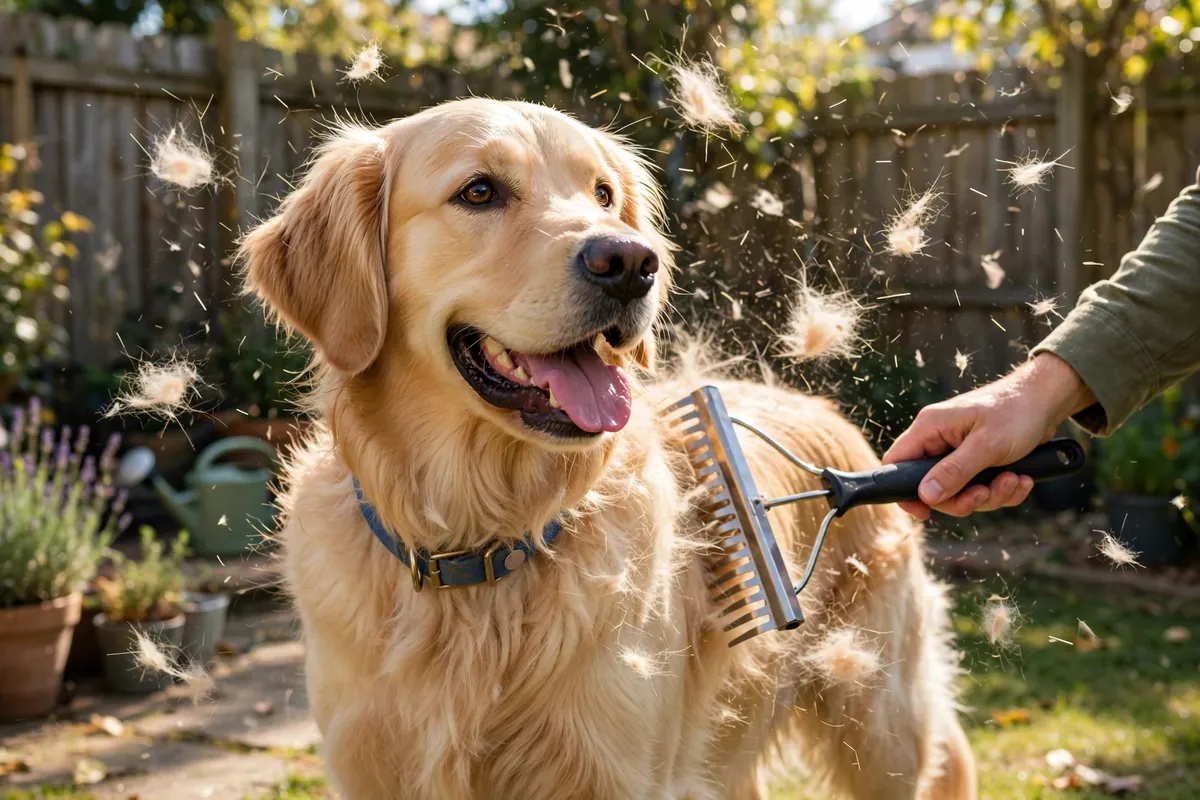
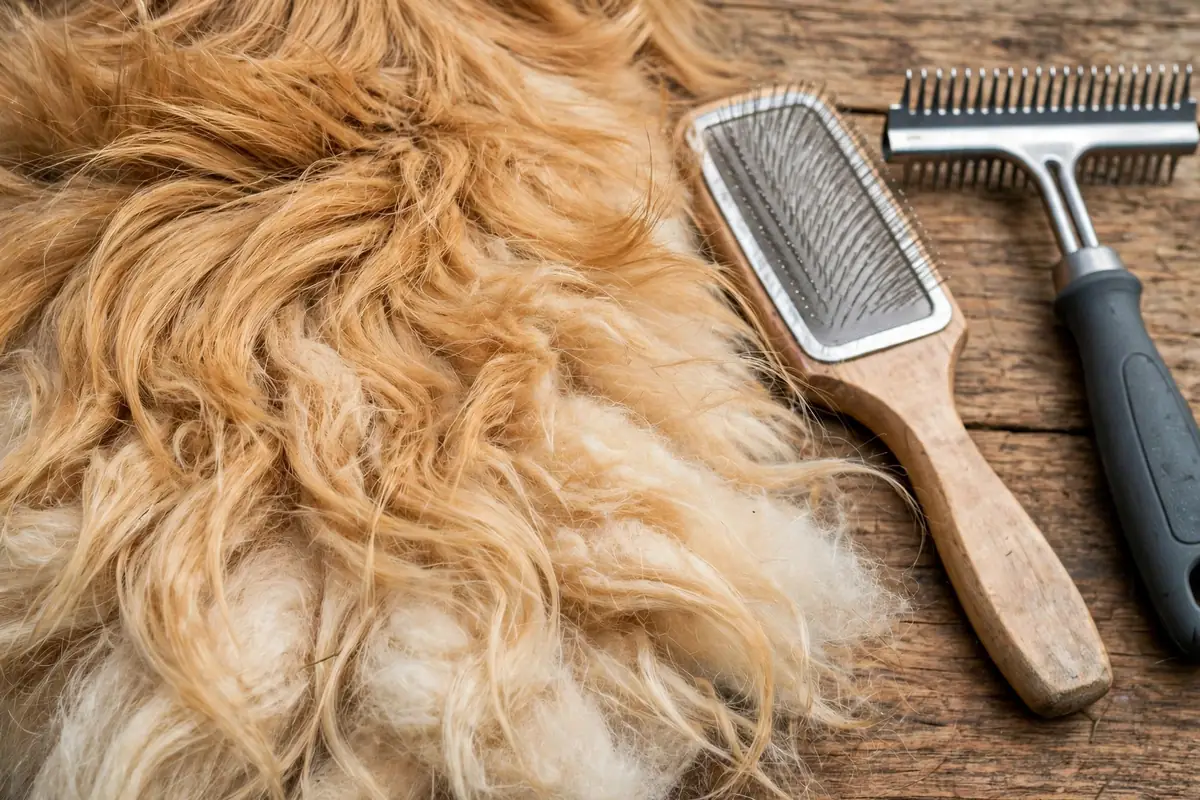
- Start with the undercoat rake on the neck, back, sides, and chest.
- Work in small sections, and lift the topcoat gently so the rake reaches the undercoat.
- Use a slicker brush to smooth the outer coat and catch tangles.
- Finish with a wide-toothed comb on the feathering behind the ears, under the armpits, and on the tail.
Brushing is also a skin check. As you work, look for redness, sores, lumps, ticks, or tender spots, and note anything new for your vet.
Tools for a Double Coat
One brush rarely reaches both coat layers. The right mix lets you remove loose undercoat without pressing hard or pulling the skin.
| Tool type | What it does | When to use it |
|---|---|---|
| Slicker brush | Smooths the outer coat and catches tangles | Most sessions, after the rake |
| Undercoat rake | Reaches loose hair in the dense undercoat | Regular sessions and coat blows |
| Wide-toothed comb | Checks feathering for mats | Every few days, and after baths |
| De-shedding tool type | Removes loose hair during heavy shedding | During a coat blow, gently and sparingly |
Use light, even pressure. If the tool snags, stop and work the tangle from the outer edge inward with the comb. Never drag a tool through a tight mat.
Bathing and Diet Basics
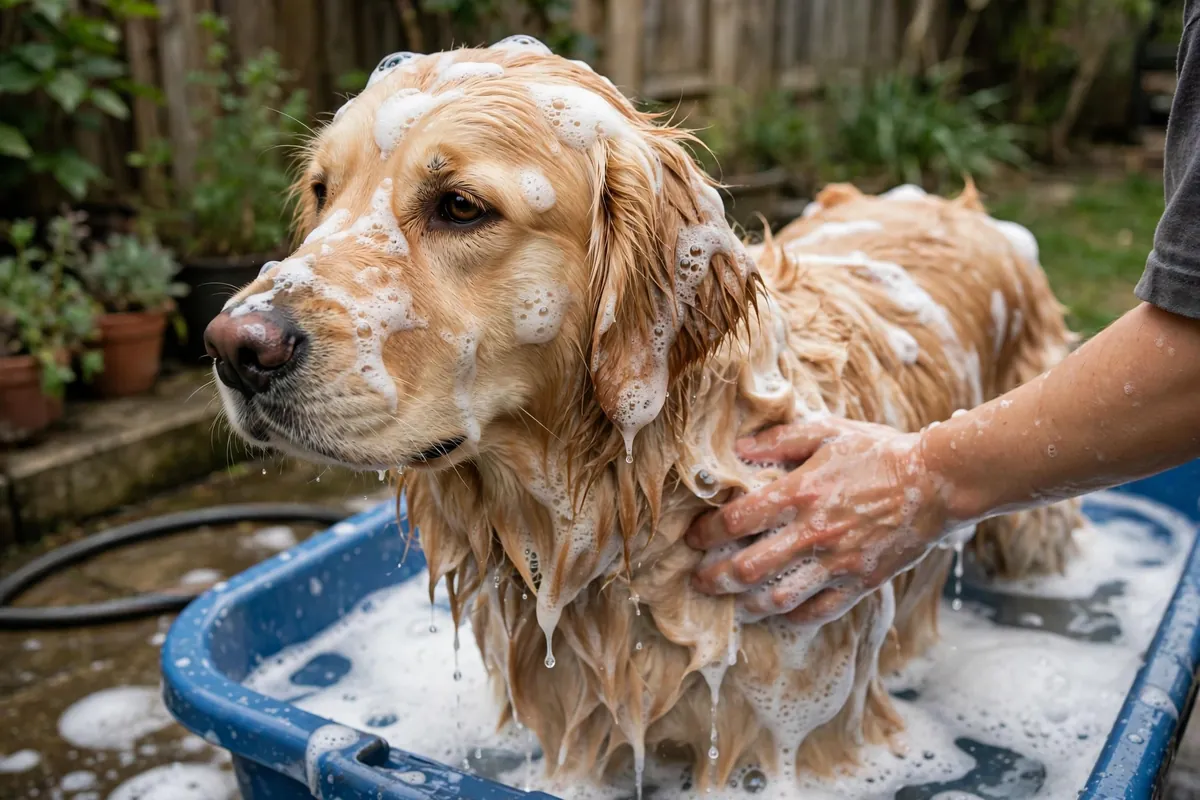
A bath can loosen dead hair, but too many baths can dry the skin. Every 6 to 8 weeks suits most Goldens, with extra baths only when the dog is truly dirty.
Rinse twice if needed, because a dense double coat holds shampoo. Dry the undercoat fully, since damp fur can irritate the skin and hide hot spots.
A complete and balanced diet with good-quality protein supports healthy hair growth. A dull or brittle coat can shed more, so feed steadily and avoid sudden food changes.
Ask your vet before adding any supplement. Some products can interact with medicine or cause stomach upset, and no supplement should replace vet advice for a coat problem.
Home Hair Management
Good golden retriever shedding management also includes your home. Some hair will escape the brush, so make cleanup part of the routine, not a rescue mission.
Vacuum pet areas on a set schedule, and use washable covers on the sofa and the dog bed. Keep lint rollers by the door, in the car, and near your desk.
Brush outdoors during a coat blow when you can. Loose undercoat blows away instead of settling into carpet, and the session feels less messy for everyone.
What NOT to Do: Never Shave a Double Coat
Do not shave a Golden Retriever to reduce shedding. The soft undercoat often grows back faster than the topcoat, so regrowth can look patchy and uneven.
Shaving also removes insulation and sun protection. A shaved dog can overheat more easily and can sunburn on exposed skin, which is the opposite of summer help.
The only exception is a vet shaving a small patch for surgery or a medical procedure. That is a clinical decision, not a grooming choice, and it should not be copied at home.
Make Grooming Positive
The best routine is the one your dog accepts. Keep sessions short, use small treats and calm praise, and end on a good note even if you only brushed one side.
If your dog pulls away, freezes, or shows stress, pause and try an easier step next time. Forcing the brush teaches fear, and a fearful dog is harder to groom well.
Check feathering every few days for small tangles. Gentle, patient combing now prevents tight mats later, and it keeps grooming calm for both of you.
When Shedding Needs Vet Attention
Heavy seasonal shedding is normal. These signs are not normal on their own, and they deserve a vet visit rather than more brushing.
- Bald patches or a coat that is clearly thinning in spots.
- Sores, redness, flaking, or itching that will not stop.
- A sudden heavy shedding change outside a coat-blow period.
- Shedding with lethargy, weight change, pain, or a sudden behavior change.
These signs can point to allergies, skin infection, parasites, thyroid problems, or poor nutrition. If you are unsure, call your vet sooner rather than waiting for the next season.

Frequently Asked Questions
Can you ever stop a Golden Retriever from shedding?
No. Shedding is part of the double coat, and no diet, tool, or grooming routine eliminates it. You can lower the hair you see at home with regular brushing and a steady cleaning routine.
How often should I brush my Golden Retriever?
Brush 3 to 5 times a week in normal periods, and daily during a coat blow. Keep each session short, and focus on the undercoat first, then the outer coat and feathering.
Does shaving a Golden Retriever help with shedding in summer?
No. Shaving does not stop shedding, and it can damage the coat and remove sun and heat protection. The hair grows back and sheds again, often in worse condition.
What is the best brush for Golden Retriever shedding?
For golden retriever shedding management, an undercoat rake does the heavy work, because most loose hair comes from the undercoat. Pair it with a slicker brush and a wide-toothed comb for feathering.
Why is my Golden Retriever shedding so much all of a sudden?
If it is spring or autumn, it is often a normal coat blow that lasts a few weeks. Outside those periods, sudden heavy shedding with bald patches, sores, or itching needs a vet check.
Do puppies and older Goldens shed differently?
Puppies change coats as they grow, and older dogs may have thinner or drier coats. Keep the same gentle routine, watch the skin closely, and ask your vet about any lasting change.
For cold nights, gentle mouth care, and puppy routine questions, see our guides on keeping a puppy warm at night without a heater, cleaning puppy teeth without a toothbrush, and how often a 2-month-old puppy poops.
Reference
American Kennel Club, How to Groom a Golden Retriever.
Still stuck? Get a plan built for your dog.
Answer a few quick questions and get a personalized, force-free training plan in minutes.
Try the Free Dog Tools