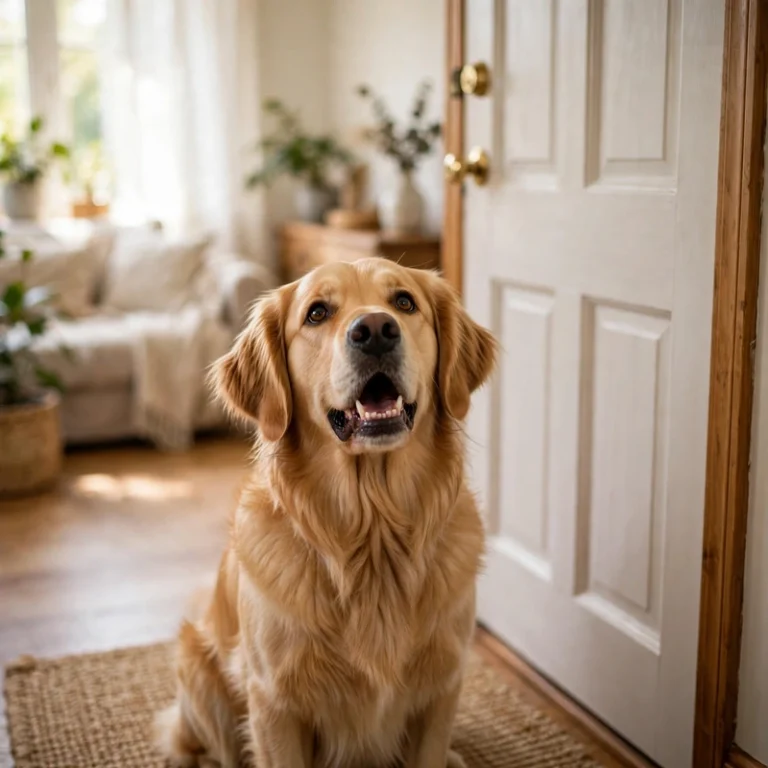
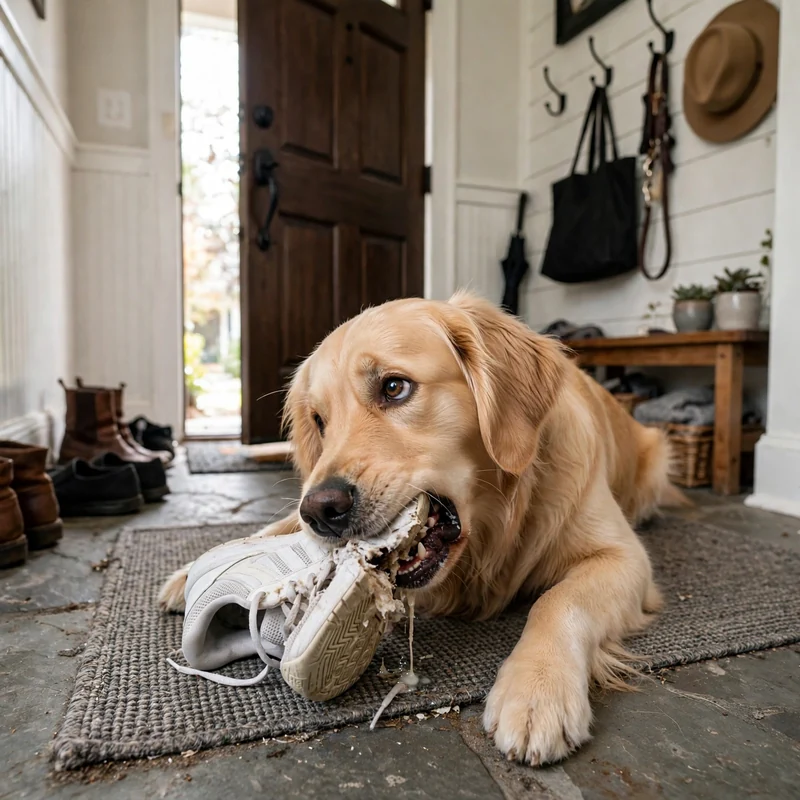
Golden Retriever Chewing Shoes When Left Alone
You come home to a chewed sneaker by the door. Not an old slipper. Your good shoes, torn apart while you were out.
Golden retriever chewing shoes when left alone is a frustrating problem, but it is rarely about spite. Shoes smell strongly of you, and Goldens love to carry things in their mouths.
Direct Answer: Golden Retriever Chewing Shoes When Left Alone
Golden retriever chewing shoes when left alone is usually boredom, separation distress, or a mix of both. Boredom chewing starts later and looks scattered. Distress chewing starts within minutes and focuses on your scent items.
Film one normal absence before you change anything. The camera tells you which problem you have, and the right plan follows from that.
Either way, start with management today. Shoes put away cannot be chewed, and a good enrichment plan gives your dog a better job while you are gone.
Key Takeaways
- Shoes are targeted because they smell like you and suit a retriever’s mouth. It is not spite.
- Diagnose first: boredom and separation distress need different fixes.
- Management stops the damage today; training fixes the cause over weeks.
- Never punish damage you find after the fact. Your dog cannot connect it to chewing hours earlier.
- Sudden chewing in an adult dog, or swallowed shoe pieces, needs a vet call promptly.
Why Shoes, and Why Goldens?
Shoes carry your concentrated scent. For a social, people-bonded breed left alone, that scent is comfort. Chewing your shoes can be your Golden staying close to you while you are gone.
Goldens were bred to pick things up and carry them gently. Shoes are about the right size and shape for carrying, and chewing often follows carrying. A Golden alone with shoes is a retriever with a job and no supervisor.
An under-stimulated Golden alone for hours will invent entertainment. Chewing relieves stress, passes time, and feels rewarding in itself. Shoes are simply what is available and interesting.
Some dogs are not having fun at all. They are distressed, and chewing your scent-soaked belongings is a coping behavior. This needs a slower, gentler approach than boredom chewing.
Young Goldens chew everything, alone or not. If your puppy chews shoes while you are home too, that is general puppy mouthiness, not a separation problem. Our puppy chewing guide covers that stage in detail.
Boredom or Separation Distress? How to Tell
This distinction changes the whole plan, so get it right before you train. One day of video is usually enough to tell the two apart.
| Clue | Boredom chewing | Separation distress |
|---|---|---|
| When it starts | After a while alone, often after a nap | Within minutes of departure |
| What gets chewed | Whatever is available and fun | Your scent items: shoes, laundry, bedding |
| On camera | Relaxed between chewing bouts | Pacing, panting, drooling, howling |
| When you return | Happy, settles normally | Frantic greeting, slow to settle |
| Other signs | None | House-soiling, escape attempts, vocalizing |
Use a cheap pet camera or an old phone recording video. Watch the first 30 minutes after you leave. A bored dog explores, chews, and naps. A distressed dog panics.
Also ask one simple question. Does the chewing happen when you are home too? If it does, separation distress is less likely, and boredom or puppy mouthiness is the better explanation.
The Shoe-Saving Plan: Management First
In short, golden retriever chewing shoes when left alone is best handled in two stages. Management stops the damage today, while training builds over weeks. Do these six steps first.
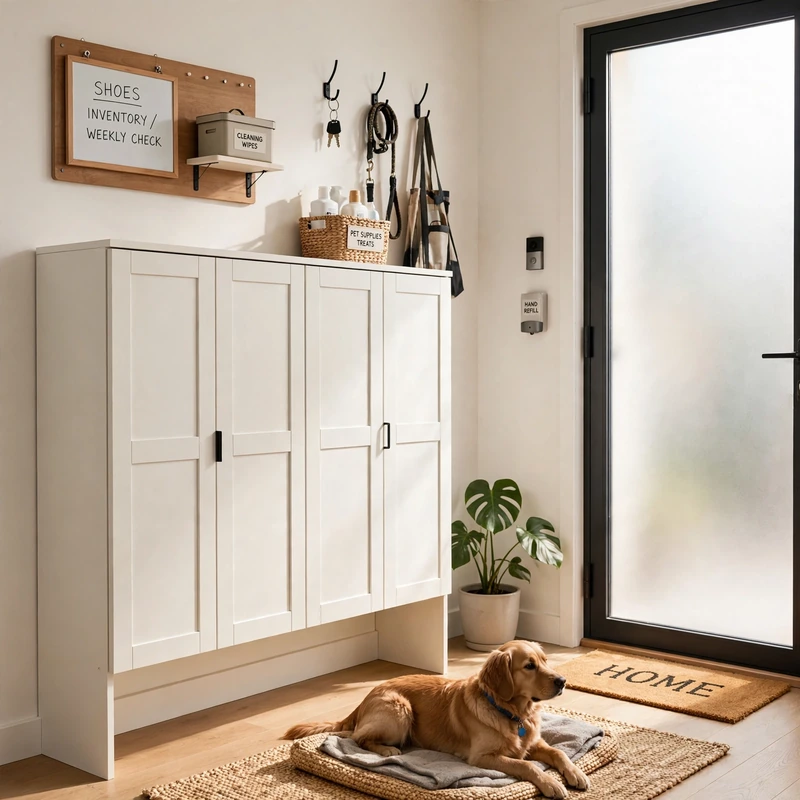
1. Shoes away. Put every shoe in a closed closet, on a high shelf, or behind a shut door. Every shoe your dog cannot reach is a shoe that survives. This is not giving up. It is management, and it is the fastest win available.
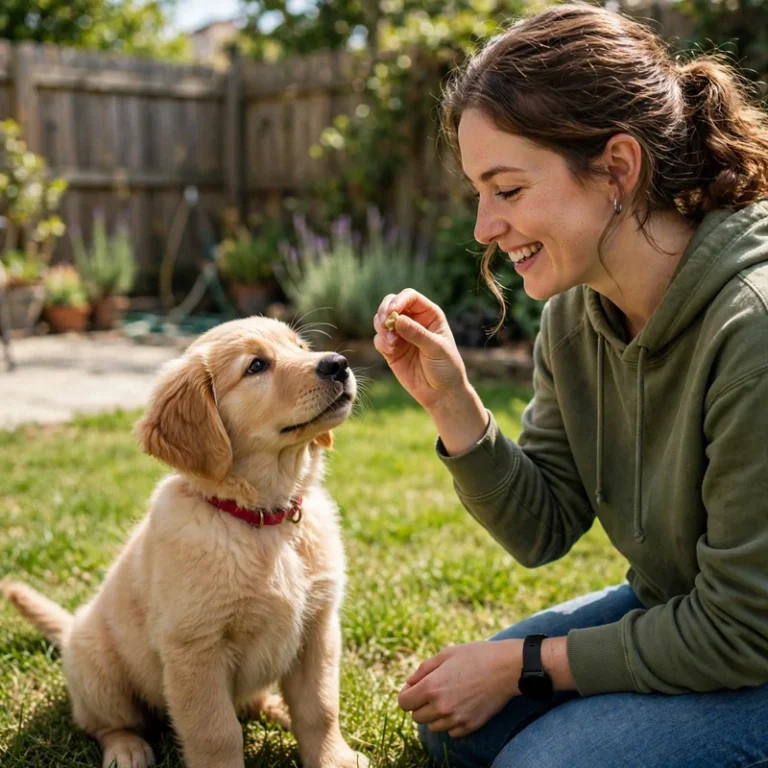
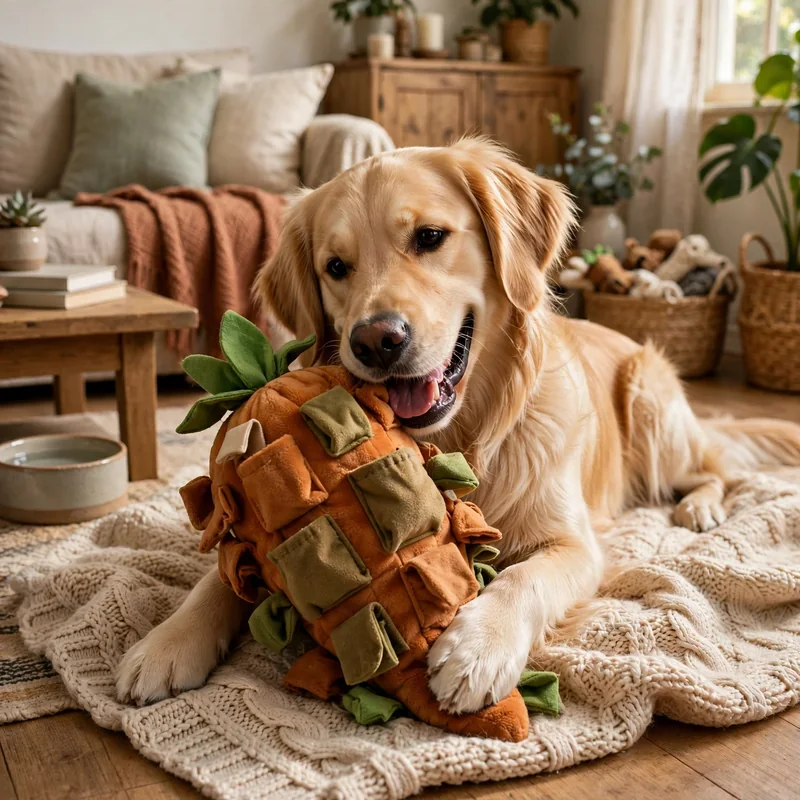
2. Enrichment before departure. About 15 minutes before you leave, offer a frozen stuffed food toy, a snuffle mat, or a puzzle feeder. A Golden with an engaging project chews the project, not your sneakers. Rotate the enrichment so it stays novel.
3. Exercise first. A well-exercised Golden settles more easily. A morning walk plus a short play or training session before you leave changes the whole alone-time picture. A tired dog naps. A wired dog renovates your shoe collection.
4. A safe, boring space. Set up a dog-proofed room or pen with a comfortable bed, water, and safe chews. Nothing valuable should be in reach. For many dogs, a smaller, predictable space feels calming rather than lonely.
5. Background comfort. Leave a radio, television, or white noise on for company-like sound. An old worn T-shirt gives scent comfort without casualties. Never offer an old shoe as a toy, since your dog cannot tell old shoes from new ones.
6. Calm departures and arrivals. Keep goodbyes short and greetings calm. Long emotional farewells teach your dog that leaving is a major event worth worrying about. Calm in, calm out, every time.
Check chewed shoes for missing pieces. Laces, insoles, and heel caps can be swallowed, and a blockage is an emergency. If your dog vomits, gags, goes off food, or seems lethargic after chewing, call your vet promptly.
Training That Fixes the Cause
Management stops the damage, but training fixes the cause. Most cases of golden retriever chewing shoes when left alone fade once the dog’s daily life is fuller and alone time is built up gradually.
For boredom chewers
For boredom chewers, build a better alone-time life. Increase daily exercise and mental stimulation overall, not just before departures. Practice calm alone time while you are home, rewarding your dog for settling on their bed as you move around.
Extend absences gradually, in steps your dog can handle. If a step fails, drop back to the last easy step and build again. Progress is rarely a straight line.
For distressed chewers
For distressed chewers, desensitize departures slowly. Practice picking up keys, putting on shoes, and walking to the door without leaving. Repeat until these cues stop predicting panic.
Then practice micro-absences. Step out for seconds and return before distress starts. Build duration very gradually, over weeks rather than days, and keep a simple log so progress is visible.
Never push through panic to finish a session. Fear must be avoided, or the work backfires and your dog becomes more frightened. If distress persists despite weeks of gradual work, get professional help.
Teach a trade and a settle
Teach a calm trade for forbidden items. If your dog picks up a shoe while you are home, offer a high-value chew or toy in exchange. Praise the swap warmly. Chasing your dog turns shoes into a thrilling game.
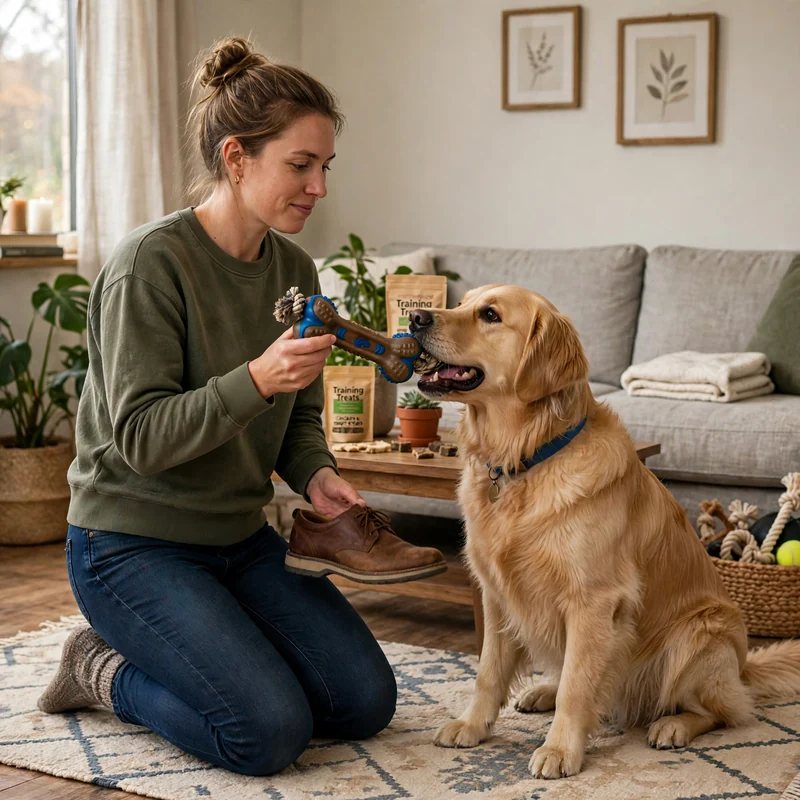
Also teach a settle cue, such as go to your bed and relax. Train it separately first, then layer it into departures. A dog with a trained resting place has a job during alone time.
Check the camera again each month. If your dog now naps peacefully, you are winning. If distress is unchanged, it is time for professional guidance rather than more of the same.
A rough week-by-week outline
| Week | Focus |
|---|---|
| 1 | Management in place, camera test, calm departures |
| 2 to 3 | Enrichment routine, settle training, micro-absences |
| 4 and beyond | Longer absences, monthly camera check, professional help if stuck |
When to Call Your Vet or a Behavior Professional
Get help promptly if you see any of these signs. Separation distress is a welfare issue, not a training failure, and some dogs need medical support alongside behavior work.
- The camera shows panic: panting, drooling, howling, escape attempts, or self-injury
- Destruction is escalating despite management and training
- Your dog injures itself: broken teeth, bloody paws, or damaged claws
- House-soiling, refusal to eat when alone, or the dog cannot settle at all
- The behavior started suddenly in an adult dog, so medical causes must be ruled out first
- Swallowed shoe pieces, or blockage signs such as vomiting, gagging, or lethargy
A veterinary behaviorist or certified separation-anxiety specialist can assess whether anti-anxiety medication alongside behavior work is appropriate. Medication timing and choice are vet decisions, never something to improvise at home.
Common Mistakes That Make It Worse
- Punishing after the fact: your dog learns that homecomings are scary, which can worsen distress chewing.
- Giving an old shoe as a toy: dogs cannot tell old shoes from good ones.
- Getting a second dog for company: it may help boredom, but distress is about you, and you may end up with two shoe chewers.
- Crating a panicking dog without guidance: a distressed dog can injure itself trying to escape a crate.
- Relying on bitter spray alone: determined or distressed dogs chew through the taste. Spray is only a backup.
- Leaving a Golden alone all day without a break: long, lonely days manufacture the boredom and distress behind shoe chewing.
Frequently Asked Questions
Should I punish my dog for chewing shoes?
No. Punishment after the fact does not work, because dogs cannot connect your anger now to chewing hours ago. They learn that you coming home is scary, which can worsen distress-driven chewing. Manage the environment and train the alternative instead.
Will getting a second dog stop the shoe chewing?
Sometimes companionship helps boredom, but a second dog does not treat separation distress. The distress is about you, not about being alone in general. Fix the root cause first, or you may end up with two shoe chewers.
Should I crate my Golden when I leave?
A crate helps some dogs feel secure and prevents destruction, but only if the dog is properly crate-trained and comfortable. Never crate a dog with separation distress as a first resort without guidance. A panicking dog can injure itself trying to escape a crate.
How long can a Golden Retriever be left alone?
Adult Goldens generally manage 4 to 6 hours if their exercise and enrichment needs are met. Puppies manage far less. Beyond that, arrange a midday walker or daycare. Long, lonely days manufacture the exact boredom and distress behind shoe chewing.
My puppy chews shoes even when I am home. Is this the same problem?
No. That is general puppy mouthiness, covered in our puppy chewing guide and nipping plan. This article is about chewing that happens specifically during alone time.
Do bitter sprays stop shoe chewing?
They can make specific shoes less appealing as a backup measure, but determined or distressed dogs chew through the taste. Management, with shoes put away, plus fixing the underlying cause works. Spray alone does not.
What if my dog swallowed part of a shoe?
Call your vet promptly, especially if you see vomiting, gagging, lethargy, loss of appetite, or straining. Do not wait to see if the piece passes on its own. A blockage can become an emergency, and your vet can advise whether an examination is needed.
Shoes are just the symptom. A Golden with a full life, proper exercise, and treated distress when needed does not need your sneakers. Stick with the plan, and golden retriever chewing shoes when left alone will fade into a funny story.
For the broader picture, see our puppy chewing guide and the complete Golden Retriever behavior guide.
Reference
- ASPCA, “Separation Anxiety”: https://www.aspca.org/pet-care/dog-care/common-dog-behavior-issues/separation-anxiety
Still stuck? Get a plan built for your dog.
Answer a few quick questions and get a personalized, force-free training plan in minutes.