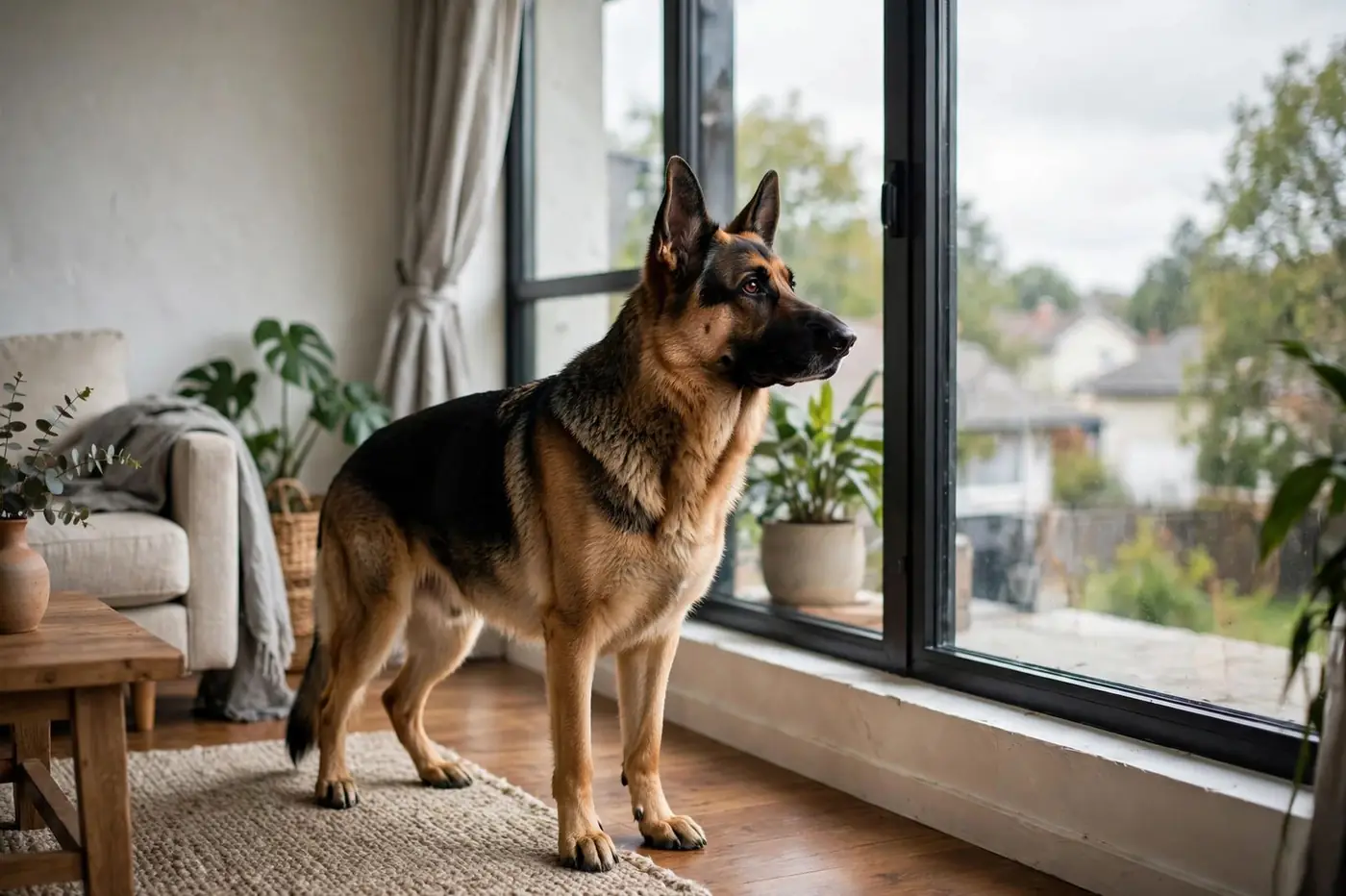
German Shepherd Destructive When Left Alone: Causes and Fixes
# German Shepherd Destructive When Left Alone: Causes and Fixes
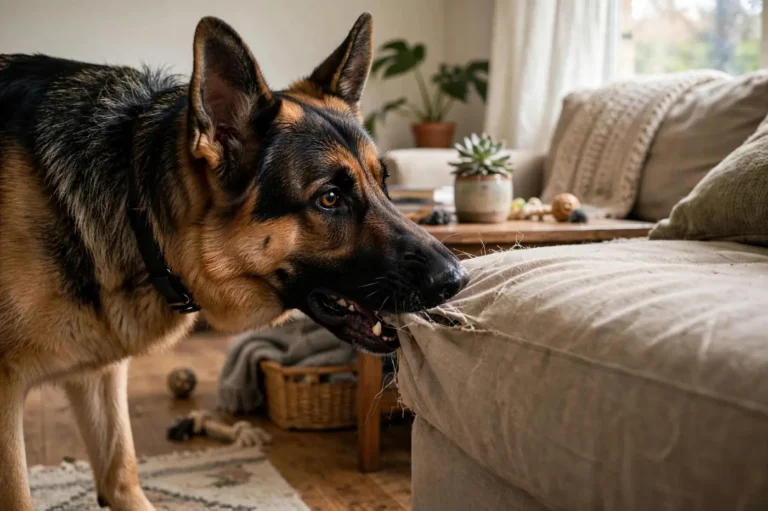
Cushions disemboweled. Door frames scratched raw. The bin raided and its contents distributed across three rooms like modern art. If your German Shepherd is destructive when left alone, you’re dealing with one of the breed’s most common — and most misunderstood — problems.
Here’s what most owners get wrong: they assume the dog is “being naughty” or “getting revenge” for being left. Dogs don’t do revenge. A German Shepherd destroying the house in your absence is either under-exercised and bored out of their mind, or genuinely distressed about being alone. Those two causes look similar but need different fixes — and this guide will help you tell them apart and fix both.
Key Takeaways
- Destruction when alone usually means boredom, under-exercise, or separation anxiety. Figuring out which one changes the entire plan.
- The camera test: a dog that settles then gets destructive is likely bored; a dog that’s distressed from the moment you leave is likely anxious.
- Punishing the dog when you get home never works — they can’t connect it to something they did hours ago.
- Panic-level symptoms (injury, escape attempts, nonstop vocalizing) deserve a vet visit and professional guidance, not tougher confinement.
The Three Main Causes (and How to Tell Them Apart)
1. Under-exercise
The classic. A German Shepherd who got a quick walk around the block and then eight solitary hours is a coiled spring. Destruction from under-exercise often targets “fun” objects — cushions, shoes, the laundry basket — and the dog may otherwise seem fine on camera: napping, then waking up and deciding to redecorate.
2. Boredom and Lack of Enrichment
Closely related but distinct: even a walked dog gets bored. Shepherds are thinkers. A dog with nothing to do, no puzzle, no project, in an empty house for hours, will invent projects. The projects will involve your belongings.
3. Separation Anxiety
This is distress, not mischief. Signs that point toward anxiety rather than boredom:
- Destruction focused on exit points — doors, windows, gates — as if trying to get out (or get to you)
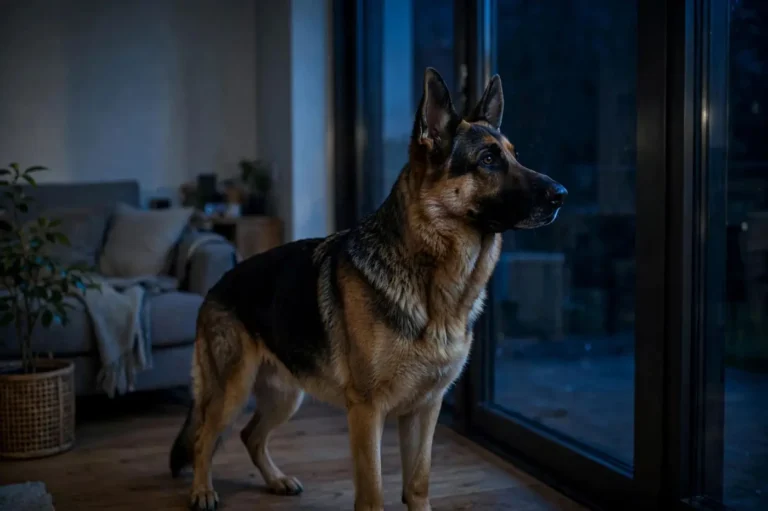
- Drooling, panting, or pacing visible on camera
- Vocalizing (barking, howling, whining) that starts soon after you leave and continues
- House-soiling in a dog that’s otherwise reliably trained
- The behavior happens even on days with good exercise, and even during short absences — like when you shower
The camera test is the single most useful diagnostic tool you have. A cheap pet camera (or even an old phone on video call) for a few absences tells you more than any amount of guessing. Watch the first 30 minutes after you leave: calm settling followed by later mischief suggests boredom; immediate distress suggests anxiety.
Immediate Management: Stop the Damage Now
While you work on the training plan, protect your house and your dog:
- Dog-proof one room or area. Remove anything valuable, dangerous, or chewable. Think of it as a toddler-proofed playroom, not a punishment cell.
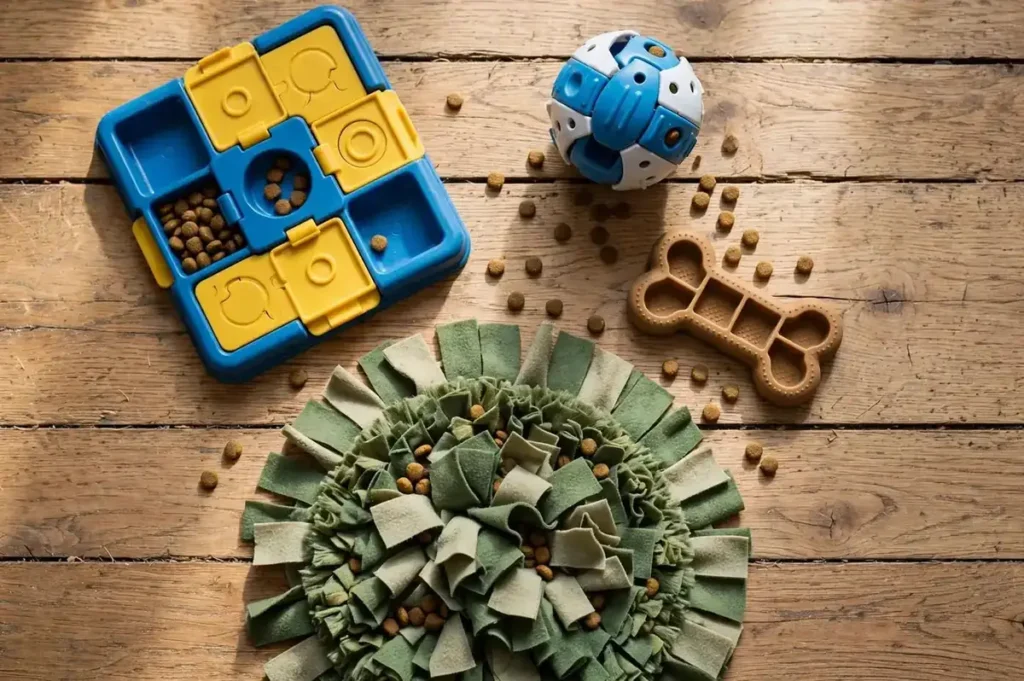
- Leave enrichment, not just toys. A bowl of kibble won’t cut it. Frozen stuffed rubber toys, scatter-fed meals, a snuffle mat — things that take 20–40 minutes of engaged effort.
- Exercise before departures. A solid walk or play session before you leave takes the edge off restless energy. A tired dog settles faster.
- Keep departures and arrivals boring. No long emotional goodbyes, no ecstatic reunions. Calm, brief, matter-of-fact. Big emotional scenes teach the dog that departures are a big deal.
- Don’t trap a panicking dog. If your dog is injuring themselves trying to escape a crate or room, confinement is making things worse, not better. Get professional help instead of a stronger crate.
The Training Plan: Teaching Your Shepherd to Be Alone
This is gradual desensitization — the gold-standard approach for alone-time problems. It works for both boredom and mild anxiety; severe anxiety may need professional support on top.
Week 1–2: Desensitize departure cues. Your dog has learned that keys + shoes + bag = abandonment. Break the association: pick up your keys ten times a day and sit back down. Put your shoes on and watch TV. Make the cues meaningless again.
Week 2–3: Practice micro-absences. Step outside the front door for 10 seconds. Come back before any distress. Repeat, gradually extending: 30 seconds, a minute, five minutes. The rule: always return before the dog gets upset. If they panic at 5 minutes, you’re training at 2 minutes. Progress isn’t linear — that’s normal.
Week 3–4: Build independence while you’re home. Reward your dog for settling on their bed in another room while you’re home. Toss a treat for choosing to lie down away from you. You’re teaching that distance from you is safe and rewarding — the foundation of comfortable alone time.
Ongoing: The departure routine. Exercise, then enrichment (frozen toy), then a calm, brief exit. Leave some background sound on. Start with absences your dog has already mastered in practice, and build up to real-world durations gradually.
The cardinal rule: never jump from successful 20-minute practices to an 8-hour workday. Build in increments your dog has actually proven they can handle.
Exercise: The Non-Negotiable Foundation
I keep coming back to this because it fixes more “destructive when alone” cases than any training protocol: most of these dogs simply aren’t getting enough. An adult German Shepherd needs substantial daily activity — long walks, running, swimming, fetch, training games. A dog who has genuinely worked their body and brain in the morning is a dog who sleeps through the afternoon.
If your schedule can’t provide that, be honest about it and get help: a dog walker, daycare a few days a week, or weekend adventure outings. There’s no training trick that replaces an unmet exercise need.
For the chewing-specific side of destruction, our guide on how to stop a German Shepherd from chewing furniture covers redirection and chew training in detail.
Common Mistakes
- Punishing the dog when you get home. They cannot connect your anger to something they did hours ago. They learn that your return is unpredictable and scary — which increases anxiety and makes the problem worse.
- Long, emotional goodbyes. “Mommy loves you, be a good boy, I’ll miss you SO much!” — you’ve just told your dog this is a crisis.
- Going from zero to full workdays. The dog who managed 30 minutes doesn’t automatically manage 8 hours. Build gradually.
- Getting a second dog to “keep them company.” A second dog doesn’t treat separation anxiety — and now you have two dogs who may feed off each other’s stress. Fix the first dog’s problem first.
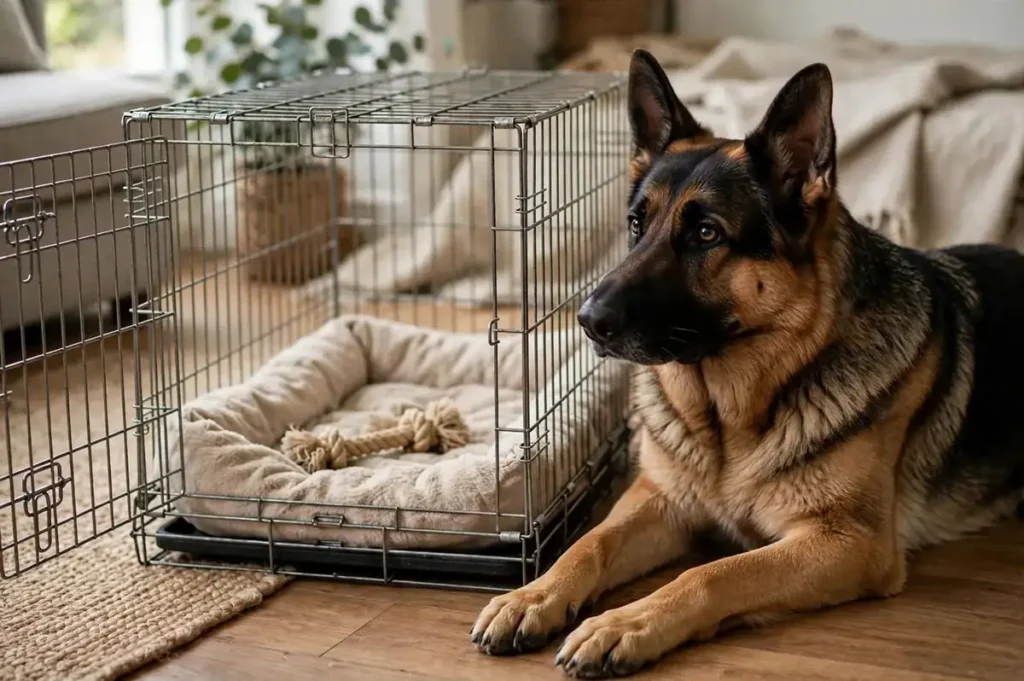
- Relying on the crate as the whole plan. A crate is a management tool, not a treatment. A comfortable, crate-trained dog may rest well in one; an anxious dog may injure themselves trying to escape it.
When to Get Professional Help
Some cases need more than a DIY plan:
- Self-injury or escape attempts — broken teeth, torn nails, bloody paws from scratching at doors. This is suffering, not misbehavior.
- Sudden onset in an adult dog who was previously fine alone — see your vet first. Pain, illness, or age-related changes can trigger new anxiety.
- No progress after several consistent weeks — a certified separation anxiety specialist (many work remotely and this is their entire specialty) can tailor the plan.
- Your vet should be in the loop for severe cases. There are veterinary-prescribed options for extreme anxiety that, combined with behavior work, can give a dog enough relief to actually learn. That’s a conversation for you and your vet — not something to decide from an article.

Frequently Asked Questions
How long can a German Shepherd be left alone?
There’s no single number — it depends on the individual dog’s training, age, and temperament. As general guidance, well-adjusted adult dogs typically manage a standard workday with a midday break far better than puppies, who need much more frequent attention. Build up gradually to whatever your schedule requires, and watch your dog (camera!) rather than the clock.
Will crate training fix destruction when left alone?
Only if the dog is genuinely comfortable in the crate — which takes gradual, positive training. A crate prevents access to your furniture, but it doesn’t treat the underlying boredom or anxiety. And a panicking dog in a crate is an emergency, not a solution.
Should I leave the TV or radio on?
It can help as background sound — many dogs settle better with some ambient noise than in total silence. But it’s a comfort measure, not a fix. Don’t expect it to resolve real anxiety on its own.
Is doggy daycare a good solution?
It can be a great part of the picture for boredom-driven destruction: social play, activity, tired dog. For true separation anxiety, be cautious — some anxious dogs are fine at daycare and still panic at home alone, because the problem is specifically about being without *you*. And daycare doesn’t teach the dog to be alone.
My neighbor is complaining about the noise. What do I do?
Talk to them honestly and early — most people are far more patient when they know you’re actively working on it. Share your plan briefly, give them your number, and show progress. Meanwhile, the camera test plus the training plan above is your fastest route to actual quiet.
Destruction when alone is one of the most fixable German Shepherd problems — but only when you treat the cause instead of punishing the symptom. For the full breed picture, including the five foundations that prevent most behavior problems, read our complete German Shepherd behavior guide. More separation-specific help is in the separation anxiety archive. You can also browse all German Shepherd guides and every separation anxiety guide.