Dog Growls When Your Spouse Comes Near? What to Do
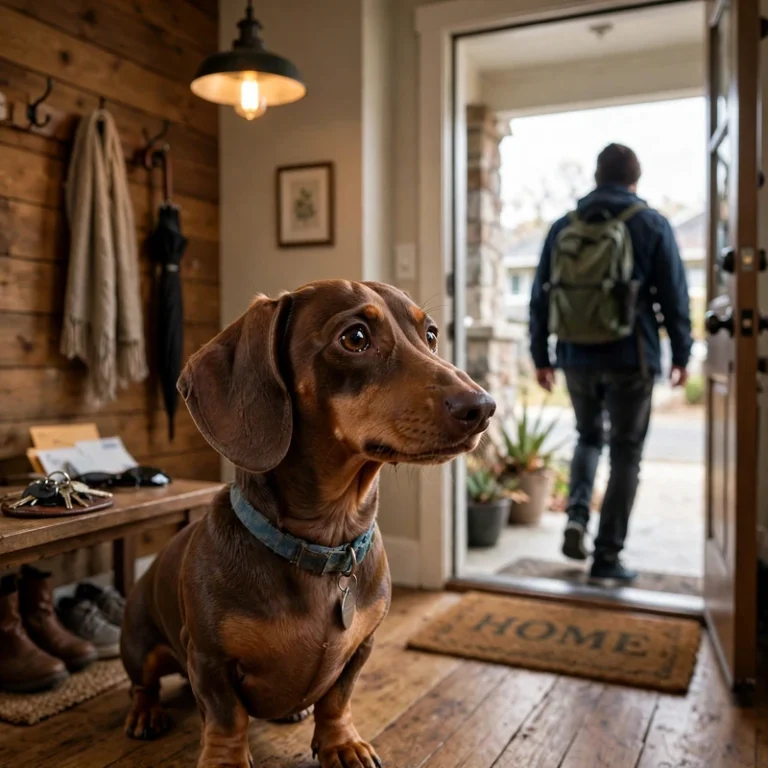
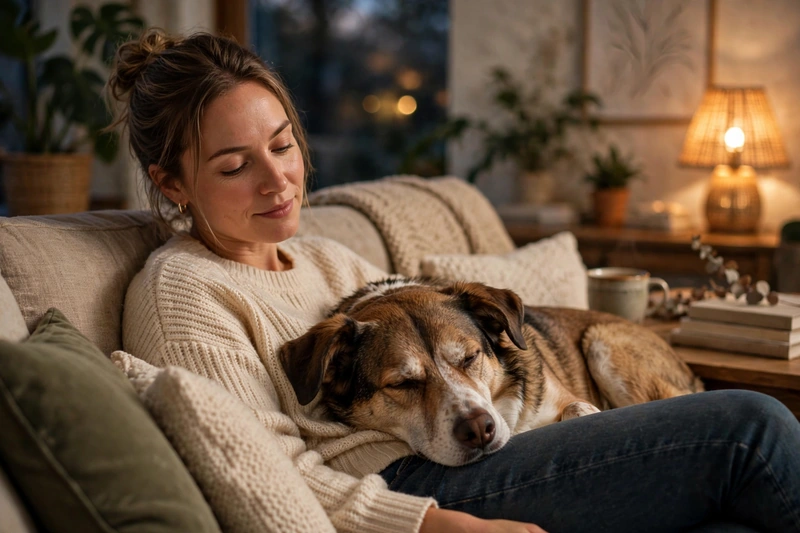
You’re on the couch when your husband sits down beside you, and your dog lets out a low growl. Or your wife walks into the bedroom and the dog, sweet all day, stiffens and bares teeth at her. When a dog growls when spouse comes near, the whole room goes quiet.
If you’re the one being guarded, you feel guilty, like you’re choosing the dog over your partner. If you’re the one being growled at, you feel rejected and hurt. This is your home and your dog too, and now there’s a growling animal standing between you and your own bed.
Both feelings are valid, and both of you deserve a plan for the whole household. This isn’t a relationship problem you caused, and it isn’t a broken dog.
It’s resource guarding, a normal (if very rude) canine behavior, and it can be changed. Here’s what to do when a dog growls when spouse comes near.
Key Takeaways
- A dog who guards one partner from the other is resource guarding a person: they fear losing access to someone they value, not jealousy or dominance.
- Never punish the growl. It’s a warning, and removing the warning doesn’t remove the feeling underneath.
- The quickest relief comes from management: change the routines where guarding happens, especially on the couch and in bed.
- The fix centers on the “rejected” partner becoming the source of good things, while the guarded partner steps back.
- Get professional help for bites, spreading guarding, a child involved, or sudden onset (see a vet first).
Why a Dog Growls When Spouse Comes Near
Dogs guard things they value: food, chews, favorite spots, and yes, people. Your dog’s favorite person is the best resource in the house.
When a dog growls when spouse comes near during a cozy moment, the dog isn’t objecting to your spouse’s existence. They’re responding to what that approach might cost them: the warmth, the attention, the closeness.
Every time the growl works, the behavior gets stronger.
People usually call this jealousy, or worry the dog is trying to be the boss. Neither holds up. Jealousy implies the dog wants what your spouse has; dominance implies a status contest.
What’s actually happening is simpler: the dog learned that growling creates distance, and distance protects access to the person they value. It’s insecurity, not ambition. This pattern is a well-documented form of resource guarding in dog behavior.
So we’re teaching the dog that your spouse’s approach predicts wonderful things instead of loss.
This often shows up only in high-value moments (the couch, the bed, goodbye kisses) while the dog is perfectly friendly to your spouse at other times. When a dog growls when spouse comes near, the guarding is situational, and situational problems have situational solutions.
The Escalation Ladder: Warning Signs to Watch
Growling sits in the middle of a sequence, not the beginning. Dogs climb this ladder when earlier signals get ignored:
- Subtle signals: lip licking, yawning, turning away, whale eye, wedging between you.
- Stiffening and hard stares: tense body, closed mouth, eyes fixed on your spouse.
- Growling and lip curling: the warning most people notice first.
- Snapping at the air near your spouse. The dog is shouting now.
- Biting: the last resort, when nothing else created distance.
The whole plan depends on one rule: respect the growl. A dog who growls is still choosing to communicate instead of bite.
Punishing the growl (scolding, leash pops, pinning, spray bottles) doesn’t remove the uneasy feeling. It removes the warning, and a dog with the same feelings and no warning is a dog who bites “out of nowhere.”
Note what triggered each growl. That trigger list becomes your training curriculum.
Your Dog Growls When Spouse Comes Near: Safety Rules First
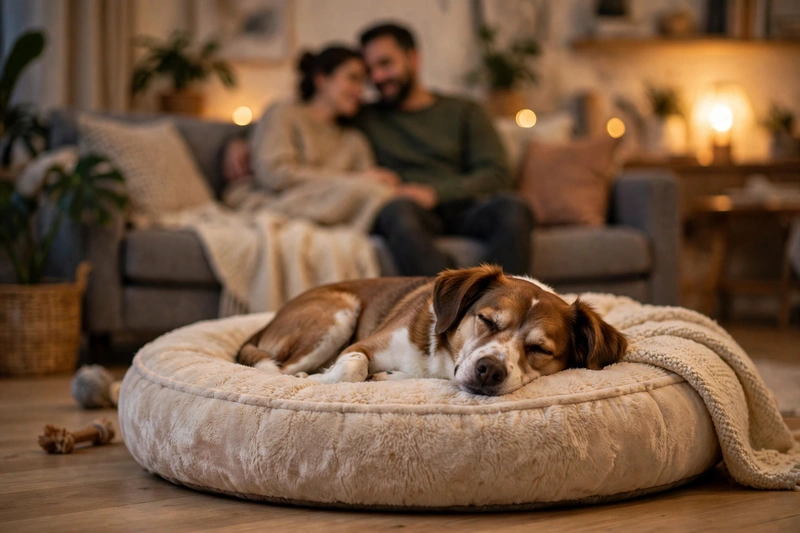
Management comes first: rearrange routines so the growling scenarios stop happening while you work on the plan. This isn’t giving in. It’s what makes training possible.
The couch rule. The classic guarding spot: dog plus one partner settled in, the other partner returns and gets growled at.
When your partner stands up, they call the dog along (or to the dog’s bed) before leaving, so nobody returns to a guarded setup. Or everyone gets up together and resettles together.
For persistent cases, make the couch invitation-only and give the dog a really comfortable bed of their own. Our guide to dogs who growl when moved off the couch goes deeper on that scenario.
The bedroom rule. One partner and the dog settle in, and the latecomer gets growled at coming to bed.
Have the latecomer call the dog out of the bedroom for a treat first, then enter the room together. If the dog won’t happily leave the room for a treat yet, the dog sleeps elsewhere until that skill is solid.
Keep the bedroom door closed meanwhile so the dog can’t claim the bed unsupervised.
The affection rule. Wedging between you during hugs or kisses is the mild, early version of the same behavior. Don’t force “group cuddles” while you’re working through this.
No confrontations. When a dog growls when spouse comes near, nobody should lean over the dog, stare them down, or “stand their ground.” Calmly increase distance instead. Confrontation is how guarding turns into snapping.
Children get extra caution. Kids are unpredictable in exactly the ways guarding dogs dislike. If a child is involved in any guarding scenario, professional help is step one, not a last resort.
The Step-by-Step Plan: Turning Your Spouse Into the Best News in the House
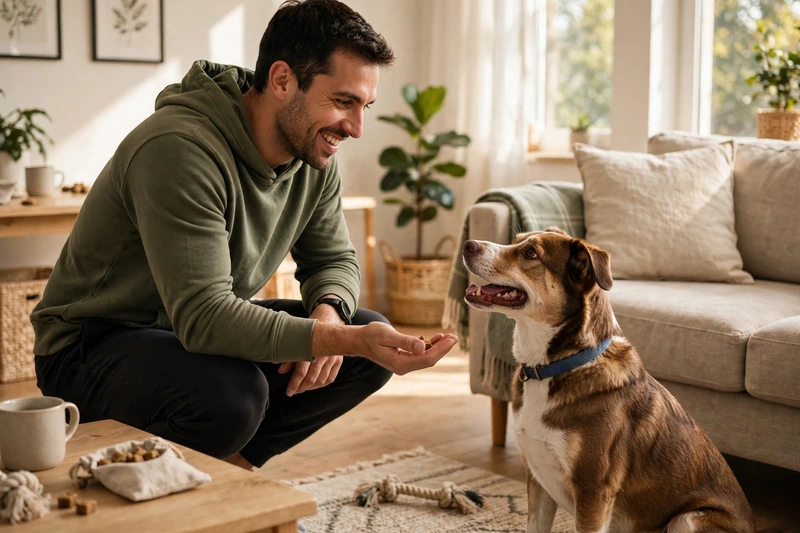
The heart of this plan is counterconditioning: changing how the dog *feels* about your spouse’s approach. Right now, a dog growls when spouse comes near because approach predicts loss. We’re going to make it predict the best things in the dog’s world, delivered by your spouse.
Step 1: The guarded partner steps back. This is temporary. For the next few weeks, the person being guarded stops being the main treat-giver, play-initiator, and cuddle-source.
You’re not ignoring the dog. You’re letting your partner become the fun one, so the dog stops seeing you as a resource under constant threat of being taken.
Step 2: The spouse becomes the treat-giver. Your partner starts delivering the dog’s best rewards: meals, high-value treats, the good walks, the fun games. Keep it pressure-free, no looming, no forced affection. Just be the bringer of chicken.
Step 3: Countercondition the approach. The dog relaxes near you; your partner appears at a distance where the dog notices but stays relaxed.
The moment they appear, they toss a high-value treat toward the dog (tossed, not hand-fed yet), then move away. Partner appears, treat rains down, partner leaves.
Over days and weeks, gradually decrease the distance, staying under the dog’s tension threshold. If the dog stiffens, back up to the last easy distance; the dog should never growl during these sessions.
Step 4: Structured together-time. Once close-range approaches are boring and treat-filled, practice togetherness: all three of you on the couch, your partner delivering a steady stream of small treats for the first few minutes, then tapering off. Short sessions, always ending before the dog gets tense.
Step 5: Train “off” and “place.” Teach the dog to hop off furniture on cue and go to a mat, trained with rewards in calm moments first.
These become your management tools: instead of physically moving a guarding dog (never during a guarding episode), cheerfully ask for “off” or “place” and pay generously. Practice when nothing is at stake, so the cues hold when it matters.
Step 6: Share the caregiving. Rotate who walks, feeds, trains, and plays with the dog. When one person does everything, that person becomes the single most valuable resource in the house, and guarding pressure concentrates on them. Spreading the good stuff across both of you makes guarding less necessary.
What NOT to Do When Your Dog Growls at Your Spouse
Don’t punish the growl. Scolding, alpha rolls, scruffing, spray bottles, and shock or prong collars suppress warnings while leaving the underlying fear untouched, which is exactly how dogs end up biting without warning. A dog growls when spouse comes near to communicate, not to misbehave. Listen.
Don’t force closeness. Making your spouse cuddle the dog, or flooding the dog with approaches until they give up, isn’t training. It’s cornering a scared animal, and it makes guarding worse. Every positive interaction must be the dog’s choice.
Don’t play favorites back. When the dog growls at your spouse, don’t comfort the dog extra hard to “make up for it,” and don’t let your spouse withdraw in anger. Both feed the cycle. Stay neutral, manage the situation, follow the plan.
Don’t try to “show the dog who’s boss.” The dominance framing is outdated and points at the wrong fixes: intimidation, forced submissions, taking things away to prove a point. None of it changes how the dog feels about your spouse approaching.
Don’t let them “work it out.” Leaving the dog and your spouse to sort it out unsupervised is how growls become snaps. Every rehearsal makes the behavior stronger.
Rebuilding the Partner-Dog Bond
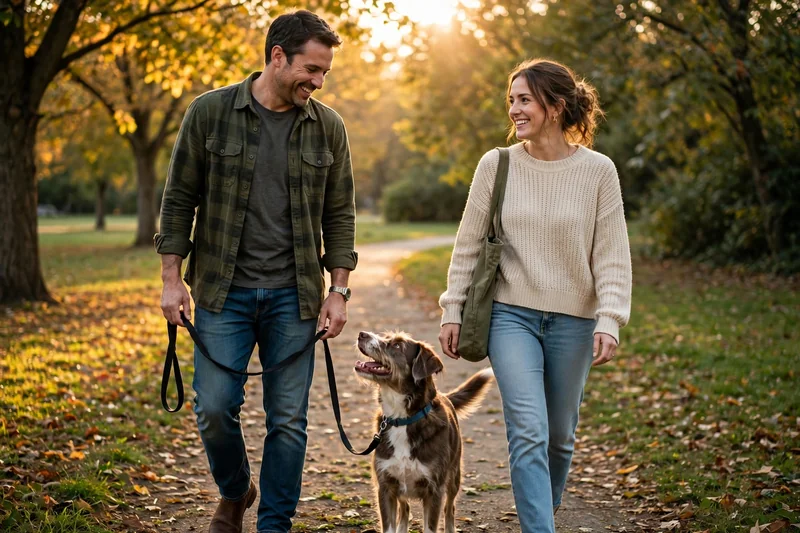
Being growled at by your own dog feels personal even when you know it isn’t, so rebuilding the bond needs to be deliberate, and it needs to belong to your spouse.
Give your partner ownership of the fun stuff: the long sniffy walks, the fetch sessions, the silly training games, the special treats that only come from them. A few weeks of “this person is the source of everything good” rewires the relationship faster than most people expect.
The guarded partner has a role too: don’t take it personally when the dog chooses your spouse’s lap for a while. That’s the plan working. The goal is a dog who trusts both of you.
When to Call a Professional
This plan handles mild to moderate guarding. Bring in a qualified behavior professional promptly if:
- The dog has bitten, or snaps are getting closer and more intense.
- Guarding is spreading: it started with the couch and now it’s the bedroom, the kitchen, and the hallway.
- The dog guards with little or no warning, or leaves the room to confront someone.
- A child is involved in any guarding scenario.
- You feel afraid of your own dog. That’s a valid reason on its own.
Look for a certified professional with specific experience in aggression and resource guarding who uses positive reinforcement (ask what happens when the dog gets it wrong: the answer should never involve pain, fear, or intimidation).
One medical note: if the guarding started suddenly in a dog who never did this before, book a vet visit before you book a trainer. Pain can lower a dog’s tolerance dramatically.
If your dog growls when spouse comes near, it isn’t broken, jealous, or trying to run your marriage. It’s normal animal behavior, and they can learn a better way. Start tonight: change one routine, respect the growl, and give your partner a few weeks of being the most generous person in the dog’s world.