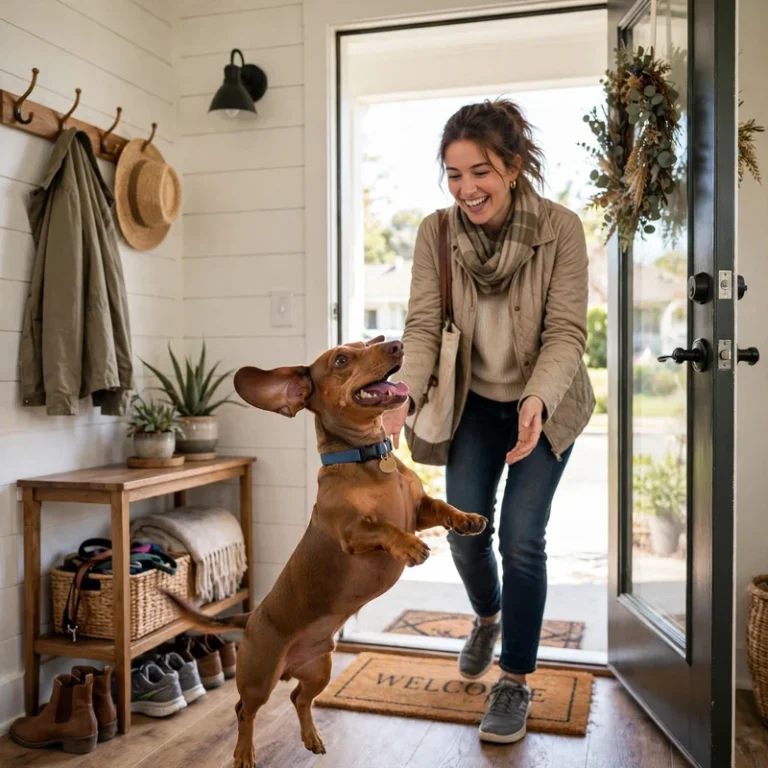
How to Stop a Pomeranian Barking Too Much
If you’re trying to stop Pomeranian barking before it costs you a neighbor’s friendship or puts your lease at risk, you’re in the right place.
A Pom’s bark is shockingly big for a tiny dog, and when it fires at every footstep, knock, and passing shadow, apartment life gets tense fast.
Here’s the honest part first: your Pomeranian isn’t barking to spite you. Barking is this breed’s factory setting.
Pomeranians descend from the ancient Spitz family of dogs, and early Pomeranians weighed around 30 pounds (VCA Animal Hospitals). Queen Victoria’s fascination with the breed shrank the dog but kept the watchdog wiring.
You can’t delete that instinct. But you can teach a Pom when to sound the alarm and when to stand down.
This plan uses only reward-based training. No shock collars, no spray collars, no “be the alpha.” Force-free methods work better on anxious barkers anyway, as you’ll see below.
Key Takeaways
- Pomeranians bark because they’re wired to: Spitz watchdog heritage makes alert barking at sounds, movement, and strangers the breed’s default.
- Find the top two triggers first (doorbell, window-watching, boredom, attention): the fix depends on the trigger.
- Management works fastest: window film, white noise, and blocked sightlines can cut barking within days while training builds.
- Teach “quiet” by rewarding silence, desensitize the doorbell gradually, and remove the payoff for attention barking.
- Never use spray, shock, or vibration bark collars. Animal welfare groups including the RSPCA advise against them because they punish the dog without fixing the cause.
- Barking nonstop when left alone signals possible separation anxiety: get professional help.
Why Pomeranians Bark So Much
Understanding the why keeps you from training the wrong problem. Pomeranian barking almost always falls into a few buckets.
Alert barking is the breed trait. True to its Spitz heritage, the Pomeranian is spunky, bold, and naturally suspicious of strangers, and some Poms tend to bark a lot (VCA Animal Hospitals).
To your Pom, the doorbell, knocks, and hallway footsteps are intrusions, and sounding the alarm is what their ancestors were kept around for. Aim for a Pom who barks twice and settles, not one who ignores the doorbell.
Territory watching. Many Poms claim a window and announce every passerby. Because the “threat” always walks away, the dog concludes barking worked.
Boredom. Smart, active little dogs left alone with nothing to do don’t just nap. Under-stimulated Poms bark, pace, and invent problems.
Attention barking. Usually trained by the owner, by accident. The Pom barks, you look, talk, pick them up, or hand over a treat to buy quiet.
The dog learns a simple equation: barking summons the human. It’s not manipulation; it’s learning. And it can be un-learned.
Excitement. Playtime and greetings bring happy barks in short bursts. Normal communication, not a problem, though a calmer greeting routine still helps.
Anxiety and loneliness. Barking or howling that starts when you’re gone, paired with pacing, drooling, or destruction, points to separation anxiety. That needs a different plan and professional support, covered below.
The Step-by-Step Plan to Stop Pomeranian Barking
Step 1: Find the top two triggers
For three days, keep a simple bark log on your phone: time, what happened just before, how long it lasted.
Most of the noise will come from one or two scenarios, usually doorbell/knocking plus window-watching, or attention barking plus boredom when alone. Train the top two first if you want to stop Pomeranian barking for good; the rest gets quieter as a side effect.
Step 2: Manage the environment (the fastest win)
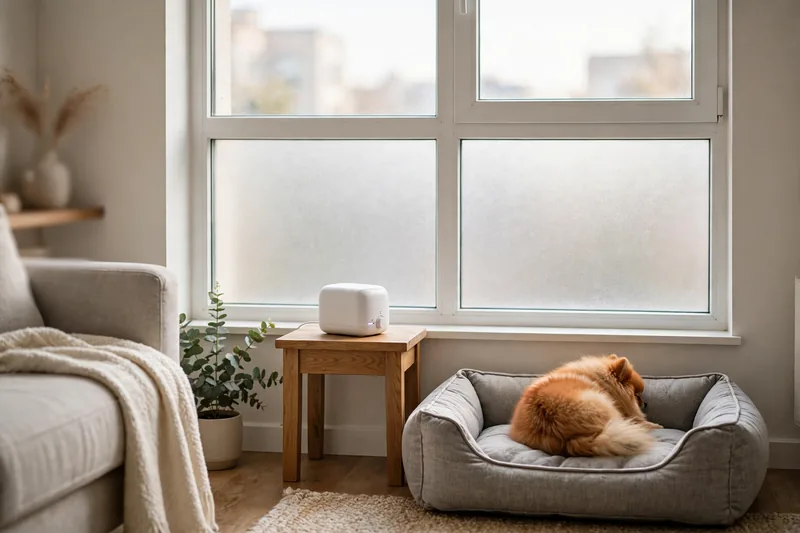
You can’t train a dog who’s rehearsing barking fifty times a day. Management cuts the rehearsals while training builds new habits. For window-watchers, apply frosted window film to the lower half of patrol windows, or close blinds during busy hours. Blocking the view removes the trigger.
Add background sound near the front door (white noise machine, fan, or calm talk radio) to soften hallway noises. A baby gate keeping your Pom in a back room during rush hours also helps. These changes can cut daily barking within days.
Step 3: Teach “quiet” with rewards
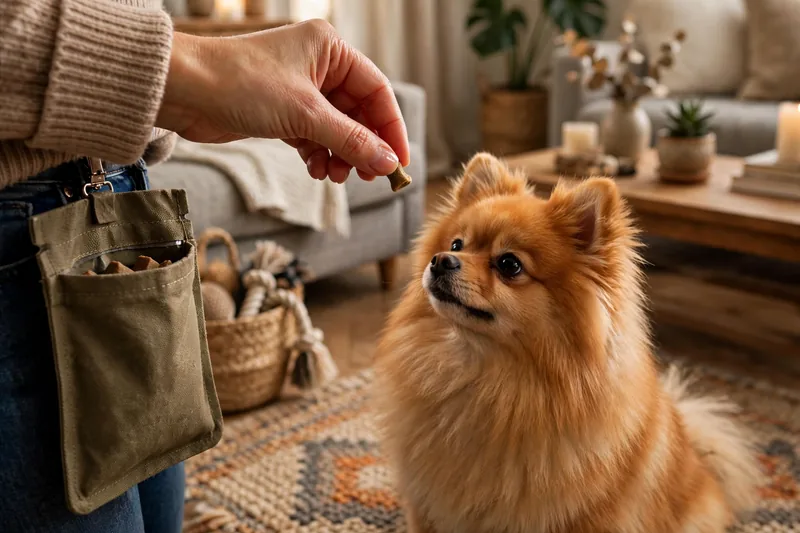
Start away from the big triggers, in a calm moment. When your Pom is quiet and settled, say “quiet,” mark it (a clicker or a calm “yes”), and deliver a treat. Repeat in short sessions a few times a day.
Next, trigger a mild bark (a soft knock from a helper or a phone sound). The instant your Pom pauses, even for two seconds, mark and reward, building the pause gradually.
Keep your own energy calm. Short, upbeat sessions suit this breed: a few minutes a day is enough to stop Pomeranian barking on cue.
Step 4: Desensitize the doorbell and knocking
The doorbell is a Pom’s nemesis: loud, sudden, and it always “brings” a stranger. Rehearse it on your terms.
Play a doorbell recording at a very low volume while feeding high-value treats, and raise the volume in small steps over sessions, always staying below the barking threshold. You’re rewriting the script: the sound predicts treats, not intruders.
Repeat with knocking, then add a “go to place” routine: when the real doorbell rings, cue your Pom to their bed, reward the settle, then open the door. This routine alone can stop Pomeranian barking at the door within weeks.
Step 5: The attention-barking protocol
If the bark log shows your Pom barks at you to get things, the way to stop Pomeranian barking for attention is removing the payoff. Everyone in the household must follow the same rule: barking never summons attention, hands, food, or doors.
When barking starts, turn away calmly: no eye contact, no talking, no “stop it.” Talking to a barking dog is still attention.
The moment there’s a pause, turn back, ask for a sit, then give the dog what they wanted. Also watch accidental rewards: petting mid-bark, looking at them, or opening doors on demand all teach the same lesson: barking works.
Step 6: Exercise the body, tire the brain
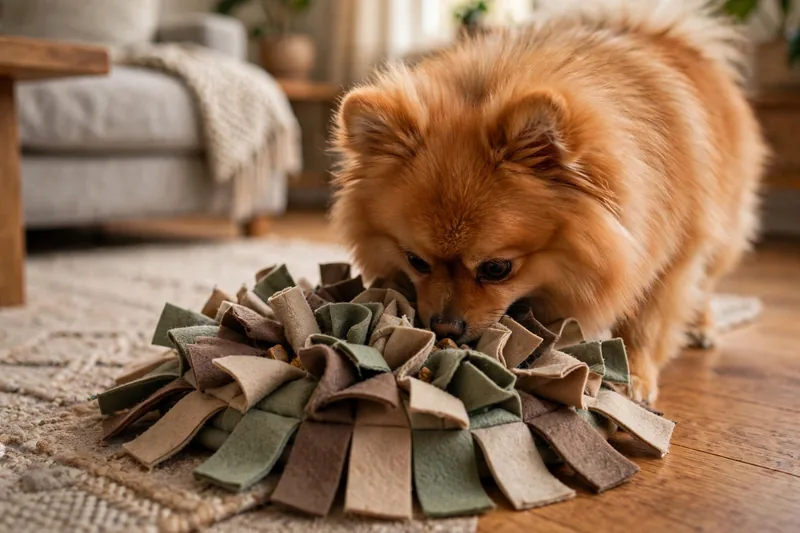
Poms need daily outlets: a real walk with sniffing time, five-minute training games, and food puzzles or snuffle mats. A Pom who has sniffed and solved things has less pressure to release through barking.
What NOT to Do If You Want to Stop Pomeranian Barking
You’ll still find breed guides recommending spray devices, citronella bark collars, or “alpha leader” routines, and one popular Q&A site has an “expert” recommending a spray bark collar outright.
The goal is the same as yours, so let’s be kind about it: those methods try to silence the noise rather than fix the reason for it. Here’s why they backfire on this breed.
Don’t use bark collars (spray, citronella, vibration, or shock). RSPCA Australia does not recommend anti-bark collars: they’re a form of punishment that’s unreliable, easy to abuse, and doesn’t address the cause.
RSPCA South Australia is blunter: shock collars and similar methods “will never address the real reason that your dog is barking and are not good for your dog’s welfare.” On an anxious barker, punishment for a fear response usually raises the anxiety, and the barking returns louder or shifts into new problems.
Don’t yell. To your Pom it often sounds like you’re joining in. RSPCA South Australia notes that if your dog thinks you’re “barking” too, they’ll ramp it up in response.
And to an attention-barker, a big dramatic reaction is exactly the payoff they wanted. Speak less, reward more.
Don’t try to be the “alpha.” Some older guides tell you to establish pack-leader status with rituals like eating before the dog or entering doors first. Pomeranians don’t need a boss; they need a teacher.
Consistent rules and well-timed rewards teach faster than any dominance ritual, and “alpha” techniques that involve intimidation erode the trust that quiet training depends on.
Apartment Living: Keeping the Peace
For apartment Poms, learning to stop Pomeranian barking is a housing issue too. A few lease-saving moves:
- Front-load management. Window film, closed blinds, and white noise during the day protect you from the hallway-traffic hours you can’t control.
- Talk to your neighbors before they complain to you. A short, friendly note (“I’m training my little dog on barking; here’s my number if it’s bad during the day”) buys goodwill and early warnings instead of a formal complaint.
- Break up the alone hours. A midday dog walker, a neighbor visit, or a puzzle feeder on a timer shortens the longest boredom stretch. A pet camera tells you whether the barking is boredom, alert, or anxiety.
- Know your lease. Read the noise and pet clauses so you know exactly what counts as a violation, and keep notes on the training you’re doing. If a complaint ever escalates, documented effort matters.
- Tire them before the quiet hours. An evening walk plus a snuffle mat before bed settles most Poms for the night. (The white-noise and sleep-spot steps in our guide to stop Dachshund barking at night work for Pomeranians too.)
When Barking Signals Anxiety: Get Professional Help
Some barking isn’t a training gap; it’s distress. Suspect separation anxiety if the barking starts within minutes of you leaving and comes with pacing, drooling, scratching at doors, house-soiling in a trained dog, or escape attempts. It’s a welfare problem, not disobedience.
It needs a structured desensitization plan that’s hard to do well from articles alone. Talk to your vet first to rule out medical contributors, then work with a certified force-free trainer or a veterinary behaviorist. For breed-comparable detail on the process, see our guide to Dachshund separation anxiety.
One more rule: if a previously quiet adult Pom suddenly barks much more, or barks when touched, book a vet visit before assuming it’s behavioral. Pain and hearing changes can turn up the volume, and no training plan fixes a sore tooth.
FAQs
Can you train a Pomeranian to never bark?
No, and you shouldn’t try. Alert barking is part of the breed’s heritage; a Pom who gives two alert barks and settles on cue is a trained Pom.
Are bark collars safe for small dogs like Pomeranians?
Not recommended. Welfare organizations including RSPCA Australia advise against anti-bark collars because they punish without addressing the cause, and on a tiny, often anxious breed the risk of increasing fear is real. The force-free steps above work without them.
How long does it take to stop Pomeranian barking?
Window film and white noise can reduce barking within days; a reliable “quiet” cue and doorbell desensitization usually take several weeks of short, consistent sessions.
Why does my Pomeranian bark at guests but not at me?
Guests are strangers entering the territory. To stop Pomeranian barking at visitors, use the Step 4 routine, and ask guests to ignore the dog until it settles.
My Pom only barks when I leave the house. Is that normal?
It’s common but often separation anxiety, especially if it starts right after you go and includes pacing or destruction. Use a pet camera to check, then get professional guidance.