Why Does My Dog Growl at My Husband? (And How to Fix It)
The ‘dog growls at husband’ scenario is more common than most couples admit. Your husband walks into the room and your sweet dog, who adores you, lets out a low growl.
Take a breath: the ‘dog growls at husband’ pattern is almost never about love for one of you and rejection of the other. Dogs react to fear, guarding, or discomfort — and it’s one of the most fixable behavior problems there is.
Key Takeaways
- A dog growling at one family member is almost always driven by fear, resource guarding, or pain: not jealousy, spite, or dominance.
- Men can intimidate dogs through no fault of their own: deeper voices, larger frames, and movement patterns the dog isn’t used to.
- Never punish the growl. It’s a warning, and removing it leaves a dog who may bite without one.
- The fix: your husband becomes the source of the dog’s best experiences: treats, meals, walks, and games, on the dog’s terms.
- Sudden growling at a specific person warrants a vet check first, especially if the dog was previously fine with them.
Why Does My Dog Growl at My Husband? The Real Reasons
Every ‘dog growls at husband’ case has a cause underneath. The growl is only the symptom — and one of these causes is almost always at work.
Fear. The most common reason — and none of it is your husband’s fault. Dogs can find deep voices, larger frames, and sudden movements frightening. The ‘dog growls at husband’ pattern is usually fear-based: Wikipedia’s article on dog aggression lists fear among the top triggers.
There’s often history underneath. If a dog had little early exposure to men, men are simply the unfamiliar category — and dogs frightened or hurt by a man in the past may generalize that fear. Rescue dogs with unknown histories deserve extra patience.
Guarding you. Does growling only happen when he sits beside you or hugs you? That’s resource guarding — the dog defends you like a food bowl. Our guide to dogs who guard an owner from a spouse covers that exact scenario.
Pain during specific handling. If growling only happens when your husband picks the dog up, pain may be the reason. Dogs with arthritis, ear infections, or dental pain have a shorter fuse — and sudden behavior changes warrant a vet check first.
What’s not happening: jealousy, dominance, or spite. Dogs don’t feel human jealousy — what looks that way is guarding or fear. And ‘he’s trying to be dominant’ is outdated: modern behavior science has largely set it aside.
The Safety Rules Come First
Before any training, set the household up so nobody gets hurt and the dog stops practicing the ‘dog growls at husband’ behavior. These rules come before everything else.
1. Respect the growl. A growl is your dog saying ‘I’m not okay’ in the only language they have — punish it and only the warning goes away, while the fear stays. Never punish a growl; thank your dog for the warning instead.
2. Stop the rehearsals. Identify the two or three situations where growling happens and manage them this week. If he growls when your husband sits beside you, have him greet you from across the room for now.
3. No forced bonding. Your husband cannot win the dog over by pursuing them, cornering them for pets, or scooping them up for cuddles. Every interaction the dog doesn’t choose pushes the relationship backward. Let the dog come to him, always.
4. No looming approaches. For now, no towering over the dog, reaching down over their head, or getting face-to-face. Side-on approaches, crouching, and soft eye contact are far less threatening to a nervous dog.
5. Rule out pain. Sudden growling, or growling only around certain kinds of touch, is a vet visit before it’s a training project. Sudden behavior change is one of the most reliable signals that something hurts.
6. Get both partners on the same page. Sit down together and agree: same rules, no exceptions, no shortcuts. One set of rules fixes this far faster than two.
How to Fix It When Your Dog Growls at Your Husband: The Step-by-Step Plan
The idea is simple: reverse the ‘dog growls at husband’ pattern by making your husband the source of the dog’s best experiences.
Step 1: Husband becomes the treat-giver. For the next few weeks, he’s the only source of the dog’s highest-value treats — real chicken, cheese, whatever makes your dog’s eyes go wide. He tosses treats from a distance, with no reaching or eye contact.
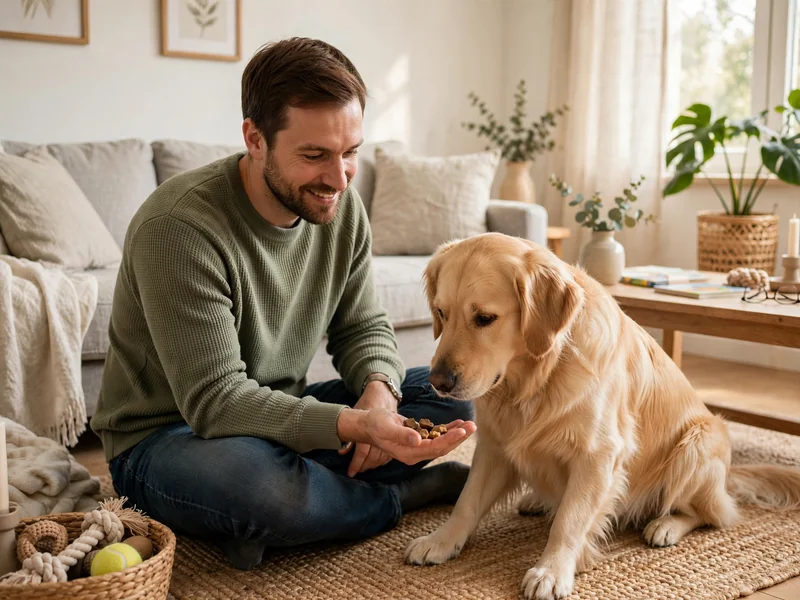
Step 2: Close the distance at the dog’s pace. Over days and weeks, the dog will start greeting your husband’s arrival with hopeful interest instead of worry. Let the dog choose to move closer — every session should end on that positive note.
Step 3: Low-pressure time together. Your husband should simply exist near the dog without asking anything of them: sit on the floor across the room reading, occasionally tossing a treat. Never pull the dog toward him.
Step 4: Husband takes over the fun duties. Once the dog takes treats comfortably, your husband gradually becomes the person behind the good stuff: meals, walks, and play. Over time, the dog starts associating your husband with the best parts of the day.

Step 5: Build on the wins. Add short, positive training sessions: sit, touch, easy tricks, each rewarded generously. Training builds a communication channel — and if one-person listening is an issue, our guide on a dog who only listens to one person covers that side.
What Not to Do When Your Dog Growls at Your Husband
Don’t punish the growl. Yelling, scolding, hitting, or using shock or prong collars on a growling dog suppresses the warning while leaving the fear or guarding untouched. That’s how you create a dog who bites without warning.
Don’t force friendship. Forced petting, cornering the dog for “bonding time,” or having your husband carry the dog around teaches the dog one thing: that person traps them. Let every approach be the dog’s choice.
Don’t “show him who’s boss.” Alpha rolls, intimidation, and dominance-based routines don’t fix fear — they add more of it. A frightened dog needs safety, not a power struggle.
Rebuilding Trust: A Realistic Timeline
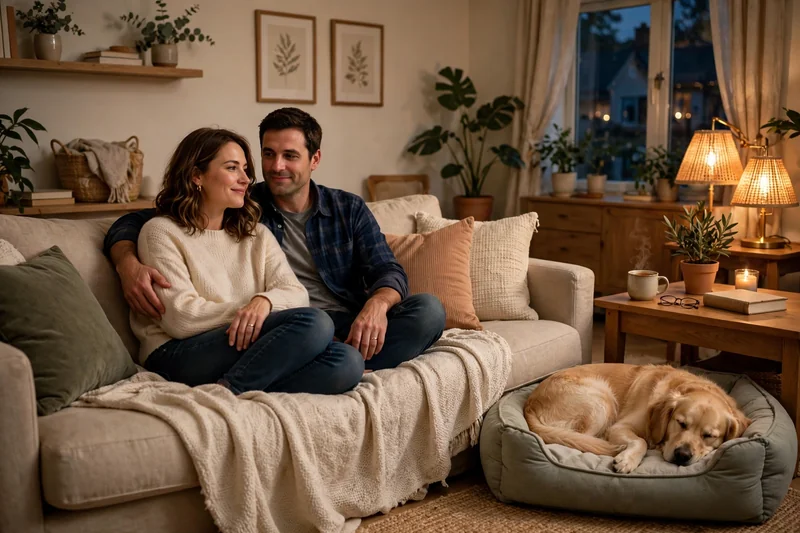
There’s no fixed schedule, and anyone promising one is guessing. But here’s what consistent work usually looks like.
The first one to two weeks tend to bring small shifts: the dog relaxes faster when your husband enters, or takes a treat a step closer. Over the following weeks, the dog orients toward your husband with hopeful body language instead of tension.
Some dogs need longer: older dogs with rehearsed fear, dogs punished for growling in the past, or dogs with a painful history. Weeks two to six are where most families see the real turn — the dog starts seeking your husband out.
When to Call a Professional
This plan handles mild to moderate ‘dog growls at husband’ cases: growling with clear triggers, no bites, and steady progress. Call a professional if:
- The dog has snapped or bitten, or growling is escalating in frequency or intensity
- The dog guards from more than one person, or the guarding is spreading to new situations
- A child lives in or visits the home and there’s any bite risk
- The growling appeared suddenly (vet first, then a behaviorist)
- You feel afraid of your own dog. That’s a valid reason on its own.
Look for a qualified behavior professional who uses positive-reinforcement methods. Ask directly what happens when a dog gets it wrong: the answer should never involve pain, fear, or intimidation.
FAQs: Dog Growls at Husband
Why does my dog growl at my husband and not me?
Most likely because something about your husband is harder for your dog: a deeper voice, larger size, different movement, or simply less positive history together. It can also be guarding of you specifically.
Is my dog jealous of my husband?
Not in the human sense. What looks like jealousy is almost always resource guarding or fear. The distinction matters: “jealousy” suggests a personality flaw to correct, while guarding and fear are emotions you can work through with training.
Will my dog ever stop growling at my husband completely?
Most dogs improve dramatically and many stop entirely once the underlying fear or guarding is resolved. A few remain a little reserved around one person but live comfortably and safely in the same household. Both count as success.
The ‘dog growls at husband’ scenario feels like a relationship problem, but it isn’t one. It’s a communication problem with a kind solution: safety first, patience second. For the related guarding scenario, read our guide on dogs who guard an owner from a spouse.