
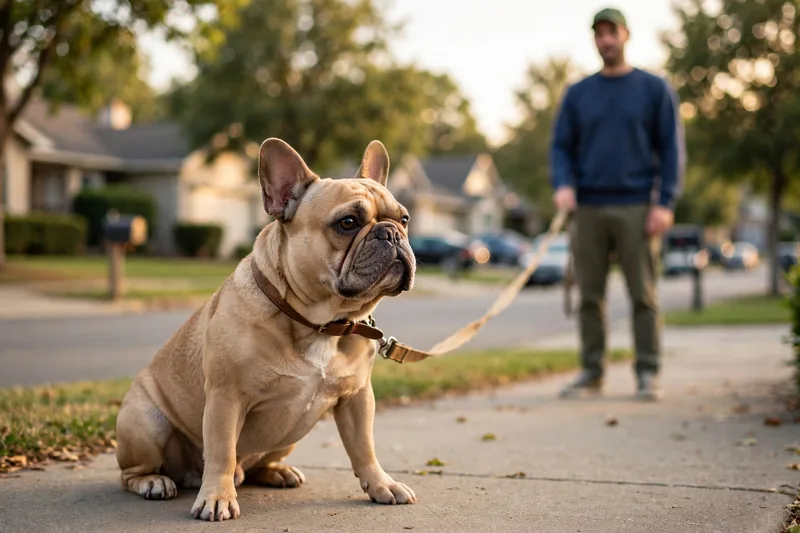
French Bulldog Refuses to Walk? What to Do
If your French Bulldog refuses to walk, you’ve probably lived the moment: leash on, door open, and your dog suddenly turned to stone. Your first instinct is probably to call it stubbornness, but with this breed, a planted dog is far more often a dog whose body is saying no.
French Bulldogs are brachycephalic: flat faces, narrowed airways, and a much smaller margin for overheating, exhaustion, and pain. When a French Bulldog refuses to walk, the first question isn’t “how do I make him move?” It’s “what is he telling me?”
Key Takeaways
- In French Bulldogs, refusing to walk is often physical, not defiant: overheating, breathing difficulty, tiredness, sore paws, or pinching gear.
- Overheating is the number-one check. Frenchies struggle in temperatures other dogs handle easily, and heatstroke can become an emergency fast.
- Never drag a dog that plants their feet, and never use leash pops or punishment. On a brachycephalic dog, pressure on the neck is genuinely dangerous.
- The fix: rule out the medical first, walk at cool times in a comfortable harness, and reward every step forward instead of fighting the standstill.
- Sudden refusal in a dog who used to walk happily is a vet visit, not a training project.
When Your French Bulldog Refuses to Walk, Check the Body First
Training is useless against a physical problem. Start here.
Overheating. The single most important check. Flat-faced breeds can overheat in temperatures as low as 21°C (70°F), and a UK study of more than 900,000 dogs published in Scientific Reports found French Bulldogs six times more likely to need veterinary care for heatstroke than Labrador retrievers.
If the air feels warm to you, it is working much harder on your Frenchie, and refusing to keep walking is one of the most sensible things they can do.
Breathing trouble. Flat faces often mean narrowed nostrils, an elongated soft palate, and a narrower-than-normal windpipe. Many Frenchies work harder for every breath and pant far less effectively than longer-nosed dogs. A dog who plants shortly after setting out, panting heavily or breathing noisily, may simply be running out of air.
Pain and exhaustion. Sore paws, a strained muscle, or simple tiredness will stop a dog in their tracks. Stocky Frenchies tire faster than they look like they should.
Gear discomfort or fear. A harness that pinches, a collar pressing on a compromised airway, or a scare on the route (a truck backfiring, a loose dog charging) can each make a dog refuse.
If the refusal started when the gear changed, start there; if it happens in specific places, the dog is saying “not safe,” not “no.”
See the vet before you train if: the refusal started suddenly in a previously willing dog; the dog is limping, stiff, or yelping; breathing is noisier or labored in mild weather; or there are any signs of overheating.
Also book a vet visit if the dog seems lethargic or off their food, or new breathing noises have appeared (some Frenchies benefit enormously from airway assessment and treatment). Pain, breathing trouble, and heat illness come before any training.
The Overheating Check: What Heat Distress Looks Like in a Frenchie
Learn the signs cold, before you need them. Early signs include heavy, frantic panting, thick or ropy drooling, seeking shade, lying down and not wanting to get up, and dark or bright-red gums and tongue.
If you see any of these, the walk is over: head home, offer cool (not ice-cold) water, and get the dog into shade or air conditioning to rest.
If it progresses: vomiting or diarrhea, a wobbly gait, a glazed or dazed expression, collapse, or seizures. Heatstroke is a veterinary emergency. Move the dog to shade, wet them with cool water (never ice water), and get to a vet immediately.
In a brachycephalic dog it can arrive shockingly fast, and it can cause organ damage and death.
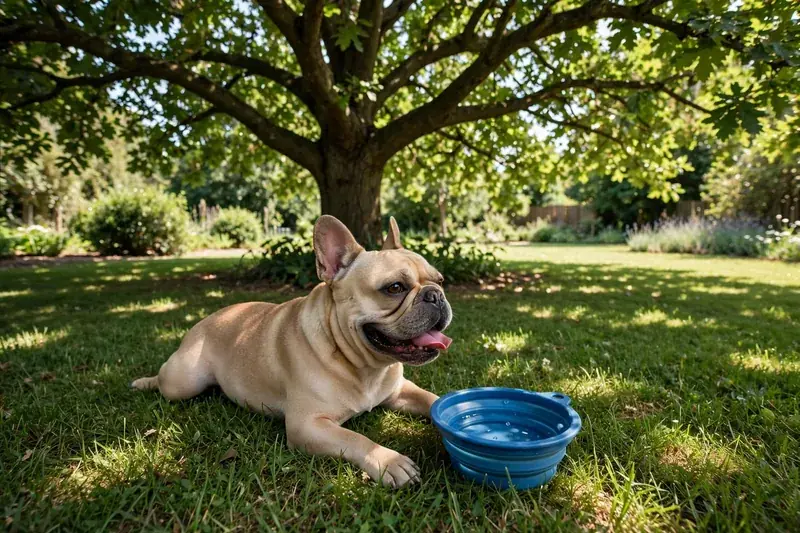
Walk in the cool of early morning or late evening, keep walks short, bring water, stick to shade, and let your Frenchie set the pace.
If your French Bulldog refuses to walk on a warm day, treat it as heat distress until you know otherwise.
Why a French Bulldog Refuses to Walk: The Behavioral Side
Learned “planting works.” Dogs do what pays. If planting has reliably ended the walk, turned back toward home, or produced a worried owner who scoops the dog up, the dog has learned a very effective strategy. Not dominance or spite: simple economics.
The fix isn’t to overpower the strategy, it’s to make walking pay better than standing still.
Fear and under-socialization. Many Frenchies are under-socialized to the noisy outside world. Traffic, skateboards, construction noise, a strange dog barking behind a fence: a fearful dog freezes because moving feels unsafe, and forcing them forward deepens the fear.
If your Frenchie only plants in certain places, fear is the likely driver. Our guide to helping a fearful dog covers the same desensitization principles for a different scary thing.
“Stubbornness.” VCA’s breed profile describes Frenchies as willing to please but able to be stubborn, and notes they may rebel against forceful methods.
But stubbornness is the last explanation on the list, not the first. A dog who is comfortable, cool, pain-free, unafraid, and motivated almost never chooses to just stand there.
The Step-by-Step Plan to Get Your Frenchie Walking Again
This assumes you’ve ruled out heat, pain, and gear problems today. Work through the steps in order.
Step 1: Audit the walk. Walk in the cool of early morning or late evening, choose shade and grass over sun-baked pavement, and check the harness fit: two fingers under every strap, nothing pinching behind the front legs.
Keep the route short and familiar: most Frenchies do far better with two short outings than one long expedition.

Step 2: Make the walk worth walking. Let them sniff. A sniff walk (longish leash, the dog chooses the direction within reason, no rushing past interesting smells) turns a chore into the best part of the day.
Scatter a few treats in the grass, bring water, and spread the day’s mental work around with indoor games and food puzzles so the walk isn’t the sole event.
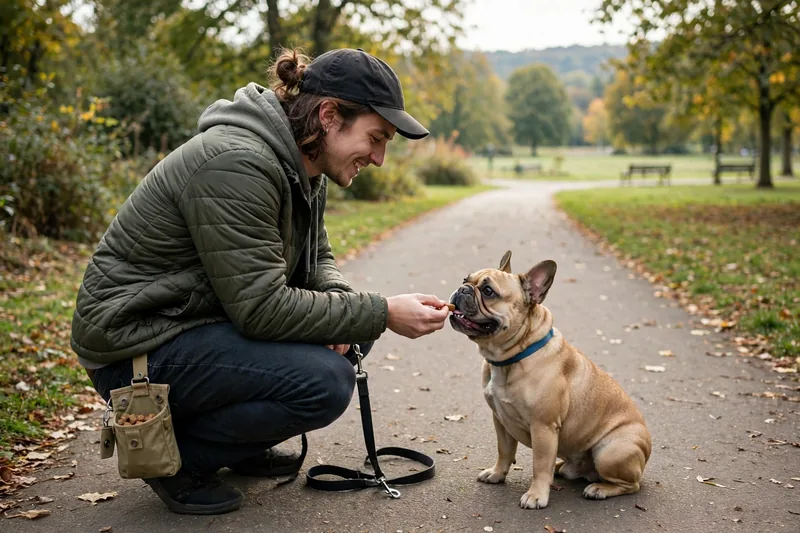
Step 3: Pause, then reward movement. When your French Bulldog refuses to walk and plants, don’t pull and don’t make a big fuss.
Just pause and give them ten or twenty seconds. Then, cheerfully, turn your body slightly, say “let’s go” once, and lure with a high-value treat at hip height, a few steps ahead.
The moment they take a step, reward them in motion, beside you, and keep walking: you’re paying for movement, not for the standstill. Over sessions, fade the lure so praise and the walk itself become the reward.
Step 4: Build walk fitness gradually. When a French Bulldog refuses to walk from low fitness, the answer is shorter sessions, not longer ones. Five happy minutes with sniff breaks beats a forced twenty that ends in a flat-out protest. Add a couple of minutes per week and let the dog’s breathing set the ceiling.
Step 5: Carry out, walk back. Some Frenchies freeze at the front door but walk happily toward home. Carry them a short distance past the sticky spot, set them down, and let them walk home. The distance creeps up week by week. This is a legitimate technique, not a defeat.
Gear Notes: Harness, Not Collar, for French Bulldogs
For this breed, a well-fitted harness is the sensible default. A collar puts pressure directly on the neck and trachea, and a French Bulldog’s airway is already compromised by anatomy. A harness spreads pressure across the chest and shoulders and keeps the neck free.
Choose a Y-front harness that doesn’t restrict shoulder movement, fit it carefully, and introduce it with treats before it ever goes near a walk. Avoid choke chains, prong collars, and anything that tightens around the neck: on a brachycephalic dog, they’re not just unpleasant, they’re a breathing hazard.
What NOT to Do When Your Frenchie Plants Their Feet
Say it plainly, because frustrated owners hear bad advice about this constantly.
Don’t drag your dog. Dragging teaches a planted dog that walks involve being hauled around, and in a brachycephalic breed the pressure on the neck plus the spike in stress and body heat can be genuinely dangerous.
Don’t do leash pops or “corrections,” which risk the airway and punish a dog who may be scared, hot, or in pain. Don’t yell, scold, or punish, and don’t use shock, prong, or choke collars.
And don’t pick a fight with a dog who weighs a tenth of what you do: you’ll win the tug-of-war and lose the dog’s trust in walks entirely.
None of these teaches the dog that walking is good, which is the only thing that fixes it when a French Bulldog refuses to walk.
When to Call the Vet vs When to Call a Trainer
Call the vet first if the refusal started suddenly, the dog is limping or yelping, breathing is noisier or labored in mild weather, there are any signs of overheating, or the dog seems lethargic or off their food. Pain, breathing trouble, and heat illness come before any training.
Call a qualified trainer or behavior professional if the vet has cleared your dog but your French Bulldog refuses to walk anyway, the refusal is clearly fear-based and tied to specific places or situations, or it’s getting worse despite weeks of patient work.
Look for someone who uses positive-reinforcement methods, and ask directly what happens when the dog gets it wrong: the answer should never involve pain, fear, or intimidation. A good professional will ask about the vet check before anything else.
Frequently Asked Questions
How long should a French Bulldog walk be?
It depends on age, fitness, airway health, and weather. Many healthy adults do well with two short 10 to 20 minute walks in cool weather. Let your dog’s breathing set the length; on warm days, shorter is safer.
Why does my Frenchie only refuse on the way out but walks home fine?
Very common. When a French Bulldog refuses to walk on the way out but walks home fine, the outward route is usually novel or has a scary spot; home is familiar. Use “carry out, walk back,” shorten the outward route, and check for something specific that frightens the dog.
Can I walk my French Bulldog in summer?
With care: walk early morning or late evening, keep it short, stick to shade, bring water, and watch for heat-distress signs. On hot days, skip the walk and play indoors.
A French Bulldog who refuses to walk is almost always a French Bulldog trying to tell you something. Listen to the body first, make the walk worth taking, and reward every willing step.
For more on this breed, read our guide to stopping French Bulldog humping, and for the same patient approach to fear, see our guide to helping a fearful dog.


