

Dog Afraid of Slippery Floors? How to Help
If you have a dog afraid of slippery floors, you know the scene: your dog stands at the edge of the kitchen, front paws planted on the rug, and will not take one more step.
Maybe they used to cross the house without a thought, and now their whole world has shrunk to the rugs and carpeted rooms.
It is not stubbornness. Hardwood, tile, laminate, and vinyl are genuinely hard for many dogs to walk on, and the fear is usually well-earned.
The good news: this is one of the most fixable problems in dog ownership, because the fix is mostly about changing the floor, not changing the dog.
Key Takeaways
- Dogs fear slippery floors because their paws cannot grip them, and one frightening slip is often all it takes to create lasting hesitation.
- Traction is the fix, not bravery: rugs, runners, and mats with non-slip backing do more than any training exercise.
- Keep nails short and trim the fur between the paw pads. Fur underfoot works like socks on a polished floor.
- Never drag, push, or punish a dog for refusing to cross a slick surface. That destroys trust and deepens the fear.
- New or worsening fear of slippery floors in an older dog can be a symptom of arthritis or a neurological problem. See your vet first.
Why Your Dog Is Afraid of Slippery Floors
Three things usually combine to create this fear. Knowing which ones are at play tells you where to put your effort.
No traction. A dog’s paw pads are slightly rough and grippy, which is perfect for grass, dirt, and carpet. The domestic dog is built for exactly these natural surfaces. On sealed hardwood, polished tile, or laminate, there is almost nothing for a pad to grab.
Dogs slip when they start, stop, turn, sit, or stand up, and their legs can splay sideways.
That is not just uncomfortable: for a dog afraid of slippery floors, slips and splaying can strain muscles and ligaments. A canine arthritis specialist notes that even sitting on slippery floors can push a dog’s limbs into abnormal positions.
One bad slip is enough. Dogs are excellent one-trial learners when the lesson involves pain or a genuine scare. A single wipeout, sliding into a wall or doing the splits in the kitchen, can teach a dog that the kitchen floor is dangerous.
From then on, a dog afraid of slippery floors hesitates at the threshold or scrambles in a panicky way that causes more slipping.
Senior mobility problems. This is the most common reason a dog suddenly becomes afraid of floors they walked fine for years. As dogs age, rear-leg muscles weaken and joints stiffen with arthritis, so the dog cannot catch themselves when a foot starts to slide.
According to Canine Arthritis Resources and Education (written by veterinarian Dr. Kristin Shaw), dogs with osteoarthritis can really struggle to stand up on slick floors such as hardwood or tile, and providing non-slip support at home is imperative.
A dog with arthritis often cannot reposition a slipping foot quickly enough because doing so hurts, so the slip is longer, scarier, and more painful.
Other contributors. Sudden fear in a dog afraid of slippery floors deserves a medical look, because several things reduce stability: overgrown nails and fur-covered paw pads, dry or cracked pads, fading vision, and neurological conditions that cause weakness or unsteady gait.
A Dog Afraid of Slippery Floors: The Step-by-Step Plan
Work in this order. The early steps fix the environment; the later steps rebuild confidence on what is left.
Step 1: Rule out pain and weakness first. If the fear is new or worsening, or comes with limping, stiffness, or trouble getting up, book a vet visit first.
Arthritis is extremely common in seniors, and when treated, the slipping often resolves because the dog can correct their feet again.
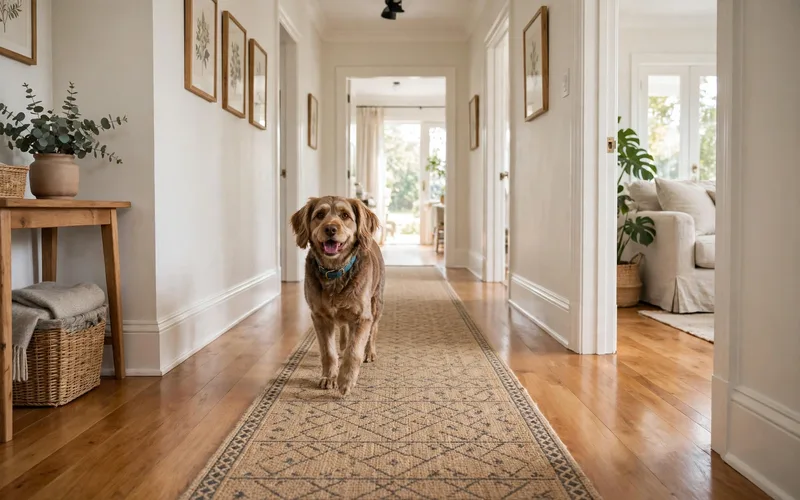
Step 2: Put traction under the routes that matter. This is the single most effective step for a dog afraid of slippery floors: rugs and runners beat booties or toe grips for most dogs.
Lay runners or low-pile rugs along the paths your dog actually uses (bed to water, food, and door). You don’t need to cover the whole house, just the essentials.
Put non-slip pads under each rug, and place a mat right by the bed, since standing up is one of the slippiest moves.
Step 3: Fix the paws themselves. Trim the nails (clicking on hard floors means too long; long nails lift pads off the ground) and trim fur between the pads, which is “a bit like walking in socks.”
For dry, cracked pads, use a dog-specific paw balm; avoid human moisturizers. These small fixes give a dog afraid of slippery floors more grip from their own feet.

Step 4: Rebuild confidence with tiny, rewarded steps. Lay a treat trail from a rug onto a small patch of bare floor where the dog can step back instantly. Reward every brave step; over days, lengthen the patch slightly.
Keep sessions short and end while it’s fun. If the dog freezes, the patch was too big. The same gradual, reward-based approach works for other fears too — see our gentle plan for a dog afraid to get in the car.

Step 5: Help seniors specifically. Steady them with a hand on the harness during stand-up, move essentials closer together, and gate stairs and sharp turns on slick floors.
A comfortable orthopedic bed for old dogs placed on the rug route gives sore joints a safe landing spot. Carrying a small or painful dog over scary stretches is fine short-term, but keep vet checkups regular since progressing arthritis can bring the fear back.
Step 6: For puppies and newly adopted dogs, let learning happen at their pace. Traction first, rewards for exploring, no pressure.
Add playtime on rugs and reward calm walking on small patches early, before a bad slip teaches the wrong lesson. That early confidence is exactly what a young dog afraid of slippery floors needs.
What Not to Do With a Dog Afraid of Slippery Floors
- Never drag, push, or pull the dog across a slippery floor. Heaving a frightened dog onto a surface they believe is dangerous confirms their fear and breaks their trust in your hands.
- Never punish refusal. Scolding a dog for balking at a threshold tells the dog that the scary floor also comes with scary people. The dog is communicating, not disobeying.
- Do not lure them into the middle of a slick area with a treat. A frightened dog stranded mid-floor will panic-scramble and slip again. Build from the safe edges, never from the deep end.
- Do not flood them. Making the dog live with nothing but exposed floors “until they get used to it” is how mild hesitation becomes deep, generalized fear. Adaptation comes from safe exposure plus reward, not exhaustion.
- Do not use aversive training methods. Shock collars, prong collars, and intimidation have no place in fear work. They add panic to an animal who is already panicking. If someone suggests forcing or punishing your fearful dog, find a different someone.
Products That Help a Dog Afraid of Slippery Floors
Nothing here replaces rugs and paw care for a dog afraid of slippery floors, but a few products can fill gaps.
- Runners and non-slip mats are the backbone of the whole plan. Low-pile rugs with rubber backing or a separate non-slip pad underneath stay put and are easy to clean.
- Toe grips are small rubber rings that fit over the toenails so the nails themselves grip the floor. They help some dogs, though reviews are mixed and they need refitting every few months.
- Dog boots or traction socks can add grip, but many dogs dislike wearing things on their feet. If you try them, introduce them gradually with treats.
- Paw balms made for dogs can moisturize dry, cracked pads so they grip a little better. Use only products formulated for dogs.
Resist the urge to buy a drawer full of gadgets before the rugs are down.
When It Is Medical: See Your Vet
Fear of slippery floors overlaps with real medical conditions, so treat these as red flags, not training puzzles:
- The fear appeared suddenly in a dog who previously walked the floors fine
- Limping, stiffness after rest, or difficulty getting up or lying down
- Weak or wobbly hind legs, dragging paws, or knuckling over
- The fear is getting worse despite better traction
- Yelping, snapping when touched, or reluctance to be handled
These can point to arthritis, spinal problems, neurological conditions, or vision loss.
An older dog who is afraid of slippery floors and has started avoiding the kitchen may be showing you the first symptom of arthritis in the hips or knees, which is exactly why the vet visit comes first in this plan.
Frequently Asked Questions
Why is my senior dog suddenly afraid of the hardwood floor?
Usually aging joints and weakening muscles: arthritis makes catching a slipping foot painful, and weak hind legs can’t stabilize.
Start with a vet visit, then add rugs along daily routes. That combination helps almost every dog afraid of slippery floors feel safe at home again.
Are boots or toe grips better for traction?
Rugs beat both, per veterinary rehabilitation experts. Toe grips suit dogs that won’t tolerate boots; boots suit dogs needing all-paw coverage. Try the free fixes first: rugs plus nail and paw-fur trims.
Can a dog injure themselves slipping on hardwood floors?
Yes. A bad slip can strain muscles and ligaments, and repeated slipping worsens arthritis. Seniors are most at risk, which is why rugs along daily routes are essential home care for arthritic dogs, not a luxury.
If your dog is afraid of slippery floors, you don’t need to renovate your house: a few runners, a nail trim, some patience, and belief in your dog go a long way.
Fix the footing, rule out pain, reward brave steps, and most dogs reclaim their rooms within a few weeks.


