Dog Won’t Poop on Walks? How to Fix It
Dog won’t poop on walks? If that’s your daily reality, you’re not alone. Your dog isn’t stubborn or spiteful — his habits and instincts make perfect sense to him.
Every walk goes the same way. You stroll the neighborhood for half an hour, bag in hand, hopeful. Your dog sniffs everything and poops nothing. The moment you get home, he trots to his favorite corner of the yard and goes.
It turns miserable on vacation, visiting family, or before a long car ride. The good news: this is one of the most fixable problems in dog behavior.
With the right plan, most dogs learn to go on walks within a couple of weeks.
Key Takeaways
- If your dog won’t poop on walks, the cause is usually a strong substrate or location preference, a need for privacy to feel safe, overstimulation on the walk, or anxiety in new surroundings.
- Rule out medical problems first: straining, blood in stool, vomiting, appetite loss, or no poop for 48-72 hours all need a vet visit.
- Bring the yard’s scent with you, keep early walks calm and boring, give him distance and privacy on a long line, and reward every outdoor poop generously.
- Never punish accidents or withhold walks until he goes. Punishment teaches dogs to hide their pooping, not to poop on walks.
- The routine takes one to three weeks to shift. Celebrate every outdoor success.
Why Your Dog Won’t Poop on Walks
Dogs choose where to poop by habit, instinct, and how safe they feel. Almost every refusal fits one or more of these four patterns.
Substrate preference. Puppies form strong associations between surfaces and elimination early on, and those preferences stick. A puppy raised on quiet yard grass grows into an adult who only recognizes that kind of surface as "the bathroom."
Rover’s veterinary-reviewed behavior team notes these preferences usually start in puppyhood. On a walk, his brain may simply not register the pavement or strange grass as a toilet option.
The need for privacy and safety. Pooping is a vulnerable moment: while squatting, a dog can’t easily move or watch for danger, so instinct says to pick a place that feels safe.
Behaviorist Qiai Chong (Chief Behaviourist at Pet Coach SG, cited by Rover) explains that dogs sniff before pooping partly to check whether the coast is clear.
Some dogs are poop-shy in new or busy places. Your quiet yard matches those instincts; a noisy street is the opposite.
Walks are too exciting. For many dogs, the walk is the highlight of the day, and new smells and sights flood the brain with stimulation.
Pooping requires settling down, and an over-aroused dog struggles to relax enough. Many dogs hold it through the whole walk and go the second they’re home.
Anxiety or fear on walks. A dog that is even mildly worried about his environment — traffic, loud noises, strange dogs — will not poop. Relaxation is a prerequisite for elimination.
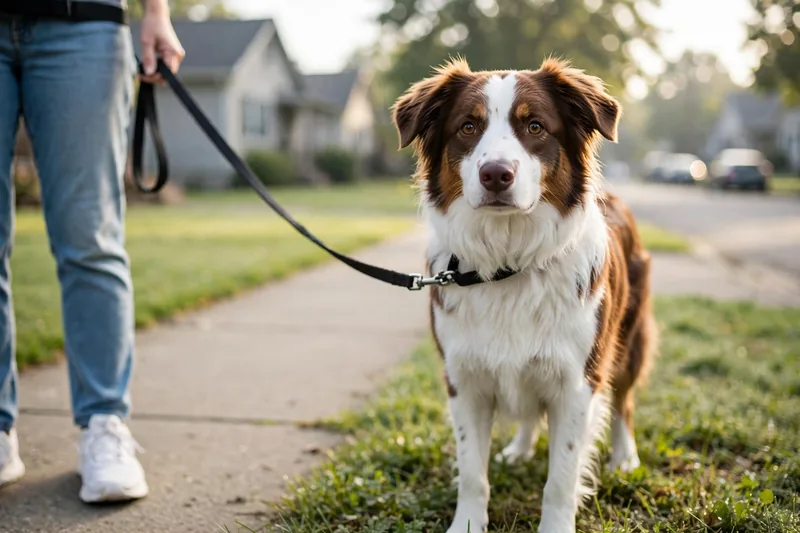
If his body language is tense (tail tucked, ears back, scanning, pulling toward home), the problem isn’t stubbornness. It’s stress.
Some dogs also learn that pooping ends the fun: if the walk always ends the moment he goes, he figures out that holding it means more time outside.
Rule Out Medical Problems First
If your dog won’t poop on walks, first make sure he can poop comfortably. A dog who avoids pooping because it hurts won’t be fixed by training.
Watch for constipation warning signs:
- Straining, crying, or repeated unsuccessful squatting
- Hard, dry, or pellet-like stools
- Blood on the stool or from the anus
- Loss of appetite, vomiting, or unusual lethargy
- A tense or painful-feeling belly
PetMD advises a vet visit if a dog hasn’t pooped in 48 to 72 hours, and sooner with straining, blood, appetite loss, pain, or vomiting. When in doubt, get the checkup.
How to Fix It When Your Dog Won’t Poop on Walks: A Step-by-Step Plan
This plan fixes the reasons your dog won’t poop on walks, using his own instincts. Give it one to three weeks.
Step 1: Take the yard’s scent with you. Dogs are scent-driven, and familiar scent marks a spot as an approved bathroom.
Scoop some of his poop, seal it in a bag, and place a small piece on grass along your walk route. Owners report it as the single fastest trick.
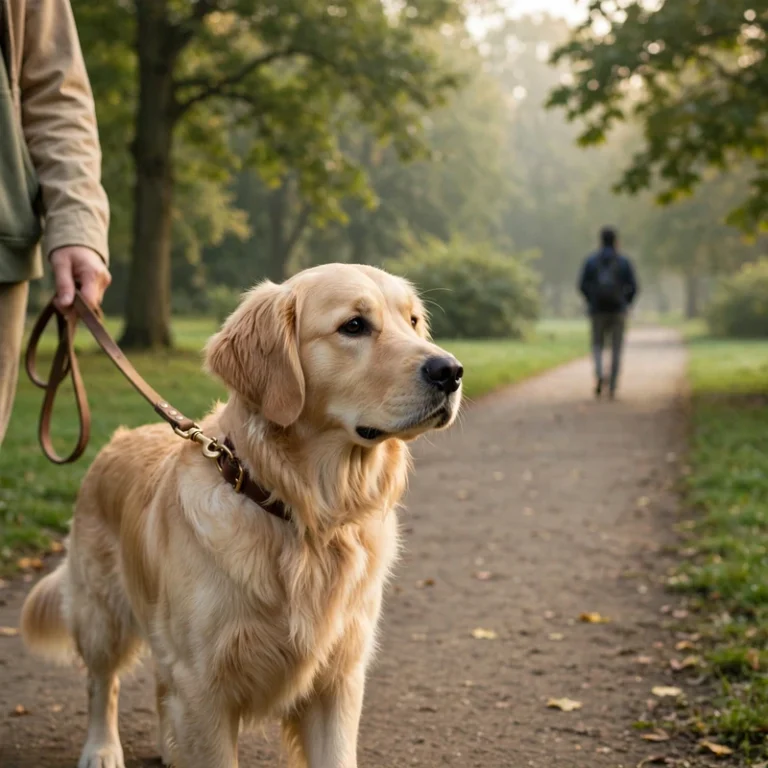
Step 2: Start with boring, potty-first walks. For a week or two, take a short, calm, boring walk dedicated to pooping: same quiet route, no exciting detours, 10 to 15 minutes of sniffing on grass.
The fun walk comes after. He learns the walk isn’t over the moment he goes (no more stalling), and the calm pace lets his body settle.
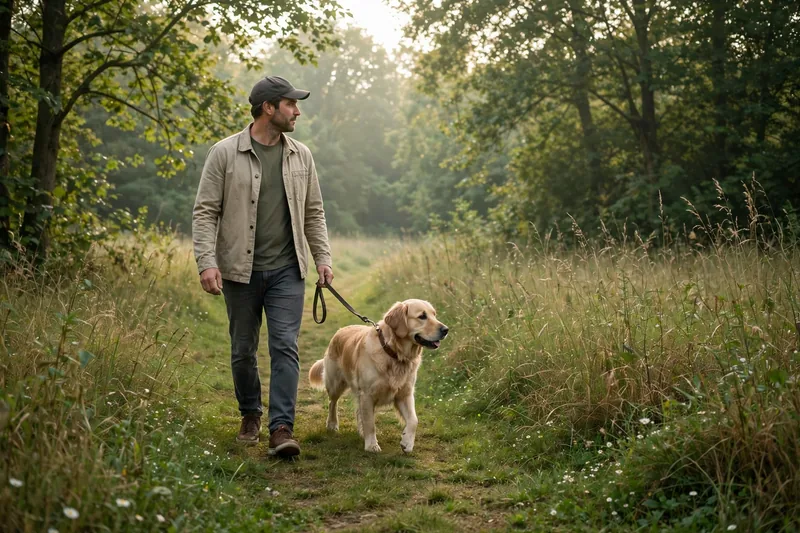
Step 3: Use a long line and give privacy. In a safe area, use a long training line (15 to 30 feet) and let him drift away from you. Distance equals privacy for a poop-shy dog.
Turn slightly away when he starts the pre-poop sniffing ritual. Quieter times and secluded grassy spots help. Let him circle and sniff uninterrupted: it’s part of his process.
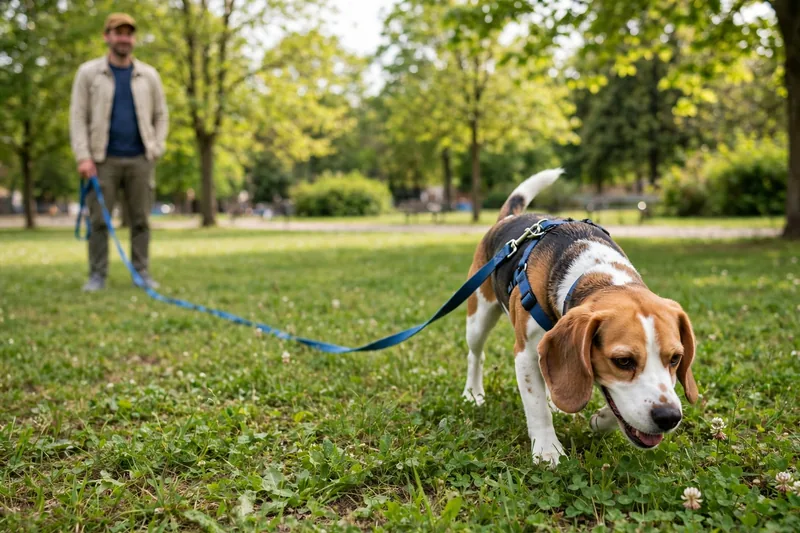
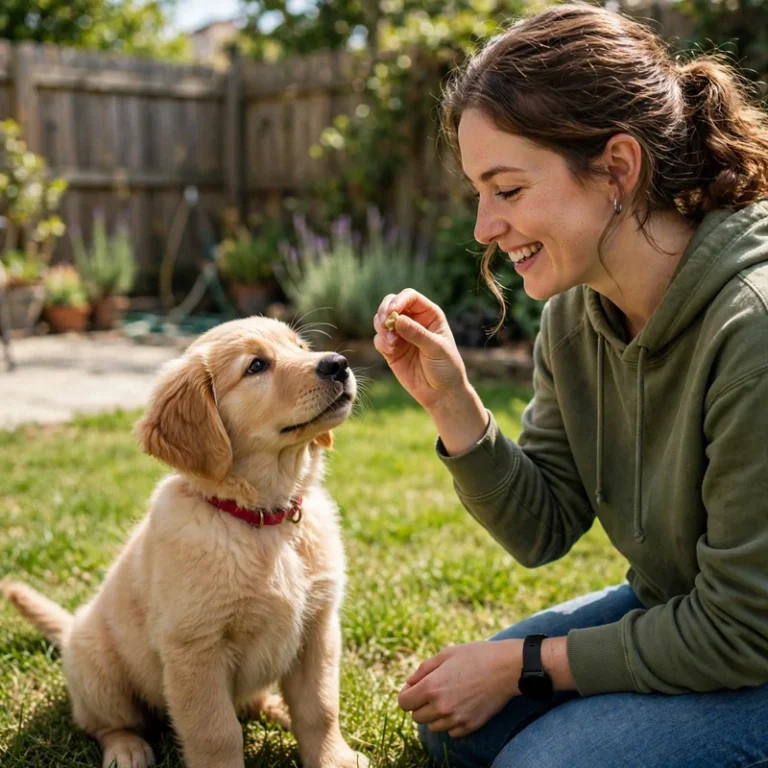
Step 4: Reward the outdoor poop like it’s the best thing ever. The moment he goes outside the yard, throw a party: his favorite treat, genuine excitement, plus more walking.
Make pooping on walks the highest-value thing he does all day. Keep rewarding every outdoor poop for at least two to three weeks. New habits replace old ones through positive-reinforcement housetraining, not pressure.
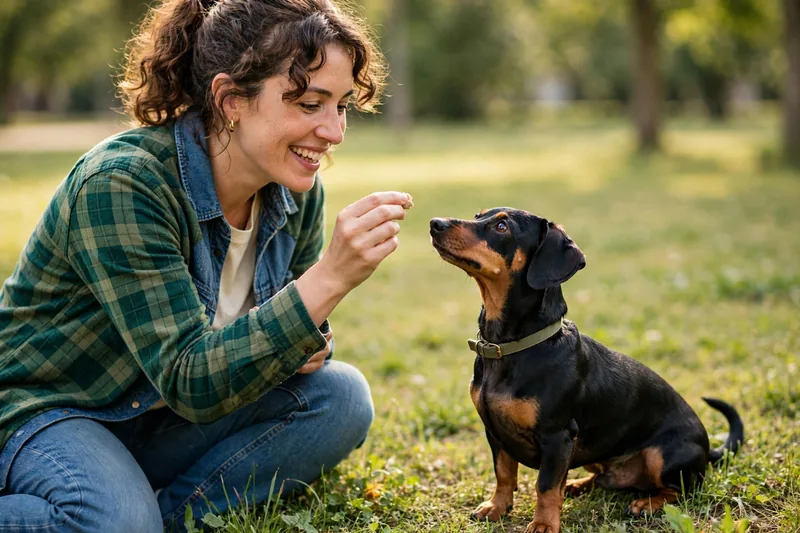
Step 5: Gradually shift the routine. Once he poops reliably on boring walks, reintroduce variety: different routes, busier times, then normal walks with potty breaks built in. If progress stalls, drop back a step for a few days.
Feed on a consistent schedule and take him out 15 to 30 minutes after meals. Predictable digestion makes the urge predictable, and predictability makes training easy. Our Potty Schedule Generator builds one around your dog’s age and routine.
What NOT to Do
When your dog won’t poop on walks, the wrong approach doesn’t just fail — it makes things worse.
Don’t punish accidents. If he holds it until home and goes inside because you stayed out too long, stay calm and clean it up with an enzymatic cleaner.
Punishing a dog for pooping teaches him that pooping in your presence is dangerous, and you get a dog who sneaks behind the couch.
Don’t do endless two-hour walks. Fifteen to twenty calm minutes is enough. If he doesn’t go, bring him home, prevent sneaking for about 20 minutes, then try again. Repetition builds the habit, not endurance contests.
Don’t use pressure or aversives. You can build a potty cue later by saying "go potty" quietly as he starts to go, then rewarding. Never shout it at him, pull him toward a spot, or crowd him.
Shock collars, prong collars, yelling, and leash jerks have no place in potty training: they create anxiety, and anxious dogs hold it longer.
Don’t skip walks to "make" him go. Withholding exercise or refusing to come inside until he’s desperate is the "tough luck" approach. A dog determined to hold it will hold it, and you’ll both be miserable.
Travel and Sitter Handover Tips
If your dog won’t poop on walks, travel gets stressful: a weekend trip can turn into a two-day constipation emergency.
- Pack the scent. Bring a sealed bag with a piece of his yard poop (or a soiled pee pad). Gross, effective.
- Pack the long line. Same distance-and-privacy routine in a quiet spot near where you’re staying.
- Write it down for the sitter. Leave a short card: "Walk 15 quiet minutes, let him drift on the long line, turn away when he sniffs, big treat and praise when he goes, never scold." Include your vet’s number: no poop in 48 hours or any straining means call the vet.
- Keep his schedule. Feed at the same times as home and walk 15 to 30 minutes after meals, even on the road.
- Give it a day. A stressed dog in a new place may skip a day. That’s normal as long as he goes within 48 hours and shows no distress. Beyond that, or with straining, appetite loss, or pain, call the vet.
When to Get Professional Help
Most cases resolve with the plan above. Bring in help if:
- A vet visit comes first for any constipation signs: straining, blood, vomiting, appetite loss, lethargy, or no poop for 48 to 72 hours. Behavior training can’t fix pain.
- Real anxiety on walks, not just holding habits. Constant scanning, tail tucked, refusal to eat treats outdoors, or panic at normal street sounds suggests a dog who needs anxiety work too.
- A certified trainer who uses positive reinforcement (look for CPDT-KA or IAABC credentials) can build a desensitization plan.
- He’s also pooping indoors or his habits suddenly changed. A reliably trained adult dog who suddenly stops going outside needs a vet check before anything else. Sudden behavior change is a medical red flag.
The Bottom Line
If your dog won’t poop on walks, he isn’t being difficult. He has a surface preference, a privacy need, or an anxiety habit, and your walks haven’t matched it yet.
Bring the scent, calm the walks, give him distance, reward every win, and most dogs rewire the habit within a few weeks.
FAQs
How long does it take to teach a dog to poop on walks?
If your dog won’t poop on walks, expect the first successes within one to two weeks of consistent training, and reliable results within about a month.
Puppies and anxious dogs can take longer. With no progress after three consistent weeks, look at anxiety or a medical issue.
Why does my dog wait to poop until we get home?
Home is where his elimination habits live. Substrate preference, privacy, safety, and routine all say "bathroom" to his brain, while the walk says "excitement." The plan above rebuilds that association so walks say "bathroom" too.
Can I train a poop-shy dog to go on cue?
Yes. Once he poops reliably on walks, say "go potty" quietly just as he starts to go, then reward. After enough pairings, the word alone prompts the behavior. Keep rewarding generously even after he learns it.
Is it normal for a dog not to poop for a day on vacation?
One skipped day in a new environment is common and usually fine. Per PetMD, see the vet if there’s no bowel movement for 48 to 72 hours, sooner with straining, blood, vomiting, appetite loss, or pain.
Why does my dog sniff forever before pooping?
Sniffing is how dogs read the area: other dogs’ scent messages, whether the coast is clear, whether the spot feels right. It’s a normal, important part of the bathroom routine. Let him finish it undisturbed; rushing backfires.