
Dog Only Listens to One Person? How to Fix It
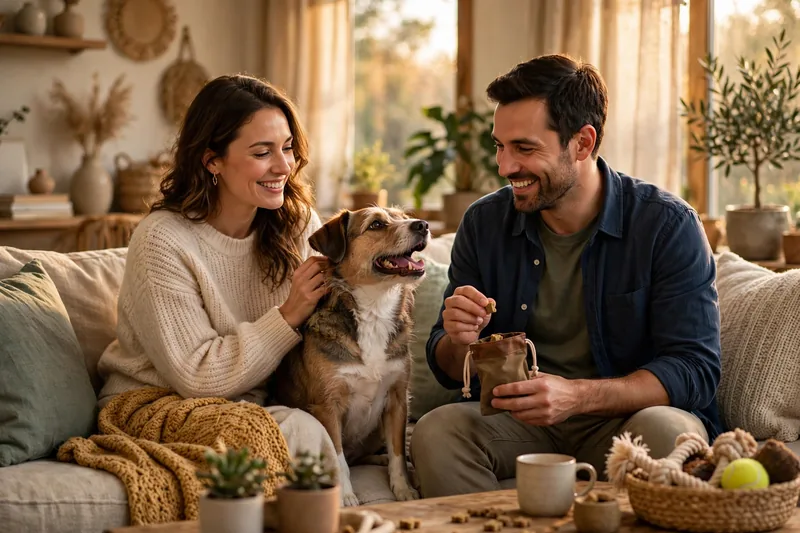
If your dog only listens to one person, you are probably the person reading this, and it stings. You say “sit” and get a blank stare while your partner says the same word and gets instant obedience.
Do not hear that as a verdict on your relationship with your dog. It is a mechanics problem: the dog has learned that one person’s words reliably mean something, and everyone else’s do not yet.
Direct Answer: Why a Dog Only Listens to One Person
When a dog only listens to one person, it is a training consistency gap, not a love gap. The dog follows the signals that have reliably paid off in the past, and right now only one person in the house is sending clear, rewarding signals.
The fix is a household plan, not a new personality for you or your dog. Agree on one word per behavior, let the ignored person become the source of good things, and practice one cue at a time until the dog responds to everyone.
Most families see real improvement within a few weeks of consistent work. If nothing changes after a month, a professional watching your mechanics in person is the next step.
Key Takeaways
- Selective listening is a consistency gap, not a love gap. Dogs respond to the clearest channel in the house.
- The usual causes: one person did most of the training, one person is more consistent, one person controls walks and food, or everyone uses different words for the same cue.
- The fix takes the whole household: same cues, same rules, written down, enforced kindly by everyone.
- The fastest way to become relevant to the dog is to become the source of good things: short, fun sessions with high-value treats, run by the ignored person.
- If the dog fears one person rather than ignoring them, that is a different problem. Slow down, remove pressure, and get professional help if needed.
Why Your Dog Only Listens to One Person
Dogs are relentless accountants. They respond to the people whose signals have consistently predicted something worth responding to, and they quietly ignore signals that have led nowhere.
When one person’s cues reliably lead to treats and clear outcomes while another person’s lead to nothing much, the dog’s behavior is perfectly logical. The dog is simply following the clearest channel in the house.
One person did the training. Whoever taught sit, down, come, and stay built a track record of “this word from this person pays off.” That history does not transfer automatically to other people.
One person is more consistent. One person asks once, waits, and gently follows through every time. The other asks three times, sighs, and walks away, and the dog learns the difference fast.
Dogs learn from what happens after the word. Every unanswered “come” that gets shrugged off teaches the dog that this cue is optional when that person says it.
One person owns the resources. Who feeds the dog, walks the dog, and hands out the treats? In many homes, one partner does most of the daily dog care, and the person who controls the good stuff becomes the person the dog tunes into.
That is not favoritism. It is economics, and it is fixable by spreading the good stuff around.
Everyone speaks a different language. One person says “come,” another shouts the dog’s name, and the kids yell “here,” all for the same recall. A dog cannot follow rules that keep changing, so it sticks with the one human whose signals are predictable.
Tone and body language differ. Dogs read tone, posture, and energy as part of the cue. A calm “sit” with a hand signal and a distracted “sit??” muttered at a phone screen are two different signals to a dog.
Notice what is absent from this list: stubbornness, spite, and the idea that the dog has ranked the household. Your dog is not snubbing you. Your dog is responding to the only clear channel in the house.
The Household Cue Agreement
Before any training session, sit down together and agree on the words. One word per behavior, one hand signal per behavior, and no synonyms allowed.
| Behavior | Word | Hand signal | Do not say |
|---|---|---|---|
| Sit | Sit | Flat hand, palm up, rising | Sit down |
| Lie down | Down | Flat hand, palm down, lowering | Lay down, get down |
| Come to me | Come | Arms open, beckoning | Here, come here, name-shouting |
| Get off furniture | Off | Sweeping hand away | Down, get down |
| Wait | Wait | Open palm like a stop sign | Hold on, stay put |
Write the list on paper and stick it on the fridge. Add three or four non-negotiable rules, for example no jumping, no bolting through doors, and wait before eating.
A rule that applies on weekdays but not weekends, or with you but not with the kids, is a rule the dog will treat as optional. Consistency is the whole game here.
The Step-by-Step Plan When a Dog Only Listens to One Person
Give this plan a few weeks of consistent work. Most families find that a dog only listens to one person until the mixed signals stop, and then the dog starts checking in with everyone.
Step 1: The ignored person becomes the treat dispenser
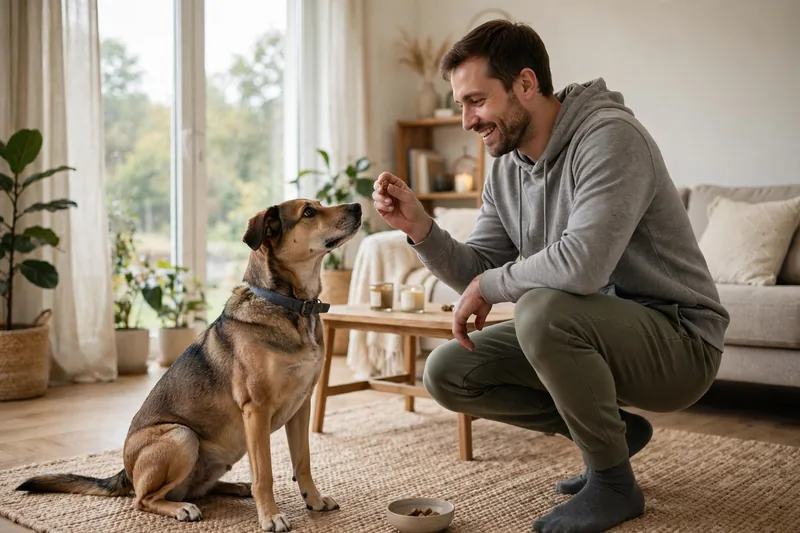
For two weeks, the ignored person becomes the source of all good things. They hand-feed part of meals during training, carry the good treats on walks, and start the fun games.
You are not bribing the dog into love. You are giving the dog a reason to pay attention to a person whose signals previously led nowhere, and this is the fastest way to change the pattern.
Step 2: Run short, fun sessions owned by the ignored person
Two or three sessions a day, five minutes each, with the ignored person doing all the handling. Start with the easiest win the dog knows, usually “sit.”
Say the word once in a cheerful tone and reward the moment it happens. Five easy reps, then quit while you are ahead, so every session ends with the dog wanting more.
Step 3: Transfer one core cue at a time
Do not rebuild the whole vocabulary at once. Pick “sit” first. Both people practice in the same room, taking turns, with the same word, hand signal, and reward.
When the dog responds to the ignored person reliably indoors, move to “down,” then “stay,” then “come” last. Recall is the hardest cue to transfer, so it goes last on purpose.
For the full recall progression, see our Shiba Inu recall training guide. The breed examples differ, but the step-by-step method of charging a cue and proofing it gradually applies to any dog.
Step 4: Ask once, follow through kindly every time
One cue, a brief wait, then gentle follow-through. If you say “sit” and nothing happens, do not repeat it louder, because repeating teaches the dog that the first asks do not count.
Wait two or three seconds, then help the dog succeed by luring them into position, and reward. The dog learns the first ask is the one that counts.
Step 5: Hand over the daily routines
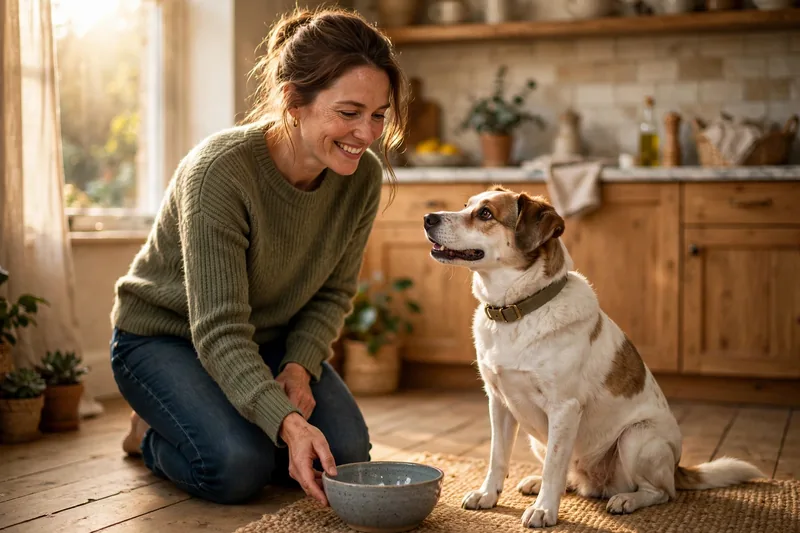
The ignored person takes ownership of one or two daily rituals: the morning walk, the evening meal, or the weekend fetch session. Dogs notice who makes their life happen, and routines are daily proof.
Step 6: Proof the new reliability gradually
Once the dog responds to everyone indoors, practice in the garden, then on quiet streets, then with distractions. Change one variable at a time, so a setback tells you exactly what was too hard.
If the dog fails in a new place, that is information, not failure. Drop back to the last place where they succeeded, rebuild there, and try the harder spot again tomorrow.
A realistic timeline
| Week | Focus | What you should see |
|---|---|---|
| 1 | Cue agreement + treat dispenser role | Dog starts orienting to the ignored person |
| 2 | Short sessions, “sit” transfer | Dog sits for the ignored person indoors |
| 3-4 | “Down” and “stay” transfer | Dog responds to everyone indoors |
| 5-6 | Proofing outdoors, then “come” | Dog responds in the garden and on quiet streets |
Timelines vary with the dog and the household’s consistency. A household that keeps slipping back to old habits will move slower, and that is normal, not a sign the plan is broken.
What NOT to Do
Do not just say it louder. Repeating a cue at increasing volume teaches the dog that the first asks do not count and the shout is the real cue. One calm request, then follow-through, every time.
Do not punish the “disobedience.” Yelling, leash jerks, and shock or prong collars will not fix selective listening, and they damage the trust the plan depends on. If the dog is not responding, the answer is better mechanics, not more pressure.
Do not let one person keep doing everything. The most common way this problem comes back is the household slipping into the old pattern: the “good” trainer handles every walk, session, and meal because it is easier.
Easier today means selective listening forever, so share the work on purpose, especially in the first month.
Do not make it a competition. “He listens to me, why doesn’t he listen to you?” turns a mechanics problem into a household wound, and dogs pick up on tension between the humans fast.
The framing that works is this: we are training our dog together, and the dog is showing us where our system is unclear.
Kids and Consistency
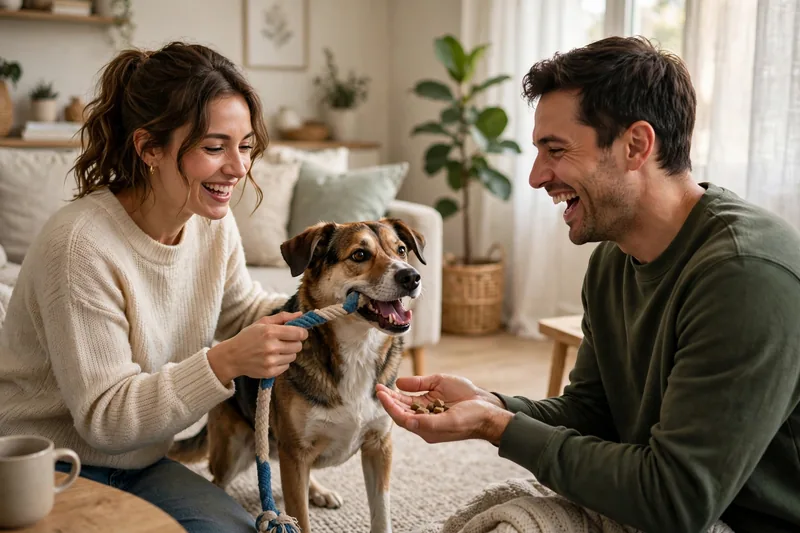
Kids are wonderful trainers once they know the rules. A child who squeals “SIT SIT SIT!” while bouncing gives the dog a very different cue than an adult’s calm “sit,” so the fix is to keep it simple for them.
Teach each child two or three cues only, with the exact word, hand signal, and treat delivery demonstrated once.
Keep an adult present for younger kids, and make it a game: children who get to be “the treat person” for five-minute sessions take to it fast.
Let the kids help write the fridge list too. A child who helped choose the words is far more likely to use them, and the dog gets one more consistent channel in the house.
When It Is Fear, Not Indifference
Sometimes the asymmetry is not indifference; it is fear. If the dog actively avoids one person, cowers, or growls when they approach, that deserves a kinder, slower look.
Ask honestly and without judgment: has this person ever frightened the dog, even accidentally? Loud punishments, looming over the dog, or rough handling can leave a lasting impression, and it is never too late to change the pattern.
A fearful dog needs the treat-dispenser approach slowed right down. Toss treats without asking for anything, let the dog choose the distance, and keep sessions short and pressure-free, so the dog learns this person predicts good things without demands.
Bring in help for fear-based cases: a qualified professional who uses positive-reinforcement methods can read the fear accurately and build a plan an article cannot.
If the dog guards one person from another, that is a different dynamic, covered in our guide to dogs who guard one owner from a partner.
Vet Red Flags: When to Book a Vet Visit First
Book a vet visit before writing a training plan if the change was sudden. A dog who used to listen to everyone and suddenly stops may be in pain, losing hearing, or dealing with another medical cause, and training cannot fix a medical problem.
Other red flags: the dog flinches when touched in a particular spot, has become withdrawn or unusually irritable, or shows new aggression alongside the listening change. Rule out medical causes first, then train with a clear picture.
If a bite ever breaks skin, wash the wound well with soap and running water, apply pressure with a clean cloth if it bleeds, and get medical advice the same day. Ask about tetanus cover, and check your local rules on reporting bites.
Frequently Asked Questions
My dog only listens to my husband. Does that mean he is loved more?
No. It means his signals have been more consistent, or he has done more of the training and daily care.
Dogs respond to the person whose cues have reliably meant something, and once your own cues start paying off, your dog will respond to you just as well.
How long does it take for a dog to listen to everyone?
When a dog only listens to one person, most families see real improvement within a few weeks of consistent household work. If nothing changes after a month of genuine consistency, a professional watching your mechanics in person is the next step.
Should the “favorite” person stop training the dog?
No; that would create a new imbalance in reverse. They should keep training but share the handling: let the other person run sessions while they observe, and split the daily rituals so the dog’s good stuff comes from everyone.
My dog listens to me but ignores my kids. Is it the same fix?
Mostly yes, with age-appropriate adjustments: fewer cues, adult supervision, and sessions framed as games. Teach kids to stay calm around the dog, because excited squealing reads as play to a dog, not instruction.
We use different words for the same command. Is that really a problem?
Yes. It is one of the most common causes of selective listening. To the dog, “come,” “here,” and a shouted name are three different sounds with three different histories, and one word per behavior, written on the fridge, is the cheapest fix in this article.
What if my dog listens to me indoors but ignores everyone outside?
That is a proofing gap, not a new problem. Every new environment resets training until you proof there deliberately, so return to the easiest cue in the new place, reward generously, and climb the distraction ladder one rung at a time.
A dog who only listens to one person is not making a statement about who they love. They are telling you, as clearly as a dog can, that the household system is unclear.
Fix the system together, share the good stuff, and give it a few weeks.
For the wider household picture, see our Shiba Inu recall training guide and our guide to dogs who guard one owner from a partner.
Reference
American Kennel Club, “Dog Training Tips for Success From Expert Dog Trainers”: https://www.akc.org/expert-advice/training/expert-tips-for-dog-training/
Still stuck? Get a plan built for your dog.
Answer a few quick questions and get a personalized, force-free training plan in minutes.