
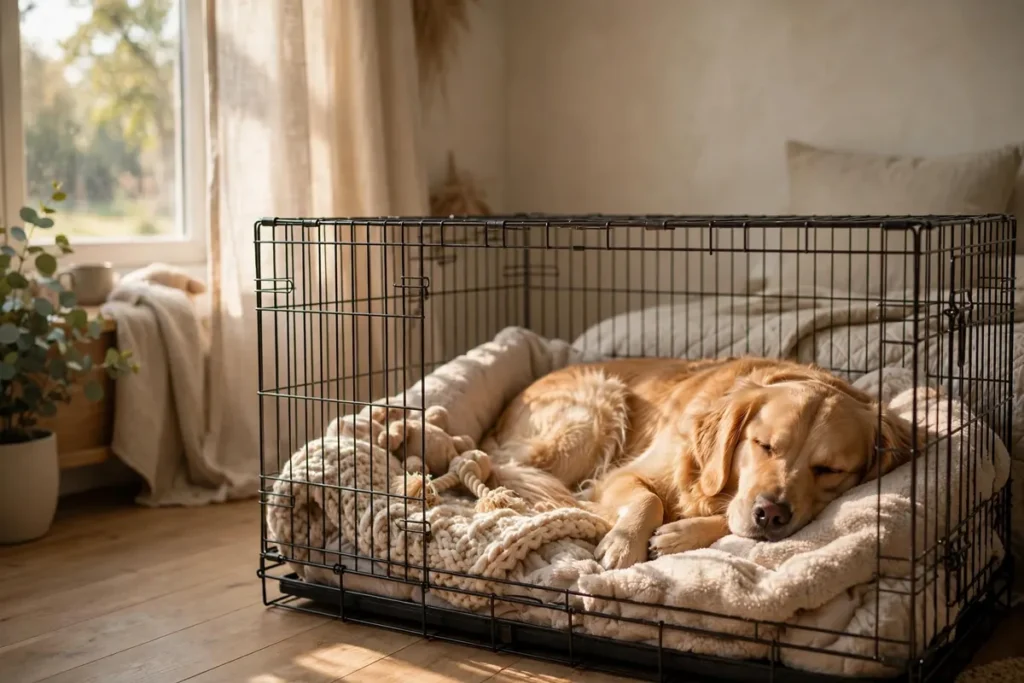
 A crate should feel like a safe den — a place your dog chooses, not a cell they are forced into. Most crate problems come from moving too fast or pairing the crate with isolation and punishment. This planner builds a gradual 7-day progression matched to your dog’s crate history and the exact problem you are seeing, so you build positive associations before asking for duration.
How it works
Tell us your dog’s age, how they feel about crates so far, the longest they are alone, and the main crate issue. The planner maps a day-by-day progression — slower and desensitization-first for dogs with bad crate history — with targeted exercises for refusal, barking, whining, restlessness, or settling difficulty.
Who it's for
For owners introducing a crate for the first time, and for owners troubleshooting a crate that has “gone wrong.” Dogs with a genuinely negative crate history get a slower track that rebuilds the association from scratch.
Frequently asked questions
How long can my dog stay in the crate?
As a rule of thumb: adult dogs should not be crated more than 4–5 hours in one stretch without a break for potty, water, and movement — and puppies need much shorter stretches, roughly matching their age in comfort, not endurance. A crate is for rest and management, not all-day storage. If your schedule needs longer alone time, use a puppy-proofed pen, a dog walker, or daycare instead.
Can I use the crate as punishment?
No — this is the fastest way to create crate problems. The moment the crate predicts scary or upsetting things, your dog will fight going in. The crate must predict good things: meals, chews, rest, and calm. If you need your dog out of the way, use a time-out in a boring area instead — and address the behavior itself separately with training.
My dog whines in the crate at night. Should I ignore it?
First, rule out needs: young puppies may genuinely need a nighttime potty break, and a dog that has been crated too long may be distressed, not disobedient. If needs are covered and the whining is protest, the fix is daytime training — building positive crate associations and duration gradually — not nighttime battles. Never let a puppy "cry it out" for hours; panic in the crate creates lasting aversion.
What if my dog panics — drooling, biting the bars, hurting themselves?
Stop crating immediately and talk to your veterinarian or a certified behavior professional. True confinement panic is not a training problem you push through — forcing it risks injury and makes the fear dramatically worse. Alternatives like a pen, a dog-proofed room, or professional help are the right move here.